Pharmacodynamic Drug Interactions: What Happens When Drugs Combine
When you take two drugs at the same time, it’s not just about what each one does alone. Sometimes, they talk to each other-directly, at the level of your cells-and that conversation can change everything. This is pharmacodynamic drug interaction, and it’s one of the most dangerous, yet least understood, risks in modern medicine.
What Exactly Is a Pharmacodynamic Interaction?
Unlike pharmacokinetic interactions-where one drug changes how another is absorbed, broken down, or cleared from your body-pharmacodynamic interactions happen at the target site. The drug concentrations stay the same, but what your body does in response changes. It’s like two people trying to turn the same light switch. One turns it on, the other turns it off. The switch doesn’t move differently, but the outcome? Totally different. These interactions don’t need to alter blood levels. They just need to mess with the signal your body receives. That’s why they’re so sneaky. A patient might be on the right dose of every drug, yet still end up in the hospital because the drugs are working against-or amplifying-each other at the receptor level.Three Ways Drugs Talk to Each Other
Pharmacodynamic interactions fall into three main types: synergistic, additive, and antagonistic. Each has real-world consequences.- Additive: The combined effect is simply the sum of the two. Take two painkillers like acetaminophen and codeine. Together, they give you the expected level of pain relief. Nothing surprising. This is often intentional.
- Synergistic: The whole is greater than the sum of its parts. The classic example is trimethoprim and sulfamethoxazole (Bactrim). Each blocks a different step in bacterial folic acid production. Together, they’re far more powerful than either alone-cutting the needed dose of each by 75%. This synergy is why the combo is still used for serious infections.
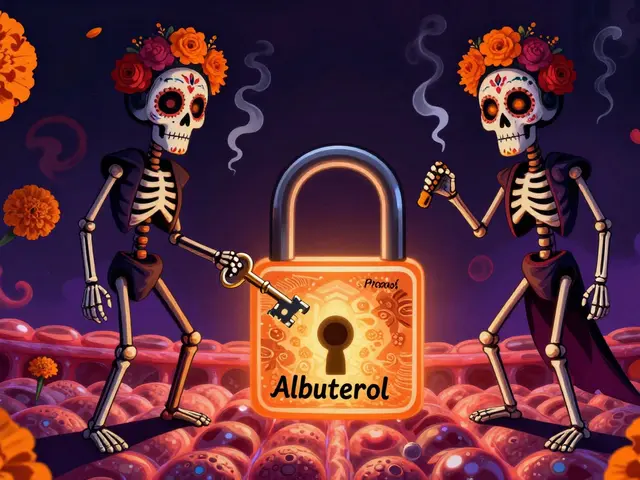
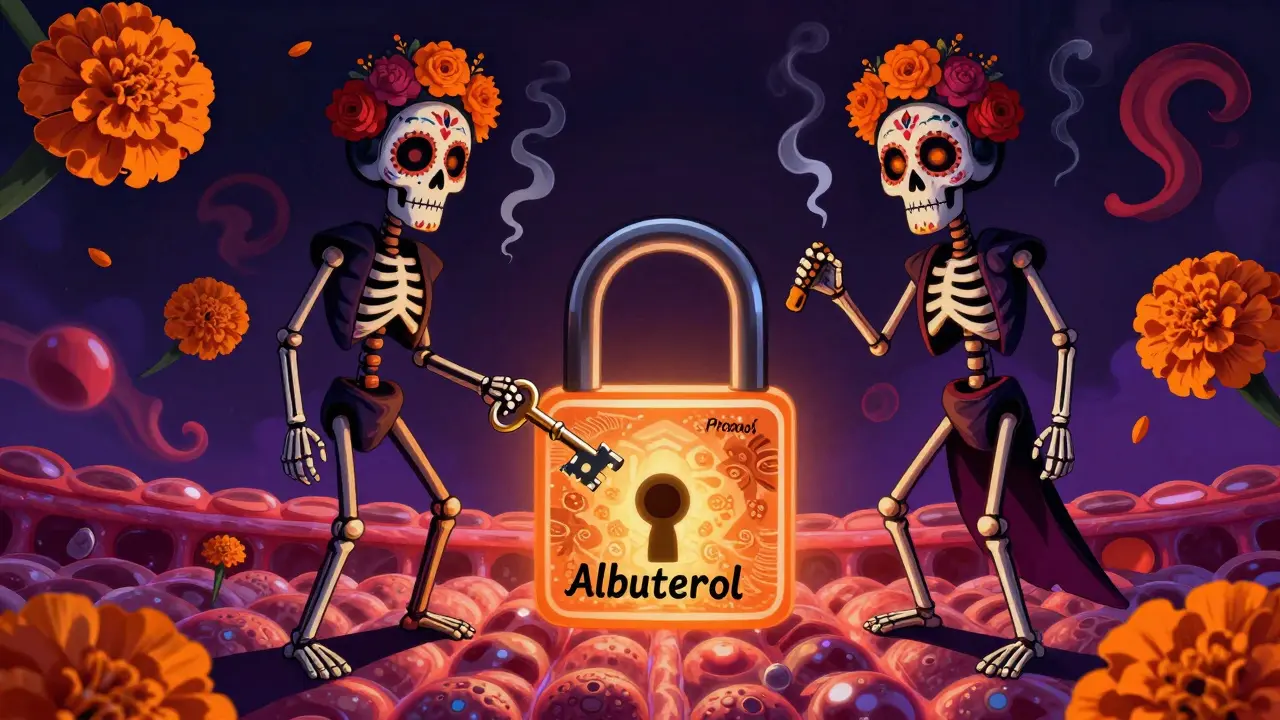
- Antagonistic: One drug blocks or reduces the effect of another. This is where things get dangerous. Take beta-blockers like propranolol and albuterol, used for asthma. Propranolol blocks the same receptors albuterol needs to open airways. If someone on propranolol has an asthma attack and uses their inhaler, it might not work. The drug is there, but the receptor is occupied. Result? No relief. That’s not a dose issue. That’s a pharmacodynamic clash.
Receptors Are the Battlefield
Most of these interactions happen at receptors-molecular locks on cell surfaces that drugs try to turn. Think of them like door handles. One drug is a key that fits perfectly (high affinity). Another drug might be a fake key that jams the lock (competitive antagonism). The strength of the interaction depends on two things: affinity (how tightly the drug binds) and efficacy (how well it turns the lock once it’s in). Propranolol has higher affinity for beta-receptors than albuterol. That’s why even small doses of propranolol can shut down albuterol’s effect. This isn’t theory. It’s documented in hospital cases where asthmatic patients on beta-blockers ended up in ICU after their inhalers failed. Another common receptor battle happens with opioids. Morphine activates mu-opioid receptors to relieve pain. Naloxone, used to reverse overdoses, also binds to those same receptors-but instead of activating them, it kicks morphine out. If someone is dependent on opioids and gets naloxone by accident, they don’t just lose pain relief-they go into full withdrawal. That’s not a side effect. It’s a direct pharmacodynamic tug-of-war.When Drugs Fight Behind the Scenes
Not all interactions happen at the same receptor. Sometimes, drugs interfere with the body’s natural systems. Take NSAIDs like ibuprofen and ACE inhibitors like lisinopril. NSAIDs block prostaglandins, which help keep blood flowing to your kidneys. ACE inhibitors rely on those same prostaglandins to lower blood pressure. When you combine them, the kidney blood flow drops by up to 25%. The ACE inhibitor still works-but not as well. Your blood pressure doesn’t budge. This isn’t rare. A 2019 NIH study of 347 hypertensive patients showed this combo reduced the effectiveness of blood pressure control in nearly half of them. Even more subtle: NSAIDs can reduce the effect of diuretics. The same kidney blood flow drop means less urine output. So someone on furosemide for heart failure might not lose fluid-and end up with swelling or shortness of breath. The diuretic dose hasn’t changed. The drug is still in the bloodstream. But the body’s response? Broken.
The Most Dangerous Combinations
Some pharmacodynamic interactions are deadly. And they’re not obscure. They’re common.- SSRIs + MAOIs: This combo can cause serotonin syndrome-a life-threatening surge in serotonin levels. Risk increases 24-fold. Symptoms? High fever, muscle rigidity, confusion, seizures. It’s not a myth. Emergency rooms see this every year. The UK’s Yellow Card Scheme recorded over 200 serious cases between 2018 and 2022.
- Anticoagulants + Antiplatelets: Warfarin or apixaban with aspirin or clopidogrel? You’re stacking two drugs that thin the blood. Bleeding risk jumps dramatically. A 2022 survey of over 1,200 doctors found this was the most common dangerous interaction they saw monthly.
- Linezolid + Sertraline: Linezolid is an antibiotic that also acts as a weak MAOI. Sertraline is an SSRI. Together, they caused serotonin syndrome in a patient documented on Reddit by a hospital pharmacist. The patient spent 72 hours in intensive care.
When Interactions Are a Good Thing
Not all pharmacodynamic interactions are bad. Medicine uses them on purpose. Low-dose naltrexone, originally used to block opioid receptors, is now being studied with antidepressants. In a 2021 trial with 142 patients with treatment-resistant depression, adding naltrexone boosted response rates from 42% to 68%. The theory? Naltrexone briefly blocks opioid receptors, triggering the body to produce more natural endorphins. The result? Better mood regulation. Another example: combining opioids with gabapentin for chronic pain. Gabapentin reduces nerve sensitivity, while opioids dull the pain signal. Together, they allow lower opioid doses-reducing addiction risk while improving pain control. These aren’t accidents. They’re intentional design. But they still require careful monitoring.Why Doctors Miss These Interactions
Most electronic health records flag pharmacokinetic interactions-like a statin and grapefruit juice-because they’re easy to calculate. Blood levels change. Software detects it. But pharmacodynamic interactions? Harder. No blood test shows them. No lab value flags them. A doctor might see two drugs on a list and think, “They’re fine together.” A 2020 study of 48 U.S. hospitals found that clinical decision tools missed 22% of serious pharmacodynamic interactions. Why? Because the algorithms weren’t built to understand receptor biology. They were built to check for enzyme inhibition. Even worse: a 2022 survey showed 63% of physicians encounter at least one dangerous interaction every month. And most of them don’t know it’s happening until the patient gets sick.
How to Protect Yourself
If you’re on multiple medications, here’s what you can do:- Know your drugs: Ask your pharmacist: “Do any of these interact in a way that makes one less effective-or more dangerous?”
- Watch for sudden changes: If your blood pressure suddenly won’t drop, or your inhaler stops working, or you feel unusually dizzy or agitated, ask if it could be a drug interaction.
- Use trusted resources: The University of Liverpool’s HIV Drug Interactions database is widely used by specialists. Even if you’re not HIV-positive, it’s one of the most comprehensive sources for pharmacodynamic data.
- Ask for a medication review: Especially if you’re over 65. A pharmacist-led review cuts adverse events by 58%, according to a BMJ study. Most of those prevented events involved blood pressure drugs and NSAIDs.
The Future: Smarter Tools, Better Outcomes
The FDA now requires pharmacodynamic interaction studies for all new CNS drugs. The European Medicines Agency says 34% of new drug applications now include this data-up from 19% in 2015. Researchers are building AI models that predict serotonin syndrome risk with 89% accuracy. The UK is piloting systems that flag dangerous combinations in real time as doctors write prescriptions. But technology alone won’t fix this. The real solution is better education-for doctors, pharmacists, and patients. Understanding how drugs work at the receptor level isn’t just for exams. It’s for survival.Frequently Asked Questions
What’s the difference between pharmacodynamic and pharmacokinetic drug interactions?
Pharmacokinetic interactions change how your body processes a drug-like slowing its breakdown or blocking its absorption. Pharmacodynamic interactions change how your body responds to the drug, even if the drug level stays the same. One affects the drug’s journey; the other affects what it does once it arrives.
Can over-the-counter drugs cause pharmacodynamic interactions?
Yes. NSAIDs like ibuprofen can reduce the effectiveness of blood pressure medications. Antihistamines like diphenhydramine can add to the sedative effect of opioids or benzodiazepines. Even herbal supplements like St. John’s wort can interfere with serotonin levels when taken with antidepressants.
Why don’t my doctors warn me about these interactions?
Many electronic systems don’t flag pharmacodynamic interactions because they’re harder to detect than pharmacokinetic ones. Also, doctors are often overwhelmed. A 2022 survey showed most physicians see at least one dangerous interaction every month-and many don’t realize it’s happening until the patient is already in trouble.
Are pharmacodynamic interactions more dangerous than pharmacokinetic ones?
They can be. A 2020 analysis found that 68% of serious adverse events from pharmacodynamic interactions led to hospitalization, compared to 42% for pharmacokinetic ones. That’s because pharmacodynamic effects are often sudden, unpredictable, and harder to reverse-even if the drug dose is correct.
Can I test for pharmacodynamic interactions at home?
No. There’s no blood test or home kit that can detect them. The only way to spot them is by paying attention to changes in how you feel or how your condition responds to treatment. If something suddenly stops working-or gets worse-ask your pharmacist or doctor about possible drug interactions.