

How to Share Over-the-Counter and Supplement Use Accurately with Your Provider
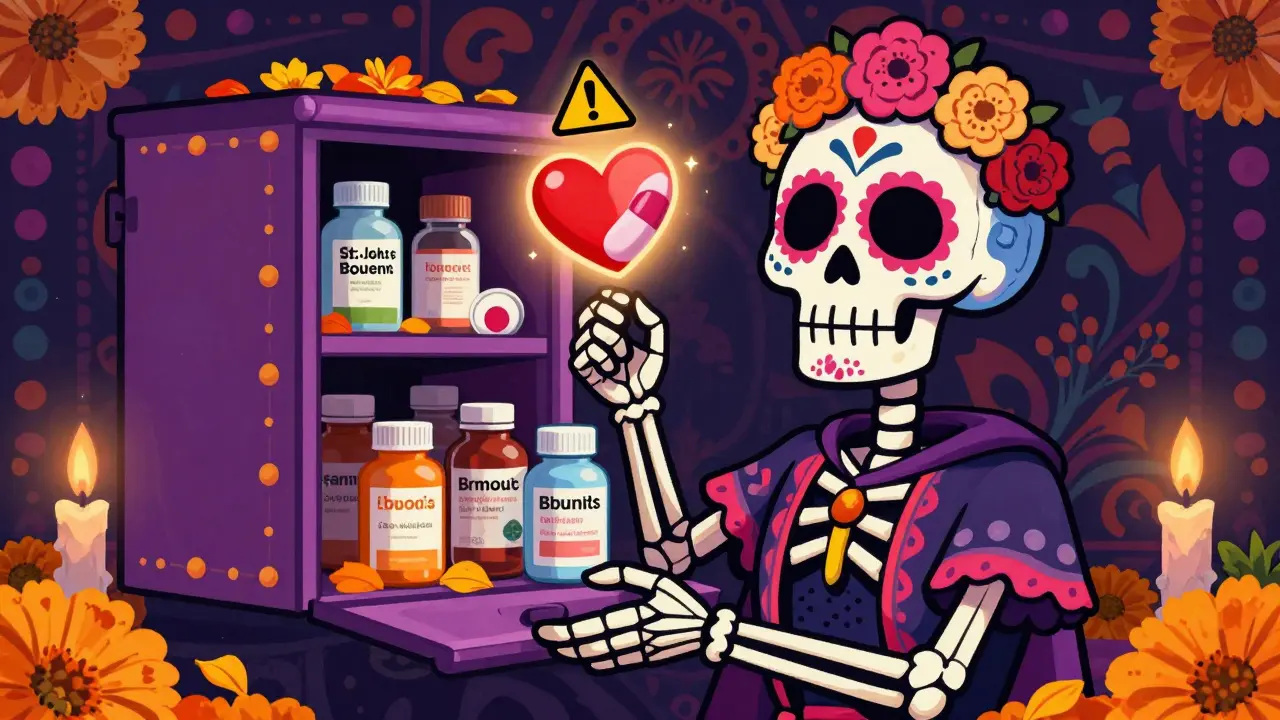
Every year, millions of people take over-the-counter medicines and dietary supplements without telling their doctors. It’s not because they’re hiding anything - it’s because they don’t think it matters. But here’s the truth: OTC medications and supplements can be just as dangerous as prescription drugs when they mix poorly. A simple vitamin, herb, or painkiller you take daily could be quietly interfering with your heart medication, blood thinner, or antidepressant. And if your provider doesn’t know about it, they can’t protect you.
Let’s be clear: this isn’t about judgment. It’s about safety. The FDA recorded over 1,000 serious adverse events linked to supplements in 2022, including 52 deaths. Many of these could have been avoided if someone had simply said, “I take fish oil every morning” or “I use St. John’s Wort for my mood.” But here’s the problem: only 36% of people who take supplements tell their healthcare provider. Meanwhile, 89% of them report their prescription drugs. Why the gap? Because no one asked.
Why Your Provider Needs to Know Everything You’re Taking
Supplements aren’t regulated like prescription drugs. That means they don’t go through the same safety testing before hitting store shelves. The FDA doesn’t approve them ahead of time - it only steps in after something goes wrong. Under the Dietary Supplement Health and Education Act (DSHEA) of 1994, supplement makers only need to prove their products are safe after they’re already on the market. That’s a huge gap in protection.
Take St. John’s Wort, for example. It’s marketed as a natural mood booster. But it can cut the effectiveness of 37 different prescription medications, including birth control pills, antidepressants, and blood thinners. The FDA’s own Director of Dietary Supplement Programs, Dr. Cara Welch, says: “Ingredients are natural or plant derived - they can be active in the body, and problems can occur if consumers take too much of a supplement, combine them with other dietary supplements or medications, or take supplements instead of prescribed medications.”
Even common OTC medicines like ibuprofen or cold remedies can cause trouble. If you’re on blood pressure medication, taking too much decongestant can spike your blood pressure. If you’re on warfarin (a blood thinner), even high-dose fish oil - 1,000 mg or more - can increase your risk of dangerous bleeding. A 2021 case study in the Journal of Patient Safety showed how a 68-year-old woman avoided a life-threatening bleed simply because her doctor found out she was taking daily fish oil. That’s the power of accurate disclosure.
What Counts as a Supplement? (And What Doesn’t)
Many people think “supplements” only mean herbal pills or protein powders. But that’s not true. If it’s not a prescription drug and you’re taking it to improve your health - it’s a supplement. That includes:
- Vitamins (like D, B12, or folic acid)
- Minerals (like magnesium, calcium, or zinc)
- Herbs (like turmeric, echinacea, or ginkgo)
- Probiotics and fish oil
- Energy drinks with added caffeine or herbal extracts
- Topical creams with active ingredients like arnica or CBD
And here’s where confusion hits: OTC medicines have a Drug Facts label. Supplements have a Supplement Facts label. They look similar, but they’re not the same. The FDA requires Drug Facts labels to list active ingredients by therapeutic dose. Supplement Facts labels? They just list weight - like “500mg vitamin C.” No context. No safety guidance. That’s why you can’t assume a supplement is safe just because it’s on the shelf.
And don’t be fooled by words like “natural” or “organic.” Comfrey and kava are plant-based - but they’ve been linked to severe liver damage. The American Liver Foundation warns that these substances can be deadly when mixed with certain medications. Yet 64% of patients don’t even consider vitamins and minerals as “supplements” that need to be discussed.
The Right Way to Track Your Medications and Supplements
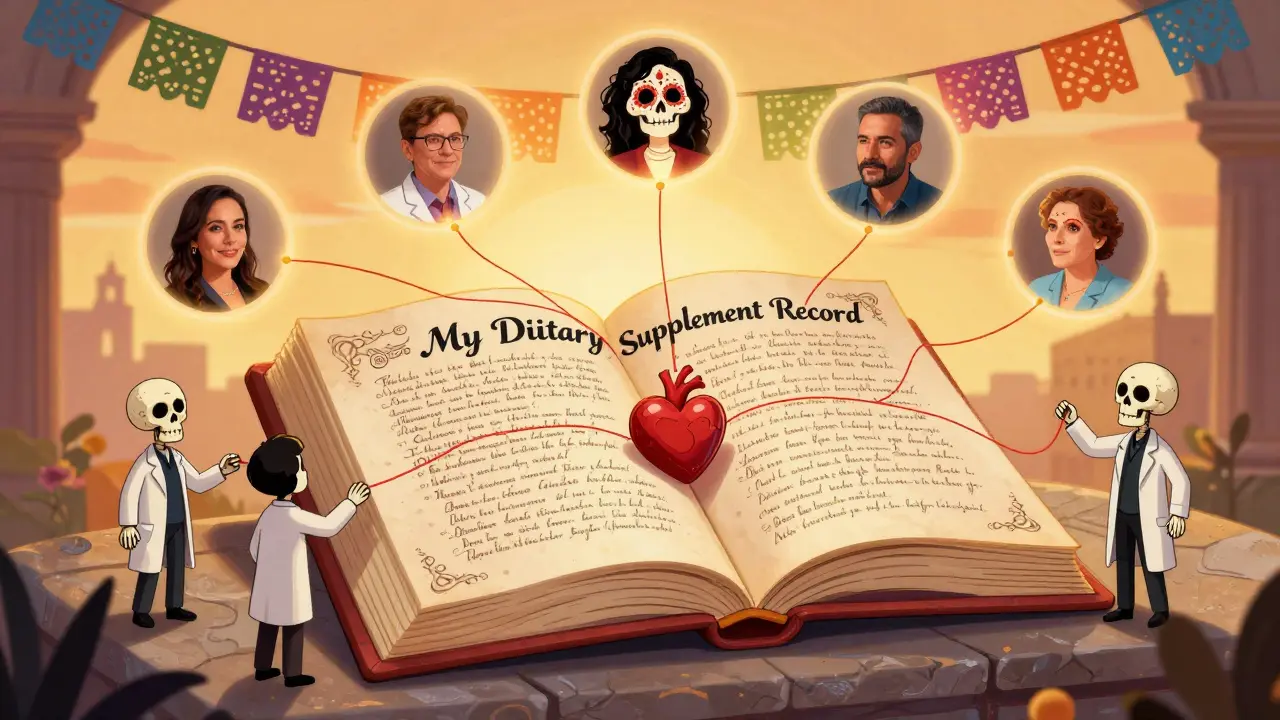
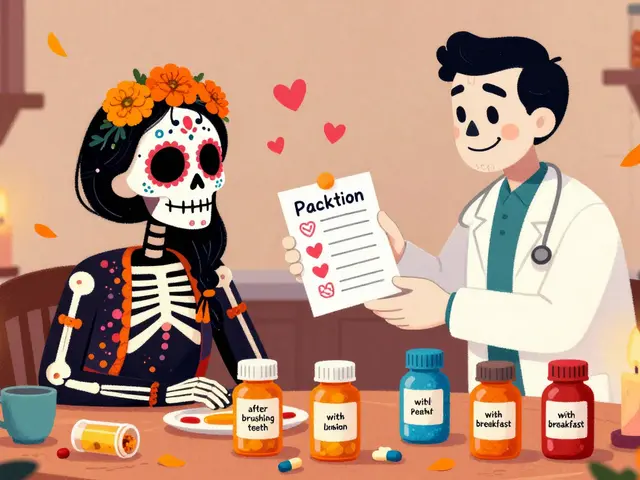
Verbal reporting doesn’t cut it. People forget. They misremember doses. They don’t know the exact name of the product. That’s why the National Institutes of Health (NIH) created a simple, free tool: the My Dietary Supplement and Medicine Record.
Here’s how to use it:
- Write down every product - even the ones you take “just once in a while.”
- Use the exact product name, not just the ingredient. “Vitamin C” isn’t enough. Write: “Nature Made Vitamin C 500mg.”
- Include dosage and frequency. Not “I take vitamin D.” Write: “2,000 IU daily, taken with breakfast.”
- Write why you take it. “For bone health” or “for joint pain” helps your provider understand context.
- Update it every time you change something. Even if you stop a supplement for a week, note it.
A 2020 study across 12 primary care clinics found that patients who used this written form reduced documentation errors by 64% compared to those who just told their doctor verbally. That’s not a small difference - it’s the difference between a missed interaction and a life saved.
Who Should Ask - and When?
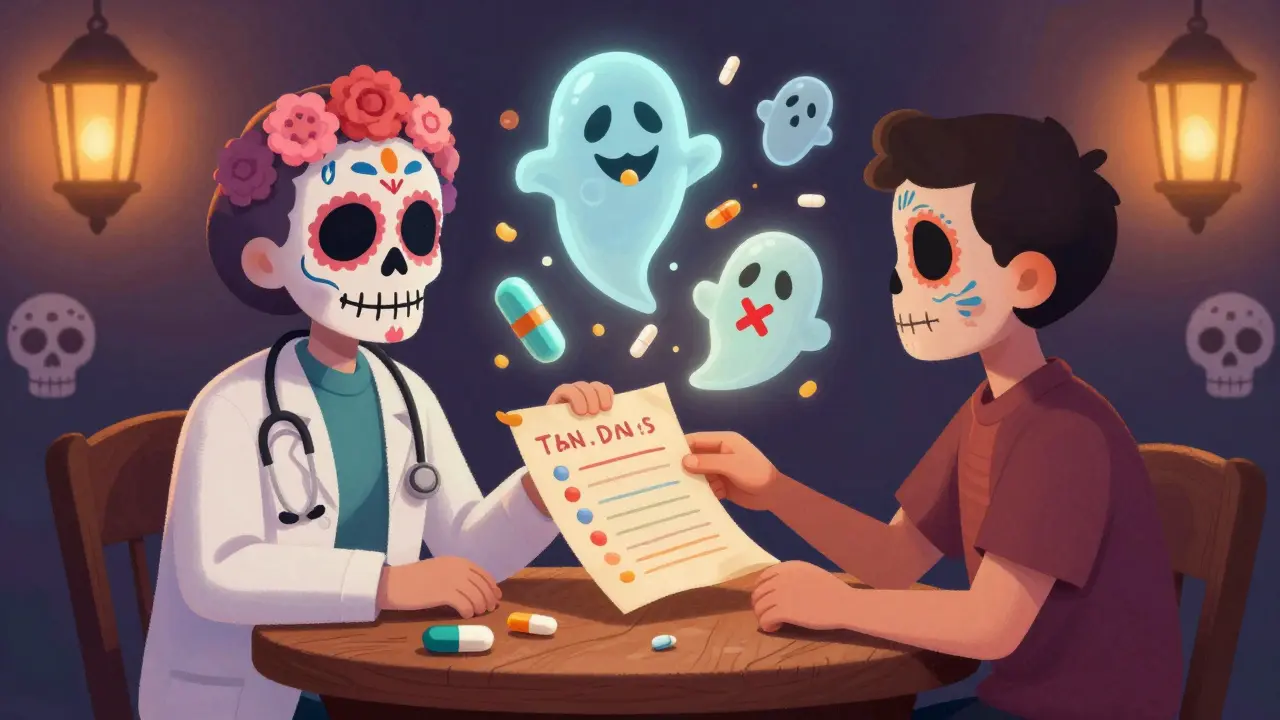
Patients shouldn’t have to volunteer this information. Providers should ask. Every time.
The American Medical Association’s 2022 ethics guidance says clinicians should ask about supplements at every visit - not just during annual checkups. And guess what? The data backs this up. A 2021 study in the Journal of General Internal Medicine found that pharmacists identified 3.2 times more potential interactions than physicians during medication reviews. Why? Because pharmacists are trained to look for them. They check every pill, capsule, and powder.
But here’s the reality: only 22% of healthcare providers routinely screen for supplement use. And 52.7% of patients who don’t disclose say their provider never asked. That’s a system failure. You shouldn’t have to remember to tell your doctor about your supplements. They should be asking.
That’s why places like Mayo Clinic now make supplement screening mandatory during every patient intake. Since 2020, they’ve cut supplement-related adverse events by 37%. That’s not luck - it’s protocol.
What Happens When You Don’t Tell
The consequences aren’t theoretical. In 2019, a 45-year-old woman died from acute liver failure. She was taking kava supplements for anxiety while on antipsychotic medication. Her providers never knew she was using it. The autopsy found high levels of kava in her liver. This isn’t rare. The FDA’s Adverse Event Reporting System shows that 73% more interactions go undetected because supplements aren’t documented.
And it’s not just about death. A 2022 Consumer Reports survey of 2,500 supplement users found that 56% had experienced side effects - dizziness, nausea, irregular heartbeat - and didn’t report them. Why? “I didn’t think it was important,” said 63% of them.
Meanwhile, providers who actually ask about supplements get 4.7 out of 5.0 patient satisfaction ratings. Those who don’t? Only 3.2. Patients notice when you care enough to ask.
What You Can Do Right Now
You don’t need to wait for your next appointment. Start today:
- Go through your medicine cabinet. Write down everything you take - even the little ones.
- Use the NIH form. Download it free from ods.od.nih.gov (no link in final output).
- Bring it to your next visit. Hand it to your provider. Say: “I want to make sure we’re not missing anything.”
- If they don’t ask, ask them: “Do you check for supplement interactions?”
- Update your list every time you add, stop, or change a product.
And if you’re a caregiver for someone older - help them do this. Many seniors take 5, 10, even 15 different products. They don’t remember them all. A written list is their safety net.
The Future Is Digital - But You Still Need to Act Now
The good news? Change is coming. Epic Systems announced in June 2023 that their 2024 software update will include AI-powered screening for supplement-drug interactions, pulling from over 14,700 supplement products. The FDA is also moving toward mandatory digital product IDs for supplements by 2024. And the Office of the National Coordinator for Health Information Technology is pushing for standardized supplement fields in all electronic health records by 2025.
But here’s the catch: technology won’t fix what people don’t report. Even the smartest AI can’t guess what you didn’t tell your doctor. The most advanced system in the world won’t help if your list is still scribbled on a napkin - or worse, stuck in your head.
So don’t wait for the system to catch up. Take control now. Your safety doesn’t depend on regulations - it depends on you speaking up.






Ugh, I can't believe people still think 'natural' means safe. I had a friend who took turmeric with her blood thinner and ended up in the ER. She swore it was 'just a supplement.' Like, honey, if it's strong enough to change your blood chemistry, it's strong enough to kill you.
I keep a laminated card in my wallet now. Every pill, every drop, every gummy. My pharmacist knows me by name. And honestly? I feel safer. Why wouldn't you do the same?
Supplements aren’t regulated. That’s the point. The FDA doesn’t approve them. They’re literally untested poison with a label.
St. John’s Wort? It’s a drug. Just not one you can legally prescribe. That’s why Big Pharma hates this system. They can’t patent a plant.
Read DSHEA. It’s a loophole written by lobbyists. You’re not ‘taking supplements.’ You’re playing Russian roulette with your liver.
Myth: ‘I only take vitamins.’ Reality: The NIH defines ‘supplement’ as any non-prescription bioactive agent. That includes your ‘natural’ energy drink with 200mg caffeine + yerba mate + guarana. You’re not ‘boosting energy.’ You’re stacking stimulants like a chemist.
And if you’re on beta-blockers? You’re one missed dose from cardiac arrest. This isn’t wellness. It’s biohacking without a license.
Dear friend, I must express with deep sincerity that this post resonates profoundly with my own professional experience as a clinical herbalist in Mumbai.
In India, Ayurvedic formulations are often taken alongside Western medications without any dialogue between practitioners. I have witnessed patients on antihypertensives consuming ashwagandha powder daily, unaware that it may potentiate hypotension to dangerous levels.
It is not ignorance, but cultural disconnection between systems of healing. We must foster intermodal communication-not judgment. Perhaps a standardized supplement log, translated into regional languages, could bridge this gap.
With utmost respect for your advocacy, I humbly suggest that education must be culturally grounded to be effective.
lol i just started taking magnesium for sleep and my doc never asked. i mean, it's just a mineral right? i'm not some kind of drug addict.
wait... did u say it can mess with my blood pressure med? oh no. i think i took it yesterday. ugh. i'm gonna go check the bottle again. it says 'magnesium citrate 400mg'... but is that the element or the compound? idk. my brain hurts.
also i think i might have taken it with my coffee. did i just cause a reaction? am i dying? 🤢
I used to think supplements were harmless... until I saw my mom’s chart after her stroke.
She’d been taking ginkgo for ‘memory’-and it was interacting with her warfarin. The doctors said if she’d told them, they could’ve adjusted her dose. She almost didn’t make it.
I don’t yell. I don’t lecture. I just hand people the NIH form. Quietly. Gently. Like, ‘Hey, I made this for my mom. Thought you might find it helpful.’
You don’t need to be dramatic to save someone’s life. Just consistent.
Y’all are overthinking this 😊
Just write it down. Like, literally. On a sticky note. Put it on your fridge. Take a pic of your pill bottle. Send it to your doc in a text. ‘Hey, just FYI I’m taking this stuff.’
Done. Easy. No drama. No guilt.
My grandma’s 82 and she does it every visit. She says, ‘If you don’t tell ‘em, they can’t help ya.’ 💪
It’s not rocket science. Just care enough to share. 🌿❤️
As a registered nurse with 18 years in primary care, I’ve seen firsthand how gaps in communication lead to preventable harm.
Supplement disclosure is not optional. It is a clinical imperative. The absence of a documented supplement list is equivalent to an incomplete medication reconciliation-something we treat as a critical safety lapse.
I now include a mandatory supplement inventory in every intake form. Patients report feeling heard, respected, and safer. The data is clear: structured documentation reduces adverse events by over 60%.
Let’s stop treating this as a ‘nice-to-have’ and recognize it as a standard of care. Our patients deserve nothing less.
My brother died from a supplement interaction. No one knew he was taking it. No one asked.
I don’t blame anyone. I just wish someone had just said, ‘Hey, what else are you taking?’
So now? I ask everyone. Friends. Family. Strangers on the bus. (Okay, not strangers. But you get it.)
It’s not about being pushy. It’s about being human.
And if you’re reading this? Take five minutes. Write it down. You might just save a life. 🤝