

How to Prevent Overdose with Patch, Liquid, and Extended-Release Medications
Overdose isn’t just about street drugs. Many people don’t realize that prescription medications-especially patches, liquids, and extended-release pills-can be just as dangerous, if not more so, than illicit drugs when used incorrectly. These forms are designed to deliver medicine slowly and steadily, but if you break that system, you can get a deadly dose all at once. In 2023, over 70% of drug overdose deaths in the U.S. involved opioids, and many of those came from improperly used prescription forms. Knowing how to handle these medications safely isn’t just smart-it can save your life or someone else’s.
Why Patches Are Riskier Than They Look
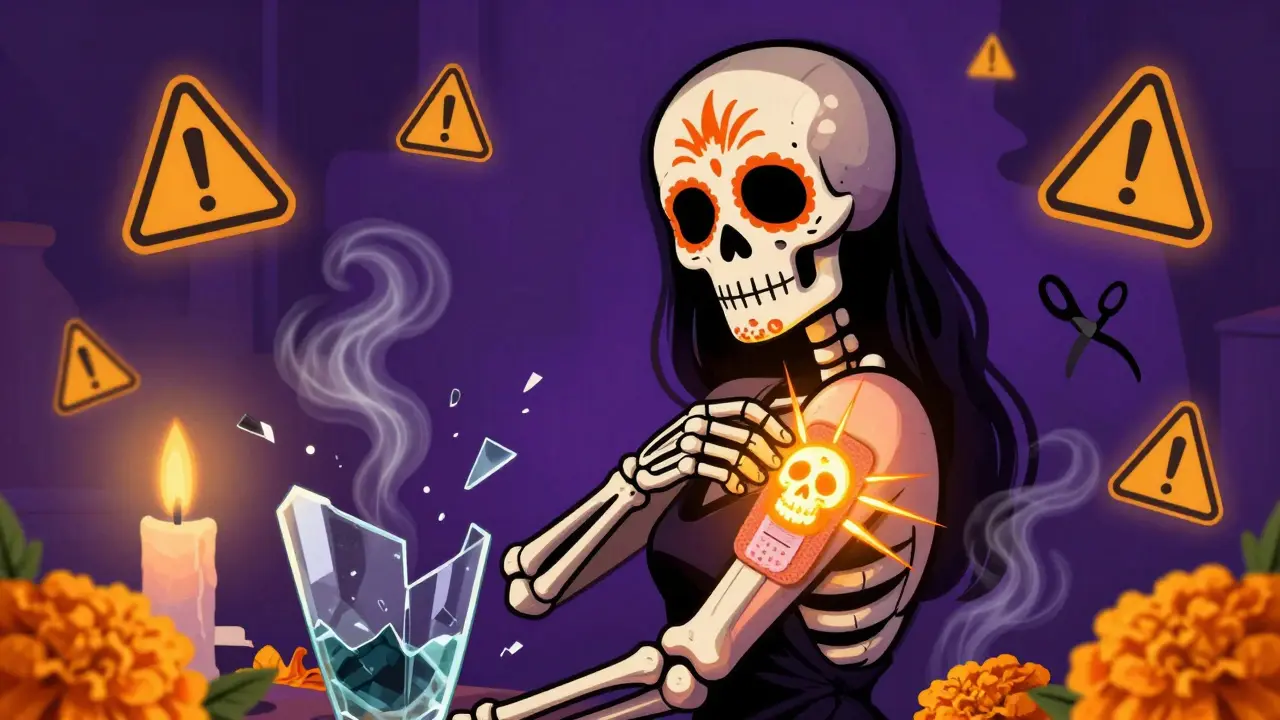
Fentanyl patches, used for chronic pain, are one of the most misunderstood medications out there. They look like small bandages, but they contain enough drug to kill someone who’s never used opioids before. The danger isn’t in wearing the patch as directed-it’s in what people do to it.Some people cut patches open to get the gel inside, thinking they can speed up relief. Others stick them to their skin for longer than prescribed, or even heat them with a heating pad or hot water bottle to pull out more drug. These actions bypass the slow-release design and flood the body with fentanyl all at once. A single 25-mcg/hour patch contains enough fentanyl to kill 10 adults who don’t have opioid tolerance.
Never cut, chew, or heat a patch. If the patch falls off, don’t reapply it. Use a new one and tell your doctor. Store patches out of reach of children and pets-even a used patch can still contain enough drug to be lethal. When you’re done, fold the patch in half with the sticky sides together and flush it down the toilet or take it to a drug take-back site. Don’t throw it in the trash.
How Liquid Medications Can Trick You
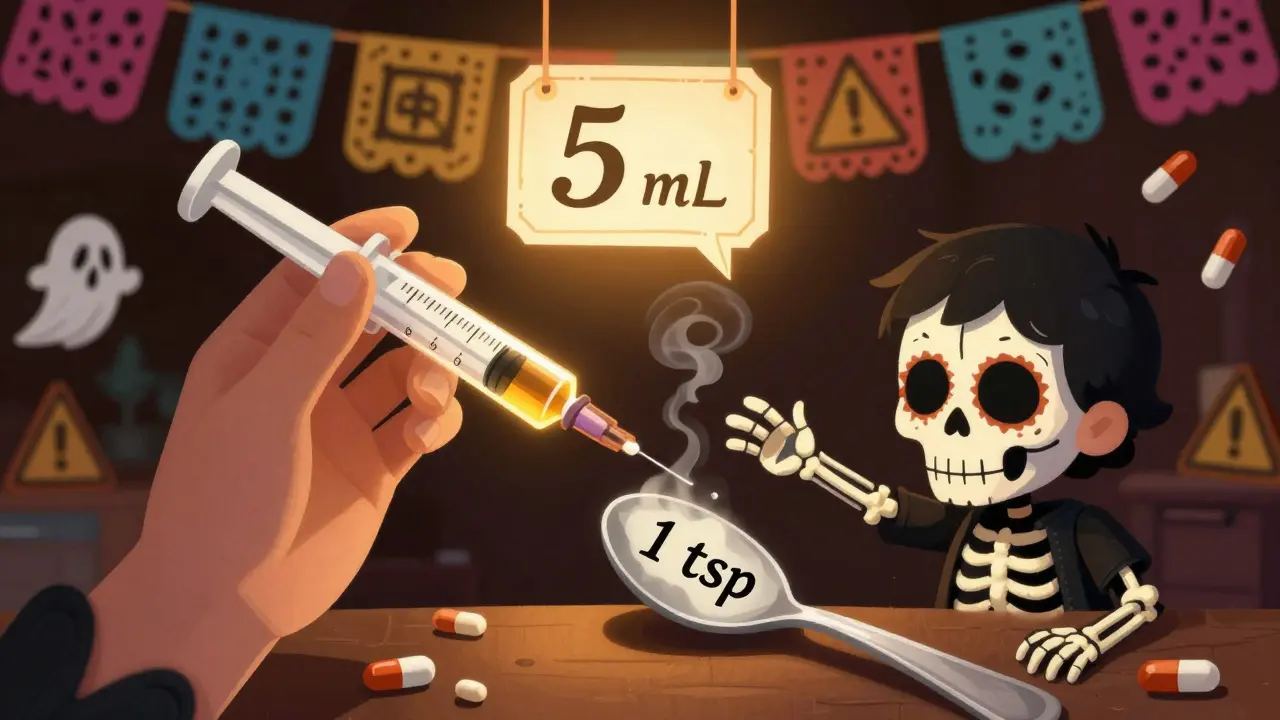
Liquid opioids-like morphine solution or cough syrups with codeine-are easy to use, but that’s also what makes them dangerous. A teaspoon might seem like a small amount, but if you’re using the wrong measuring tool, you could be giving yourself twice the dose.Never use a kitchen spoon to measure liquid medicine. A tablespoon from your cupboard holds way more than the 5 mL a medical spoon does. Always use the syringe, cup, or dropper that came with the bottle. If it’s missing, ask your pharmacy for a new one. Free ones are often available.
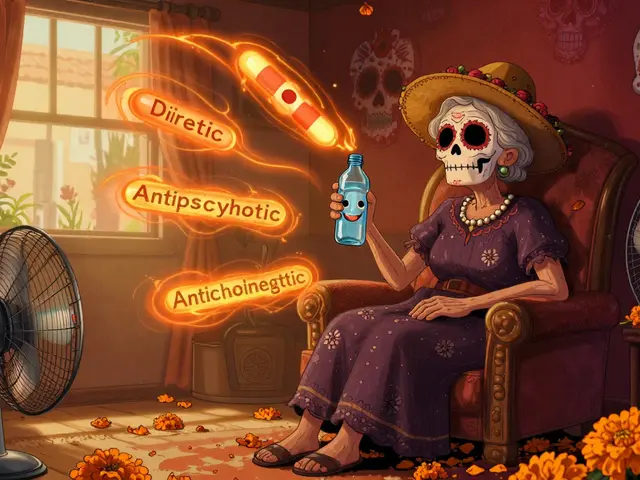
Another hidden risk? Mixing liquids. Some people combine liquid pain meds with alcohol, sleep aids, or benzodiazepines like Xanax. This is deadly. All of these drugs slow your breathing. Together, they can stop it completely. Even if you’ve used each one safely before, combining them changes the game. A 2022 study found that over 60% of opioid-related deaths involved at least one other central nervous system depressant.
Also, don’t assume all clear liquids are the same. A bottle of liquid oxycodone and a bottle of liquid hydrocodone might look identical. One might be 5 mg per 5 mL, the other 10 mg. Always check the label twice. If you’re unsure, call your pharmacist. They’re trained to catch these mistakes.
Extended-Release Pills: The Silent Killer
Extended-release pills like OxyContin, MS Contin, or generic morphine ER are made to last 8 to 12 hours. They have a special coating or matrix that controls how fast the drug enters your bloodstream. But if you crush, chew, or dissolve them, you destroy that system-and get the full dose all at once.People do this for different reasons. Some think it’ll give them faster pain relief. Others do it to get high. Either way, it’s a gamble with your life. A single 80 mg OxyContin tablet, when crushed and snorted or injected, delivers the same amount of oxycodone as 16 regular 5 mg pills. That’s enough to stop breathing in someone without opioid tolerance.
Never alter these pills. Swallow them whole. If you can’t swallow pills, ask your doctor for an alternative form-like a liquid or patch. Don’t try to grind them up or mix them into food. Even if you’ve taken them safely for months, changing how you take them can be fatal.
Also, be careful with timing. Taking an extra dose because you think it’s not working? That’s a common mistake. Extended-release meds take time to build up in your system. If you take another pill too soon, you could overdose before the first one even kicks in. Always stick to the schedule your doctor gave you.
Naloxone: Your Lifeline, But Not a Cure-All
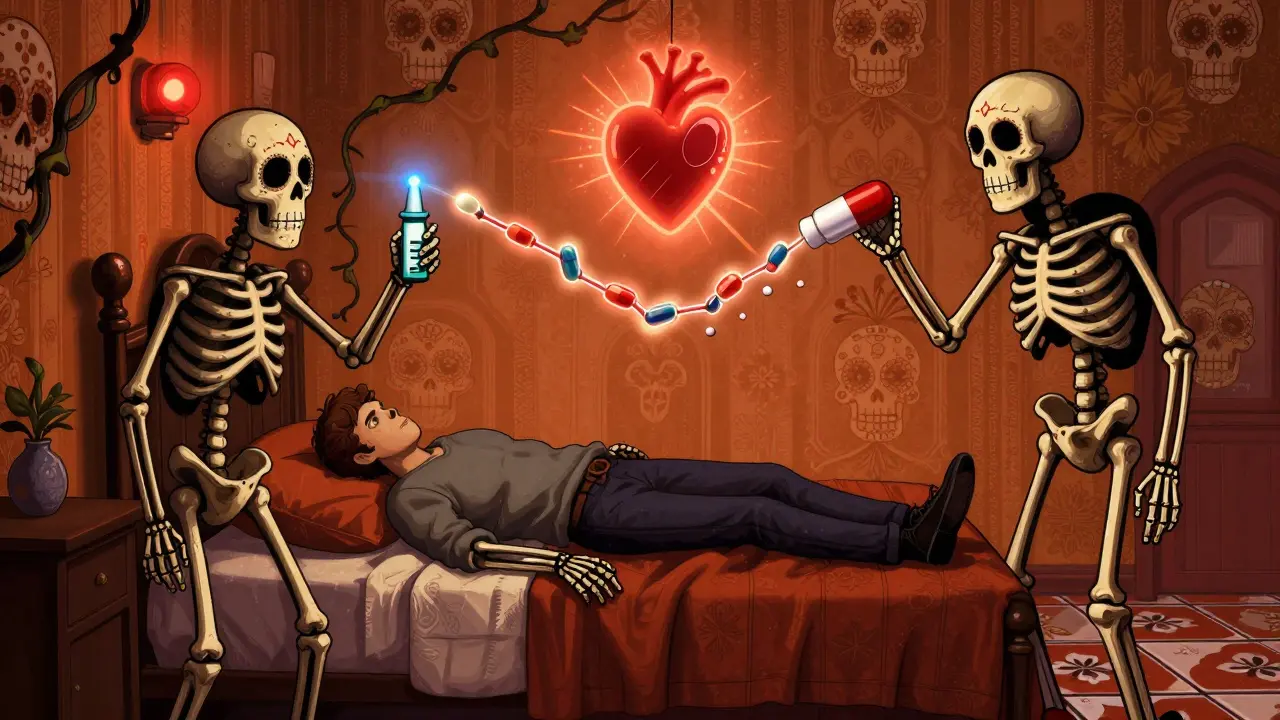
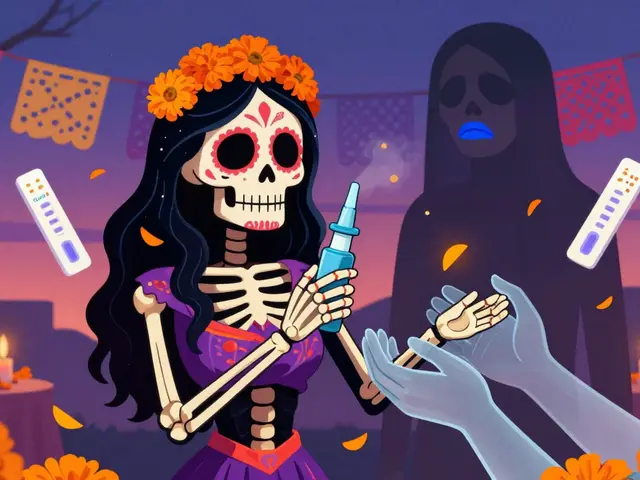
Naloxone is the one drug that can reverse an opioid overdose. It’s available without a prescription in most states and countries, including Australia. Keep it in your home, your bag, your car. If someone you know uses opioids-even if it’s just for pain-have naloxone on hand.But here’s the catch: naloxone doesn’t last forever. It works for 30 to 90 minutes. Extended-release pills, patches, and some liquids keep releasing opioids for hours-even days. That means after naloxone wears off, the person can go back into overdose. This is called renarcotization.
That’s why calling emergency services is non-negotiable. Even if naloxone brings someone back, they still need medical care. Don’t wait. Don’t hope they’ll be fine. Call 911 or your local emergency number immediately. In Australia, that’s 000. You won’t get in trouble for calling. Good Samaritan laws protect you.
Keep naloxone in a cool, dry place. Check the expiration date. If it’s expired, replace it. Many pharmacies give it out for free. Ask for it when you pick up your prescription. Learn how to use it. Watch a quick video on YouTube-there are official ones from health departments. Practice with a training kit. You’ll be glad you did.
What to Do If Someone Overdoses
If you see someone who’s unresponsive, not breathing, or making gurgling sounds, act fast:- Shout their name and shake their shoulders. If no response, call emergency services right away.
- Give naloxone if you have it. Spray it into their nose or inject it into their thigh.
- Start chest compressions if they’re not breathing. Push hard and fast in the center of the chest. Don’t stop until help arrives.
- Stay with them. Even if they wake up, they’re not safe yet. Keep monitoring.
- Don’t put them in the shower, slap them, or try to make them walk it off. Those myths get people killed.
One of the biggest mistakes people make is waiting to see if the person "gets better on their own." They don’t. Opioid overdoses don’t resolve without help. Every minute counts.
Prevention Starts with Communication
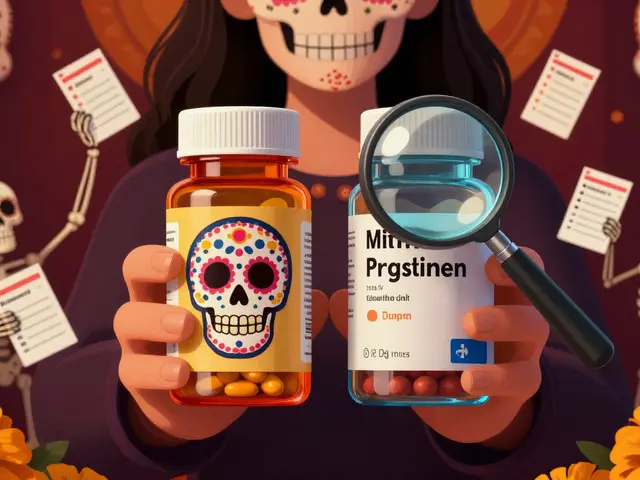
Talk to your doctor about your pain. Ask if there’s a safer alternative to opioids. Ask about non-drug options like physical therapy, nerve blocks, or cognitive behavioral therapy. If you’re on a patch or extended-release pill, ask if you really need it long-term.Ask your pharmacist to review all your meds-prescription, over-the-counter, supplements. They can spot dangerous combinations. Many pharmacies now offer free med reviews.
If you’re helping someone who uses these medications, don’t shame them. Shame keeps people silent. Instead, say: "I care about you. I want you to be safe. Let’s talk about naloxone." Keep the conversation open. People who feel supported are more likely to use harm reduction tools.
Final Reminder: It’s Not About Willpower
Overdose isn’t a sign of weakness. It’s a medical emergency caused by how these drugs work-and how easy it is to accidentally break the safety systems built into them. A person doesn’t need to be addicted to overdose. They just need to misunderstand one thing: that a slow-release pill isn’t meant to be crushed, that a patch isn’t meant to be heated, that a liquid isn’t meant to be measured with a spoon.Knowing how to handle these medications correctly isn’t complicated. It’s simple: follow the label. Use the right tools. Keep naloxone nearby. Call for help. Talk openly. These steps don’t require a degree. They just require attention.
Every year, thousands of people die from overdoses that could have been prevented. You can change that-for yourself, for someone you love. Start today.
Can I cut a fentanyl patch to get more pain relief?
No. Cutting a fentanyl patch destroys its controlled-release design and can release the entire dose at once, which can be fatal. Always use the patch as directed-on clean, dry skin, for the exact time prescribed. Never heat it, chew it, or try to extract the gel inside.
Is it safe to mix liquid opioids with alcohol?
No. Mixing liquid opioids with alcohol, benzodiazepines, or sleep aids can severely slow or stop your breathing. This combination is one of the leading causes of fatal overdoses. Even small amounts of alcohol can be dangerous when combined with opioid liquids. Always check with your doctor or pharmacist before mixing any substances.
What should I do if I accidentally crush an extended-release pill?
If you’ve crushed or chewed an extended-release pill, seek medical help immediately-even if you feel fine. You may have taken a full dose all at once. Call your doctor or go to the nearest emergency room. Do not wait for symptoms to appear. Delaying care can be deadly.
How do I know if I’m using the right measuring tool for liquid medicine?
Always use the syringe, cup, or dropper that came with the medication. Kitchen spoons vary in size and can deliver 2-3 times the correct dose. If you lost the tool, ask your pharmacy for a free replacement. Most pharmacies keep extras on hand. Never guess the dose.
Can naloxone be used more than once during an overdose?
Yes. If someone revives after naloxone but then goes back into overdose-which often happens with extended-release or patch medications-give another dose. Naloxone wears off in 30-90 minutes, but opioids can stay in the body for hours. Keep naloxone handy and be ready to give more if needed. Always call emergency services, even if you use naloxone.
Where can I get naloxone for free in Australia?
In Australia, naloxone is available for free at many community pharmacies without a prescription. You can also get it through local needle and syringe programs, drug and alcohol services, and some community health centers. Ask your pharmacist or call the National Drug and Alcohol Hotline at 1800 250 015 for help finding a location near you.
Next Steps for Safer Medication Use
If you or someone you care about uses patches, liquids, or extended-release medications:- Get naloxone today-even if you think you don’t need it.
- Learn how to use it. Watch a 3-minute video on the official health department website.
- Store medications safely: locked up, away from kids, pets, and visitors.
- Dispose of used patches properly: fold sticky sides together and flush.
- Ask your doctor: "Is there a safer alternative to this medication?"
- Keep a list of all your meds and share it with your pharmacist every 6 months.
These steps don’t take much time. But they can mean the difference between life and death.
I never realized a patch could kill someone just by being heated. So simple, so dangerous. 🤯
This is the kind of info every family should have. I just got my naloxone kit from the pharmacy-free, no questions asked. Seriously, do it. 💪❤️
The data cited here is statistically significant and aligns with CDC 2023 mortality reports. However, the omission of regional prescribing variations-particularly in rural vs. urban settings-limits the generalizability of the advice. Further epidemiological context would strengthen this piece.
I’ve been on extended-release meds for years. I always swallow them whole. But I didn’t know about flushing used patches. I’ve been tossing them in the trash. Time to fix that. Thanks for the wake-up call.
People need to stop being so careless with meds. If you don’t know how to use it, don’t take it. Simple. Why do we need a whole article for this?
bro i just found out my cousin was crushing his oxycontin because he said the pain was "too slow". i showed him this post. he cried. said he didn’t know. we got him naloxone today. thank u for writing this
I used to mix my liquid pain meds with whiskey when I was in college. Never thought it’d be deadly. Now I don’t even drink around meds. This post saved me from a future mistake.
I’m from a small town where everyone just takes what the doctor gives them without asking. I’m printing this out and handing it to my neighbor who’s on fentanyl patches. She’s 72 and doesn’t know any of this. Let’s keep people alive, one conversation at a time. 🌱
The structural integrity of pharmaceutical delivery systems is an elegant feat of biomedical engineering-yet tragically, human behavior often undermines it. The fentanyl patch, for instance, employs a reservoir-based matrix designed to modulate transdermal flux over 72 hours. Compromising this mechanism-via thermal augmentation, mechanical disruption, or solvent extraction-results in a pharmacokinetic cascade that overwhelms opioid receptors, precipitating respiratory depression. The societal imperative here is not merely education, but systemic reinforcement: mandatory pharmacist counseling, standardized patient handouts, and naloxone co-prescribing as a default protocol. This is not a matter of personal responsibility alone; it is a public health architecture in need of urgent recalibration.
America is weak. People die because they’re too lazy to read the label. In India, we don’t have this problem. We take meds like adults.