Medication Storage and Disposal: How to Safely Handle Prescriptions at Home and Beyond
Every year, millions of unused or expired medications end up in homes, toilets, and landfills - not because people are careless, but because they don’t know any better. You might think flushing an old painkiller or tossing a bottle of antibiotics in the trash is harmless. It’s not. And it’s not just an environmental issue - it’s a public safety crisis. In Australia, as in many countries, improper storage and disposal of prescription drugs contribute to accidental poisonings, drug misuse, and water contamination. The good news? You can fix this - easily - with a few simple steps.
How to Store Medications Correctly
Where you keep your meds matters more than you think. Heat, moisture, and light can break down active ingredients, making pills useless or even dangerous. The FDA recommends storing most medications at room temperature: between 20°C and 25°C. That’s your cupboard, not the bathroom. Humidity from showers can ruin tablets and capsules. Same goes for the kitchen - too close to the stove or oven, and you’re risking heat damage.
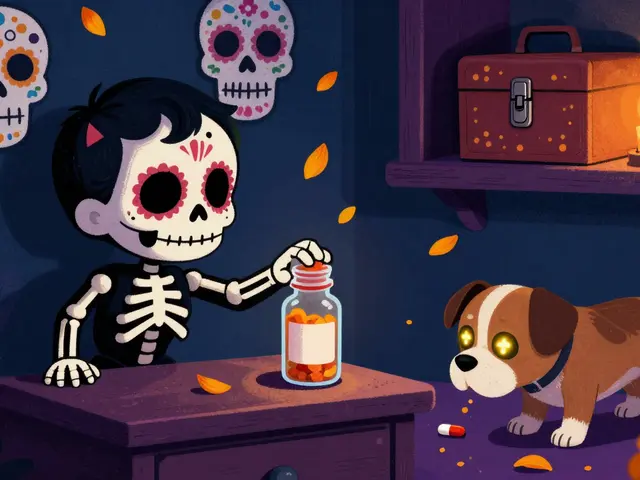
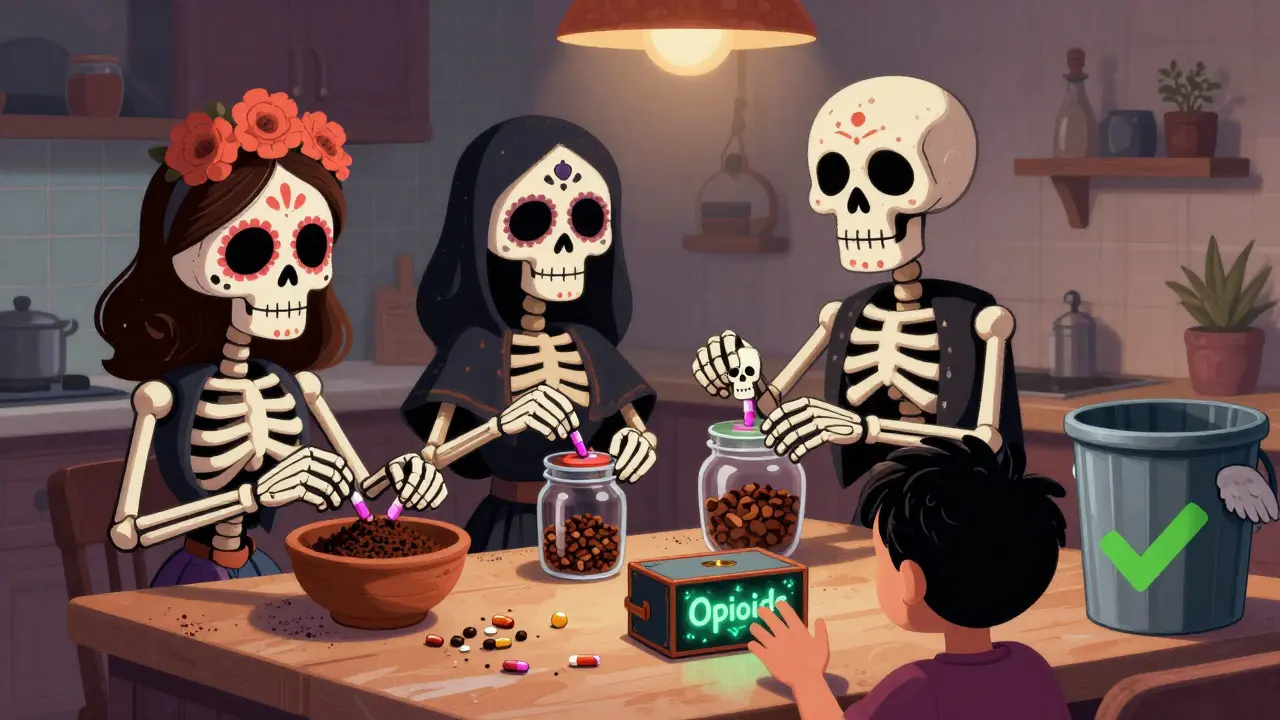
Controlled substances like opioids, benzodiazepines, or stimulants? These need extra care. A locked box or medicine safe is not optional - it’s essential. One in five households in Australia has at least one unsecured prescription opioid, according to national health surveys. That’s a child or a visitor with access to a powerful drug. Keep these out of reach of kids, teens, and pets. Even a single pill can be lethal to a small dog or toddler.
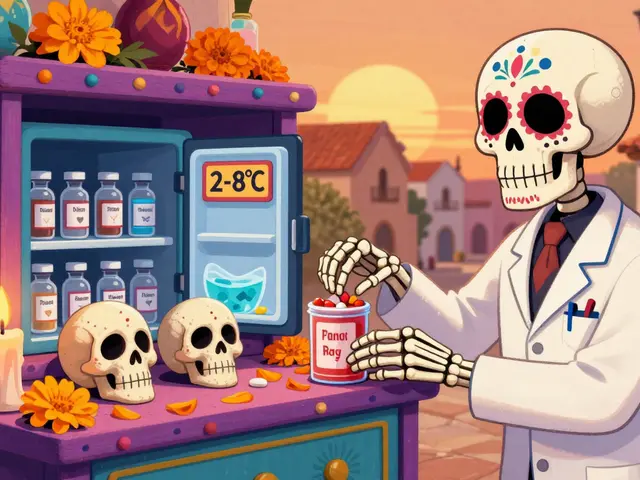
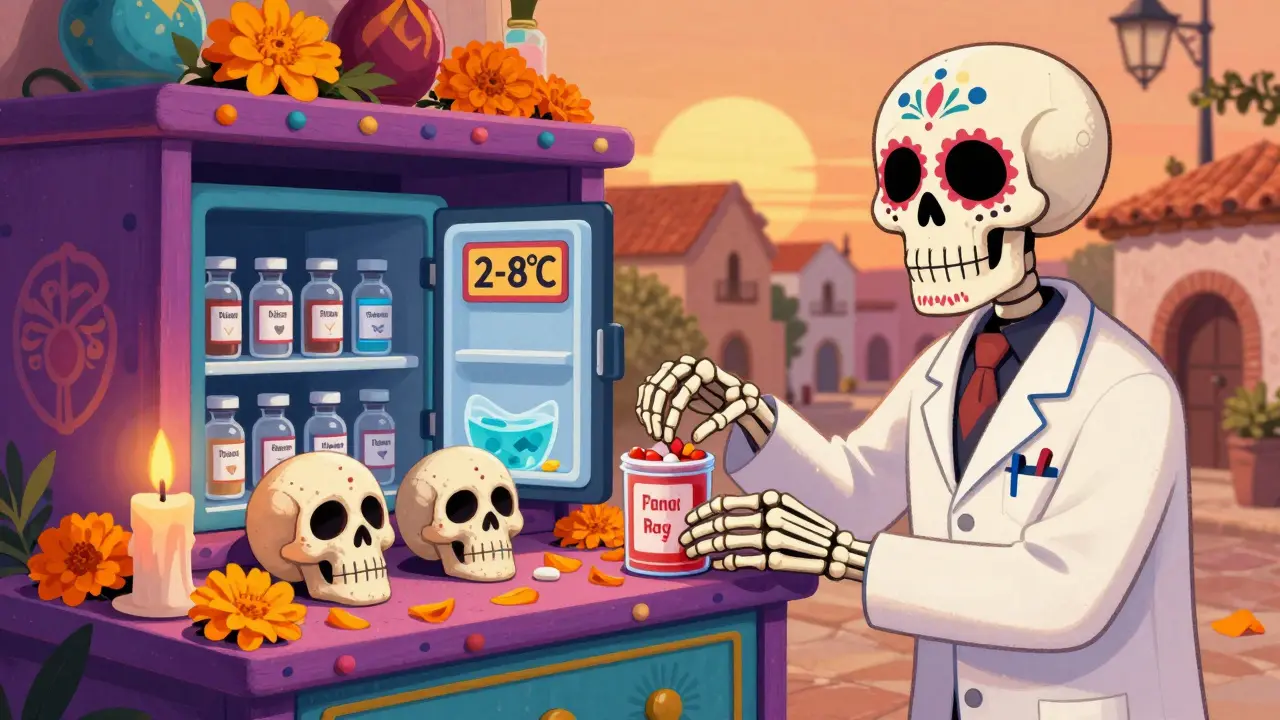
Some meds need refrigeration - insulin, certain eye drops, and biologics. These should stay between 2°C and 8°C. Don’t freeze them. Don’t leave them in the fridge door. The temperature fluctuates too much. Use a dedicated bin or shelf. Label it clearly. And check expiration dates every six months. Expired insulin doesn’t just lose potency - it can cause dangerous spikes in blood sugar.
Why You Should Never Flush Medications
You’ve probably heard the old advice: "If in doubt, flush it." That was true for a handful of dangerous drugs - but only because there were no better options. That changed in 2019. The EPA’s Subpart P rule now bans flushing hazardous pharmaceutical waste down the drain. Why? Because trace amounts of drugs end up in rivers, lakes, and drinking water. Studies show detectable levels of antidepressants, birth control hormones, and antibiotics in water supplies across Australia and the U.S. Fish are showing signs of hormonal disruption. Microplastics from pill coatings are now found in tap water.
The EPA estimates that improper disposal contributes to 247 million pounds of pharmaceuticals entering U.S. waterways every year. While Australia doesn’t track this exact number, water quality reports from Melbourne’s catchments show rising traces of pharmaceutical compounds over the last decade. Flushing isn’t just outdated - it’s harmful.
There are only two exceptions to the no-flush rule: the FDA’s official "flush list." As of 2023, this includes 15 opioid pain medications (like fentanyl patches and oxycodone tablets) and one benzodiazepine (alprazolam). These are high-risk drugs that can kill if misused. If you have one of these and can’t get to a take-back site, flushing is the safest option - but only if no other option exists.
How to Dispose of Medications at Home
For the vast majority of prescriptions, the right way to dispose of them is simple:
- Remove pills or liquids from their original bottles.
- Mix them with something unappetizing - used coffee grounds, cat litter, or dirt. Don’t crush pills unless the label says it’s safe (some extended-release pills can become dangerous if crushed).
- Put the mixture into a sealed plastic bag or container - a jar with a tight lid works too.
- Scratch out or black out your name and prescription number on the empty bottle.
- Throw the sealed container in your household trash.
This method reduces contamination risk by 99.8% compared to flushing, according to FDA testing. It’s fast - takes five minutes. And it’s legal everywhere. No need to wait for a take-back day. No need to drive across town.
Pro tip: If you have liquid medications, mix them with kitty litter or flour before sealing. This prevents spills and makes the liquid unappealing to scavengers. Don’t pour it down the sink. Ever.
Take-Back Programs: Your Best Option
The safest, most environmentally responsible way to dispose of any medication is through a take-back program. These are run by pharmacies, hospitals, or law enforcement agencies. In Australia, the National Drug Strategy includes permanent take-back bins in over 1,200 pharmacies nationwide. You can drop off any unused prescription - no questions asked.
These bins accept everything: pills, patches, gels, inhalers. Even controlled substances. Unlike in the U.S., where DEA rules limit take-backs to "ultimate users," Australia’s system is designed for easy public access. You don’t need a receipt. You don’t need to explain why you’re dropping it off. Just walk in, hand over the meds, and go.
Since 2018, Australian pharmacies have collected over 1.2 million kilograms of unused medications. That’s 1,200 tonnes of drugs kept out of landfills and waterways. If you’re unsure where to go, check with your local pharmacist or visit the Therapeutic Goods Administration website for a list of participating outlets.
What About Healthcare Facilities?
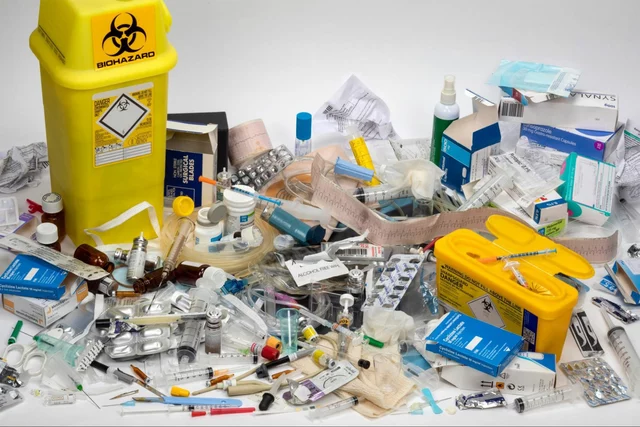
If you work in a clinic, nursing home, or hospital, the rules are stricter. The EPA’s Subpart P regulation applies here too. Hazardous pharmaceutical waste - about 5-10% of all meds - must be stored in leak-proof, labeled containers, kept in secure areas, and shipped to licensed incineration facilities. It can’t go in regular trash. It can’t go down the drain. It can’t be mixed with non-hazardous waste.
Facilities must train staff annually on waste segregation. Nurses and pharmacists need to know the difference between a P-listed drug (like warfarin or nicotine) and a U-listed one (like cyclophosphamide). Confusion here is common. A 2021 survey found 42% of nurses in Australia weren’t sure which meds were hazardous. That’s why many hospitals now use color-coded bins and digital checklists.
Controlled substances require separate handling. They must be documented, signed out, and destroyed under supervision. You can’t just throw them in a take-back bin. That’s why most hospitals have a dedicated Environmental Health and Safety team. If you’re a staff member, ask them for a training session. It’s your legal responsibility.
What Not to Do
Here’s a quick list of what not to do:
- Don’t flush unless you’re dealing with a drug on the FDA’s official flush list.
- Don’t pour liquids down the sink or toilet.
- Don’t throw empty bottles in recycling - they may still have residue. Seal them in trash.
- Don’t share prescriptions with family or friends - even if they have similar symptoms.
- Don’t assume that expired meds are safe to keep. Some, like antibiotics, can become toxic.
What’s Changing in 2025?
The rules keep evolving. By 2025, Australia is expected to roll out smart disposal kiosks in public pharmacies - similar to those piloted in U.S. hospitals. These machines scan your prescription label, identify the drug, and automatically route it to the correct disposal stream. No more guesswork.
Pharmaceutical manufacturers are also being held more accountable. New producer responsibility models mean drug companies will pay for disposal programs. This is already happening in Europe, and Australia is moving in that direction. Expect to see more take-back bins, more public education, and fewer excuses.
For now, the message is clear: medication storage and disposal isn’t optional. It’s part of responsible healthcare. Whether you’re managing your own prescriptions or handling them at work, your actions have consequences - for your family, your community, and the environment.
Can I flush old medications if there’s no take-back bin nearby?
Only if the medication is on the FDA’s official flush list - which includes 15 powerful opioids and one benzodiazepine. For everything else, mix it with coffee grounds or cat litter, seal it in a plastic bag, and throw it in the trash. Flushing other drugs harms water systems and is against federal guidelines.
What should I do with empty pill bottles?
Scratch out or cover your name and prescription number with a permanent marker. Then throw the bottle in the regular trash. Don’t recycle it - leftover medication residue can contaminate recycling streams. If you’re concerned about privacy, tear the label into pieces before tossing it.
Is it safe to keep expired medications in case I need them later?
Generally, no. Most medications lose potency after their expiration date. Some, like insulin or epinephrine, can become ineffective or even dangerous. Antibiotics may not work at all, leading to untreated infections. If you’re unsure, bring the bottle to your pharmacist - they can tell you if it’s still safe.
Can I donate unused prescriptions to charity?
In Australia, donating unused medications is not allowed. Unlike in some U.S. states, there are no legal pathways for reusing dispensed prescriptions. Even if unopened, medications are considered contaminated once dispensed. Always use a take-back program instead.
What happens to medications after I drop them off at a take-back bin?
They’re collected and transported to licensed incineration facilities. The waste is burned at high temperatures, which destroys all active ingredients and prevents environmental contamination. The process is monitored to meet strict environmental standards. No drugs are reused, repackaged, or resold.