Safe Storage of Medications: How to Protect Children and Pets from Accidental Poisoning
Medication Storage Safety Calculator
Assess Your Medication Storage Safety
Your Safety Assessment
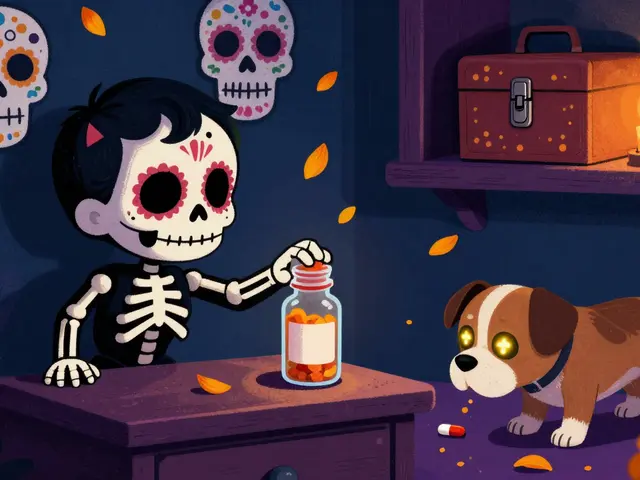
Every year, 60,000 children under age 5 end up in emergency rooms because they swallowed medicine they found lying around. Pets aren’t safe either - dogs and cats are poisoned by human meds more often than you’d think. And it’s not just pills. Liquid cough syrup, skin creams, even pet heartworm pills can be deadly if a child or animal gets into them. The scary part? Most of these incidents are completely preventable.
Where Medications Are Stored (And Why That’s Dangerous)
Most people think they’re safe if they keep meds in a bathroom cabinet or on a nightstand. That’s exactly where the danger lies. A 2023 CDC survey found that 68% of parents leave medications on nightstands, countertops, or in purses - places a toddler can reach in seconds. Kids as young as 18 months can climb onto chairs, pull open drawers, or even unlock child-resistant caps. And pets? They don’t need locks. Dogs can chew through plastic vials in under two minutes. Cats are sneaky - they’ll knock over a bottle and lick up whatever spills.Child-Resistant Isn’t Child-Proof
You’ve probably heard that medicine bottles are child-resistant. That’s true - but it’s not the same as child-proof. The Consumer Product Safety Commission found these caps stop only 50 to 80% of kids. That means up to half of toddlers can still open them. And pets? They don’t care about caps at all. A 2022 study by VCA Animal Hospitals showed 65% of dogs can open standard pill bottles in under two minutes. If your dog has ever sniffed out a treat from the trash, they’ll find your meds even faster.The Real Solution: Locked Storage
The single most effective way to stop accidental poisonings? A locked container. A 2023 study from Nationwide Children’s Hospital found that locked storage cuts pediatric medication exposures by 92%. That’s not a suggestion - it’s a lifesaver. You don’t need a fancy safe. A simple wall-mounted lockbox under $25 does the job. Some parents use old gun safes, toolboxes, or even small filing cabinets with padlocks. The key is: it must lock, and it must be out of reach.Where to Put It
Don’t put your locked box in the bathroom. Humidity ruins medicine. The FDA says 70% of pills lose effectiveness if stored where moisture is high - like above the sink. Kitchens are better. A high cabinet, away from the stove and sink, is ideal. But don’t put it near food. Pets and kids both associate food areas with snacks. A pantry shelf, 5 feet off the floor, is safer than a bathroom cabinet. And remember: pets climb too. A cabinet door isn’t enough if your cat can jump up to it.Human and Pet Meds? Keep Them Separate
This is where most families fail. You keep your blood pressure pills and your dog’s heartworm chewables in the same drawer. Bad idea. A 2022 PetMD study found 1,200 cases of human-pet medication mix-ups. Why? Because many pet meds are flavored with banana, chicken, or liver to make them easier to give. To a child, that’s candy. And some pet meds are extremely toxic to humans. Ivermectin, a common dewormer for dogs, can be fatal to a child if they swallow just 5 milliliters. That’s less than a teaspoon. The CDC says storing human and pet meds in separate rooms reduces mix-up errors by 87%.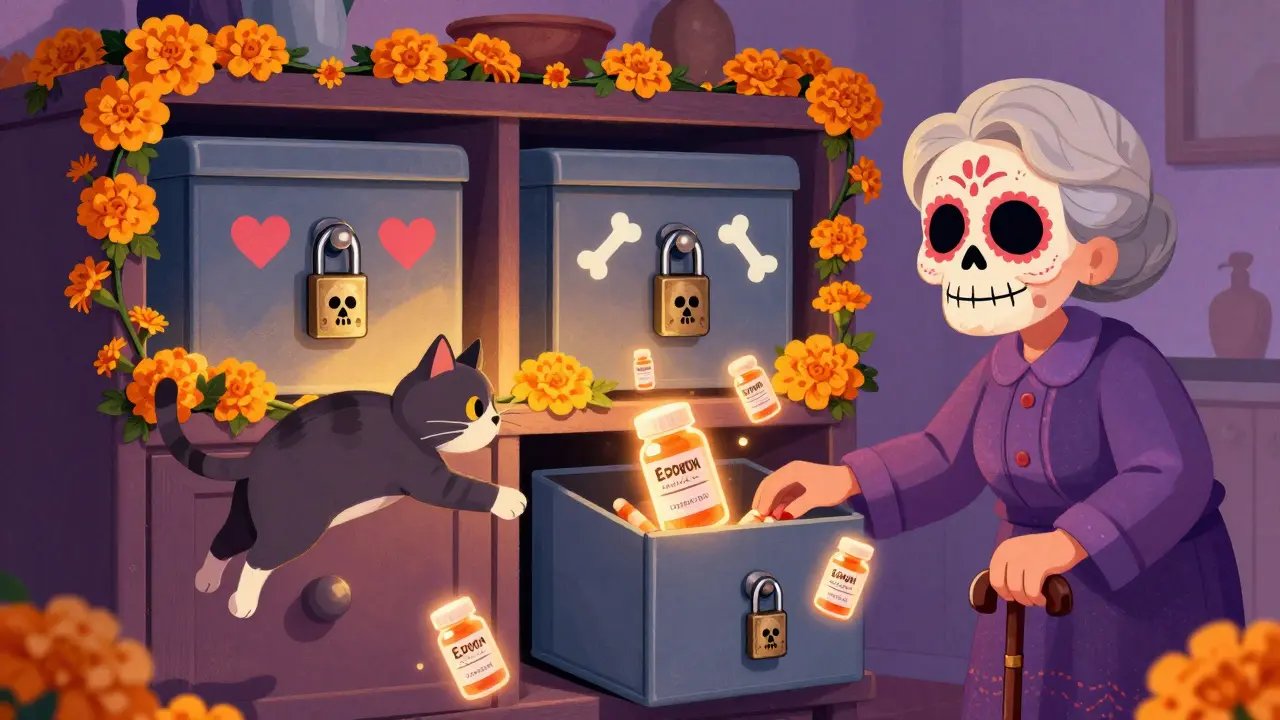
Temperature and Humidity Matter More Than You Think
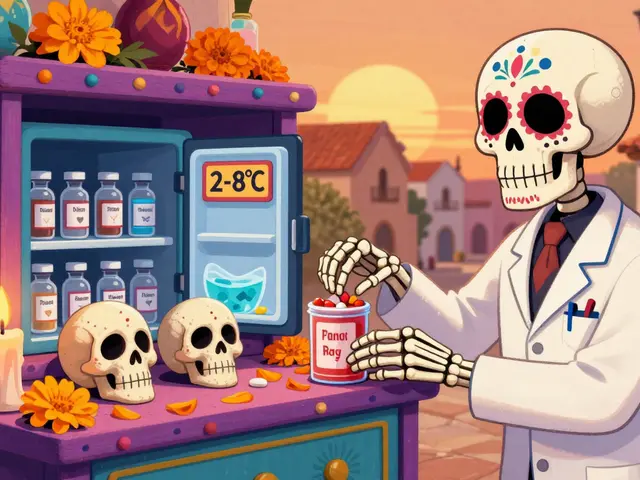
Medicine isn’t like wine - it doesn’t age well on the counter. The FDA says 70% of prescription drugs need to be kept between 68°F and 77°F. Too hot? Too cold? The pills can break down. Liquid insulin, for example, loses potency in minutes if left in a hot car. And humidity? Moisture turns pills into mush. A 2023 FDA study showed 40% of common medications degrade within 30 days if stored in a damp bathroom. That means your child might be swallowing a weakened or broken-down dose - or worse, a toxic one.Keep Original Packaging - Always
Never transfer pills to a different container. No more pill organizers with no labels. No more empty vitamin bottles holding leftover antibiotics. The CDC found that 35% of medication errors happen because someone can’t tell what’s in the container. Labels have the name, dosage, expiration date, and warnings. Without them, you’re guessing. And if your child swallows something with no label, emergency responders have no idea what to treat.Special Risks: Topical Creams and Pet Medications
Some medicines are dangerous even through skin contact. 5-fluorouracil cream, used to treat skin cancer, kills cats with just a tiny amount. One accidental lick can be fatal. And don’t assume your pet’s meds are safe for your child. A 2021 case in Ohio involved a toddler who ate a tube of dog dewormer paste - flavored like beef. The child spent 14 days in intensive care. The family had stored it in the same kitchen drawer as baking soda. That’s not an outlier. It’s a pattern.What About Expired or Unused Meds?
Don’t flush them. Don’t throw them in the trash. The FDA says 70% of households keep expired meds because they don’t know how to dispose of them safely. That’s a ticking time bomb. The DEA’s National Take Back Day, held twice a year, offers free drop-off at over 11,000 locations - pharmacies, police stations, hospitals. Find your nearest site at dea.gov. If you can’t wait, mix pills with coffee grounds or cat litter, seal them in a plastic bag, and throw them in the trash. But only as a last resort.What Works: Real Stories from Real Families
One dad in Ohio bought a $35 gun safe for $25 at a yard sale. He locked all his meds - human and pet - inside. His 2-year-old tried to open it every day. She never got in. He says, “I thought I was being paranoid. Turns out, I was just smart.” A mom in Seattle started using a timed lockbox that only opens at 7 a.m. and 7 p.m. - when she gives meds. Her kids didn’t know the code. Her dog couldn’t reach it. Within a month, she stopped worrying every time she walked into the kitchen. These aren’t extreme measures. They’re basic safety. Like car seats. Like smoke alarms.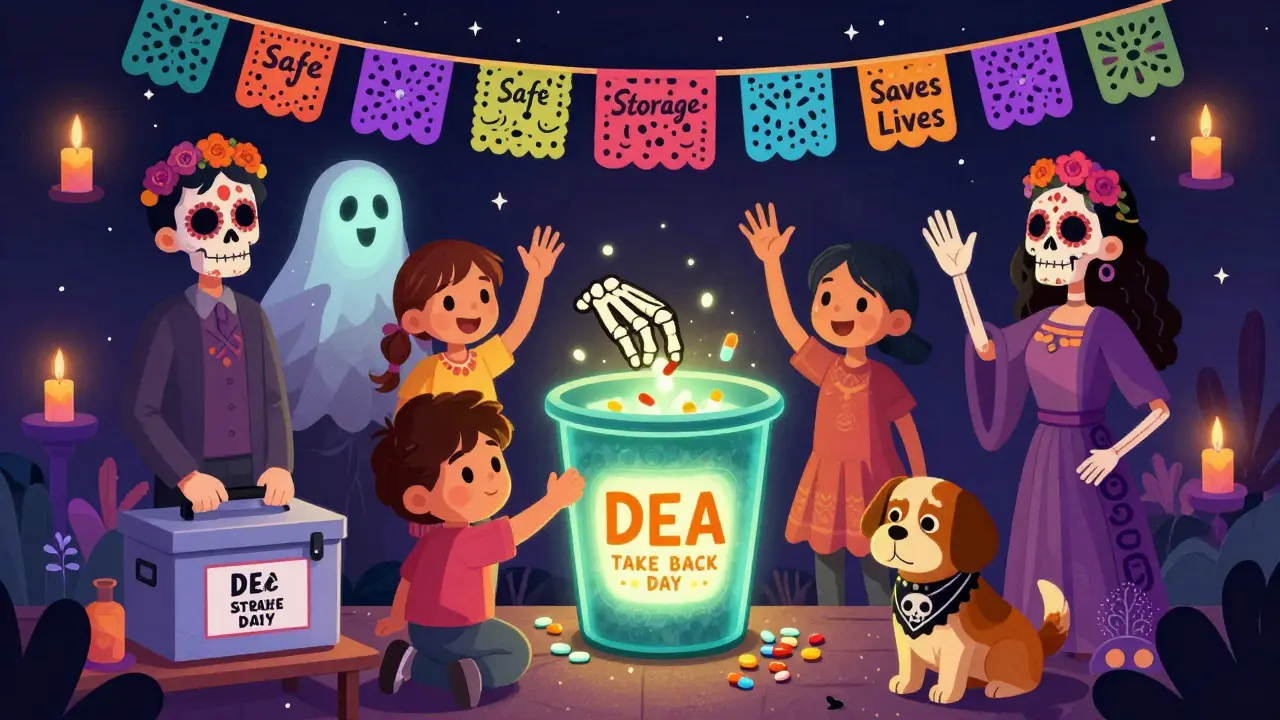
Who’s at Risk? The Numbers Don’t Lie
Households with incomes under $30,000 are half as likely to use locked storage as those earning over $100,000. That’s not because they don’t care - it’s because they don’t know where to start. A $25 lockbox isn’t expensive. But if you don’t know it exists, you won’t buy it. That’s why education matters more than ever.How to Get Started - In 15 Minutes
1. Find your meds. Go through every drawer, cabinet, purse, and nightstand. Collect every pill, liquid, patch, and cream. 2. Separate human and pet meds. Put them in two different containers. Label them clearly. 3. Lock them up. Use a lockbox, a locked drawer, or a cabinet with a childproof latch. Put it high, dry, and away from food. 4. Keep original bottles. No unlabeled containers. Ever. 5. Check weekly. Do a quick 2-minute audit every Sunday. Are all meds still locked? Are any expired?What If You’re Elderly or Have Limited Mobility?
Child-resistant caps are hard to open. So are high cabinets. You’re not alone. Many older adults struggle with this. The solution? Install a lower lockbox with an emergency release - like a key or code - so you can reach your meds easily. Some pharmacies now offer easy-open caps on request. Ask for them. Your safety matters too.What’s Changing in 2025?
New FDA rules now require pet medication labels to include clear pictograms showing where to store them - like a lock icon or a temperature symbol. Over 90% of manufacturers are already using them. And the American Academy of Pediatrics just updated its guidelines: human and pet meds should be stored at least 15 feet apart. That’s not arbitrary. Research shows that distance cuts confusion by 94%.You Don’t Need to Be Perfect. Just Consistent.
You don’t have to lock everything 24/7. But you need to lock it every single time you’re done using it. That’s the habit that saves lives. It takes 21 days to build a habit. Start today. Lock one drawer. Then another. In a month, you won’t even think about it. And your child - or your dog - will be safer because of it.Can child-resistant caps really stop kids from opening medicine?
Child-resistant caps stop about half of young children, but not all. The Consumer Product Safety Commission says they work for 50-80% of kids under age 5. That means a determined toddler can still open them. That’s why locked storage is the only reliable solution.
Is it safe to store pet and human medications together?
No. Pet medications are often flavored to taste like meat or fish, which makes them attractive to children. Some, like ivermectin, are extremely toxic to humans - even a tiny dose can be deadly. Storing them separately reduces mix-up errors by 87%, according to the CDC.
What’s the best place to store medications in my home?
A high, dry, locked cabinet in the kitchen or a bedroom closet is ideal. Avoid bathrooms - humidity ruins pills. Don’t put them near food or on counters. A wall-mounted lockbox under $25 is the most effective and affordable option.
Can pets really open pill bottles?
Yes. A 2022 study by VCA Animal Hospitals found that 65% of dogs can open standard plastic pill vials in under two minutes. Cats can knock them down and lick the contents. Child-resistant packaging doesn’t stop pets - only a locked container does.
How do I safely dispose of old or unused medications?
Use a DEA National Take Back Day drop-off site - there are over 11,000 nationwide. If you can’t wait, mix pills with coffee grounds or cat litter, seal them in a plastic bag, and throw them in the trash. Never flush them unless the label says to.
What if I’m elderly and can’t open child-resistant caps?
Ask your pharmacist for easy-open caps - they’re available on request. Or install a lower lockbox with a key or code so you can access your meds safely. Your safety matters just as much as your child’s.