

Cyclosporine and Drug Interactions: How CYP3A4 Inhibition Affects Your Medications
Cyclosporine Drug Interaction Checker
Check Your Medication Safety
Cyclosporine interacts with over 200 medications through the CYP3A4 enzyme pathway. This tool helps you understand the risks of common medications when used with cyclosporine. Always consult your healthcare team before making changes to your medications.
When you're taking cyclosporine, even a simple cold medicine can turn dangerous. This isn't theoretical-it's life-or-death chemistry happening inside your body every day. Cyclosporine, a powerful immunosuppressant used after organ transplants and for severe autoimmune conditions, doesn't just quiet your immune system. It also messes with your liver’s main drug-processing engine: the CYP3A4 enzyme. And when that enzyme gets blocked, other medications you're taking can build up to toxic levels-fast.
Why CYP3A4 Matters More Than You Think
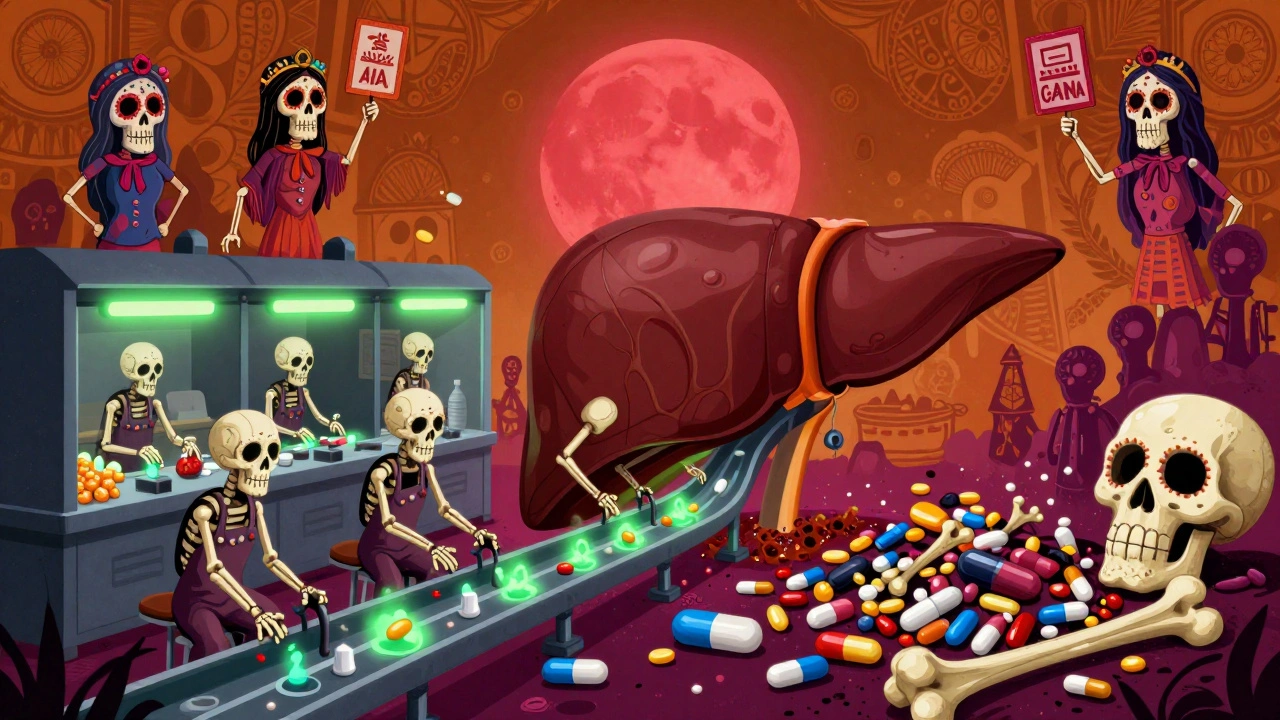
CYP3A4 is the most common enzyme in your liver and gut. It breaks down about 60% of all prescription drugs. That means if something interferes with CYP3A4, it can change how your body handles everything from blood pressure pills to painkillers. Cyclosporine isn’t just a passenger on this system-it’s a major player. It’s both a cyclosporine substrate (something CYP3A4 breaks down) and a potent inhibitor (something that shuts CYP3A4 down). This dual role creates a dangerous feedback loop.
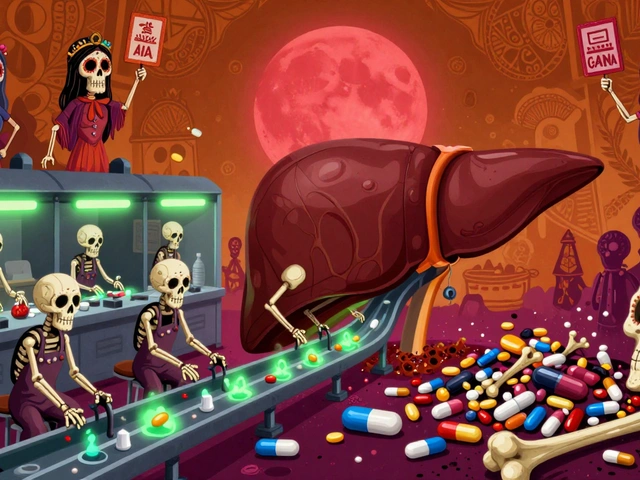
Imagine your liver as a factory. CYP3A4 is the assembly line that processes incoming drugs. Cyclosporine doesn’t just sit on the line-it clogs the machinery. When that happens, other drugs pile up. The result? Toxic levels of medications you didn’t even realize were risky. This isn’t a rare side effect. Studies show over 30% of transplant patients experience a clinically significant drug interaction involving cyclosporine within the first year after surgery. About 8% end up hospitalized because of it.
What Drugs Are Dangerous When Taken With Cyclosporine?
Some drugs are so risky with cyclosporine that doctors avoid them entirely. Others require careful dose adjustments. Here’s what you need to know:
- Sirolimus and everolimus (used to prevent organ rejection): Cyclosporine can raise their levels by more than double. Doses often need to be cut by 70% when used together.
- Statins like simvastatin and lovastatin: These cholesterol drugs can build up and cause severe muscle damage. Atorvastatin is safer but still needs monitoring.
- Calcium channel blockers such as diltiazem and verapamil: Used for high blood pressure, they’re moderate CYP3A4 inhibitors themselves. When paired with cyclosporine, blood levels of both drugs spike. Dose reductions of 25-50% for cyclosporine are standard.
- Antibiotics like clarithromycin and erythromycin: These are strong CYP3A4 inhibitors. One case study showed kidney function dropping 40-60% in transplant patients within 72 hours of starting clarithromycin.
- Antifungals like ketoconazole and itraconazole: These are among the worst offenders. They can increase cyclosporine levels by 300-500%. Avoid them unless absolutely necessary.
- Some antidepressants and antipsychotics: Fluoxetine, sertraline, and risperidone are metabolized by CYP3A4. Their levels can rise, increasing side effects like dizziness, tremors, or irregular heartbeat.
And it’s not just about what you take-it’s about what you stop taking. If you quit a CYP3A4 inducer like rifampin (used for tuberculosis), cyclosporine levels can surge overnight. That’s why transplant centers require blood tests before, during, and after any medication change.
How Cyclosporine Blocks CYP3A4-It’s Not Just Competition
Most people think drug interactions are simple: one drug competes with another for the same enzyme. But cyclosporine does something more complex. Research shows it causes time-dependent inhibition. That means the longer it’s around, the more it permanently damages CYP3A4 enzymes. It’s not just blocking the enzyme-it’s breaking it down. This is called mechanism-based inhibition. The enzyme doesn’t just get occupied; it gets destroyed.
This is why the effects last longer than you’d expect. Even after you stop taking a drug that inhibits CYP3A4, your liver needs days to make new enzymes. That’s why a single dose of clarithromycin can cause problems for over a week. It’s also why genetic differences matter. Some people have CYP3A4 variants that work 40% slower than average. For them, cyclosporine toxicity happens at lower doses.
Cyclosporine vs. Tacrolimus: Why One Is Riskier Than the Other
You might hear doctors switch patients from cyclosporine to tacrolimus. It’s not just because tacrolimus works better-it’s because it’s safer in terms of interactions. Tacrolimus is primarily a substrate of CYP3A4, meaning it gets broken down by the enzyme. It doesn’t block it. So if you take a CYP3A4 inhibitor with tacrolimus, your tacrolimus levels rise. But if you take a CYP3A4 inhibitor with cyclosporine, both drugs rise-and so do the risks.
Worse, cyclosporine also blocks P-glycoprotein, a transporter that pumps drugs out of cells. That means it traps more drugs inside your liver and kidneys. Tacrolimus doesn’t do this. So cyclosporine has a double-whammy effect: it slows down drug breakdown and prevents drug removal. That’s why its interaction profile is more complex and dangerous than most other immunosuppressants.
Real-World Consequences: What Happens When Things Go Wrong
In 2021, a study of over 1,200 kidney transplant patients found that nearly one-third had a drug interaction involving cyclosporine. Eight percent needed emergency care. One patient developed kidney failure after starting a common antifungal cream for athlete’s foot. Another had seizures after taking a cold medicine containing dextromethorphan. These aren’t outliers-they’re predictable outcomes of poor interaction management.
On the flip side, when doctors manage these interactions right, outcomes improve dramatically. A 2022 study across 12 transplant centers showed that using electronic alerts in hospital systems, combined with pharmacist reviews, reduced cyclosporine-related adverse events by 45%. That’s not magic-it’s structure. It’s knowing what to ask, when to test, and how to adjust.
What You Can Do: A Practical Guide
If you’re on cyclosporine, here’s your action plan:
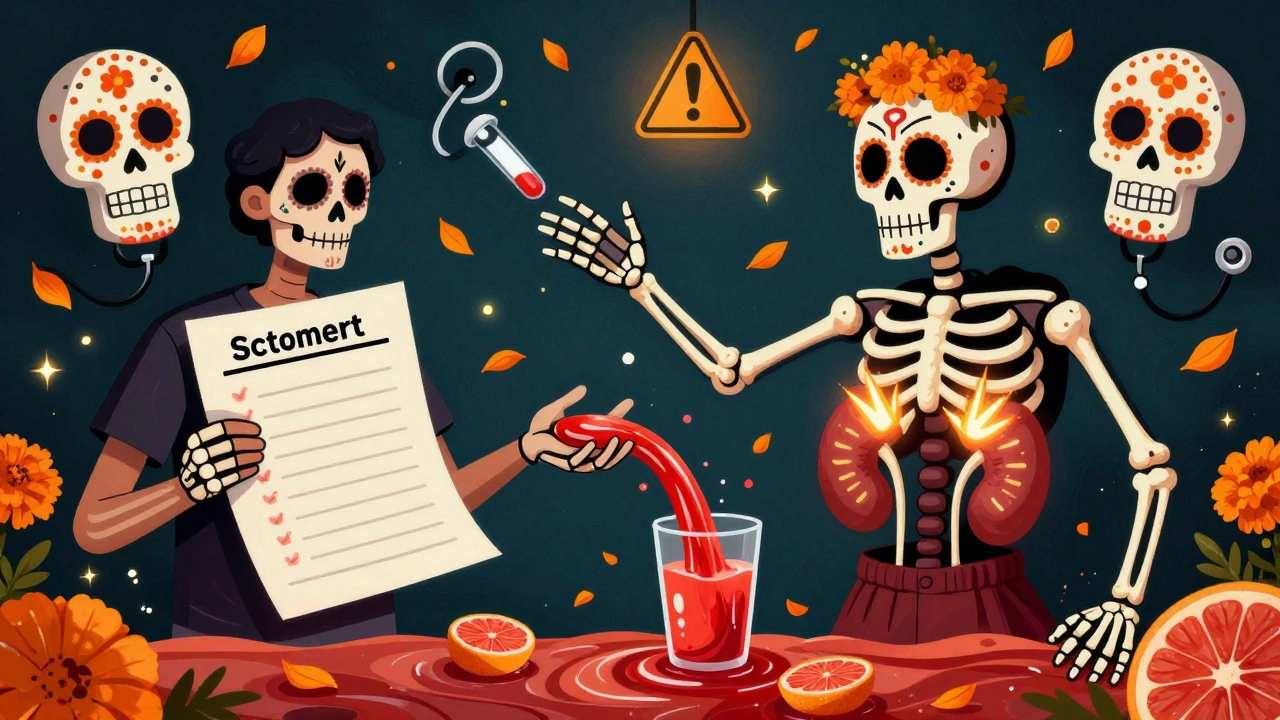
- Keep a full list of every medication-including supplements, herbal products, and over-the-counter drugs. Many people forget that St. John’s wort, grapefruit juice, and even turmeric can interfere.
- Never start or stop anything without checking with your transplant team. Even a new pain reliever like ibuprofen can affect kidney function when combined with cyclosporine.
- Get regular blood tests. Cyclosporine levels need to be checked every time a new drug is added or removed. Target levels are usually between 100-400 ng/mL, depending on your transplant type and time since surgery.
- Know your warning signs. Muscle pain, dark urine, extreme fatigue, nausea, swelling, or changes in urination could mean toxicity. Don’t wait-call your doctor immediately.
- Ask about alternatives. If you need an antibiotic, ask if azithromycin (which doesn’t affect CYP3A4) is an option instead of clarithromycin.
The Future: Personalized Dosing and Real-Time Monitoring
Researchers are now building tools that predict cyclosporine levels based on your genetics, age, weight, and current medications. Early algorithms are 85-90% accurate. Some hospitals are already testing point-of-care devices that give cyclosporine results in minutes instead of days. That means dose changes can happen faster, safer, and with fewer hospital visits.
But the biggest change isn’t technology-it’s awareness. More transplant centers now require pharmacist-led medication reviews before discharge. That’s because managing cyclosporine interactions isn’t just about knowing the science. It’s about knowing the patient. It’s about asking, "What else are you taking?" and listening to the answer.
Cyclosporine saved millions of lives. But its power comes with a price. The difference between life and toxicity often comes down to one question: Did someone check for interactions? If you’re on this drug, don’t assume your doctor knows everything you’re taking. Be your own advocate. Keep the list. Ask the question. Get the test. It could save your life.
Can grapefruit juice really affect cyclosporine?
Yes. Grapefruit juice blocks CYP3A4 in the gut, which can cause cyclosporine levels to spike by 50% or more. Even one glass can have an effect that lasts over 24 hours. If you’re on cyclosporine, avoid grapefruit, pomelo, Seville oranges, and their juices entirely.
Is cyclosporine still used today, or has it been replaced?
Tacrolimus is now the first-choice immunosuppressant for most adult transplants because it’s more effective and has fewer long-term side effects. But cyclosporine is still widely used-especially in children, patients with certain autoimmune diseases like psoriasis or nephrotic syndrome, and in regions where cost is a barrier. It’s not outdated-it’s just used more selectively now.
How often should cyclosporine levels be checked?
When you first start cyclosporine, levels are checked daily or every other day. After stabilization, checks happen every 1-3 months. But anytime you start or stop a new medication-especially antibiotics, antifungals, or blood pressure drugs-you need a blood test within 3-5 days. Some centers require testing even after starting a new vitamin or supplement.
Can I take ibuprofen or acetaminophen with cyclosporine?
Acetaminophen (Tylenol) is generally safe in low doses. Ibuprofen and other NSAIDs are risky-they can damage your kidneys, and cyclosporine already stresses them. Avoid NSAIDs unless your doctor approves them for a short time. Always check with your transplant team before taking any pain reliever.
What if I miss a dose of cyclosporine?
If you miss a dose by less than 6 hours, take it as soon as you remember. If it’s been longer, skip the missed dose and take your next one at the regular time. Never double up. Missing doses can trigger rejection. Taking too much can cause kidney or nerve damage. Consistency is critical.
Do herbal supplements interact with cyclosporine?
Many do. St. John’s wort can cut cyclosporine levels by up to 50%, risking rejection. Echinacea, garlic, ginseng, and green tea extracts can also interfere. Even milk thistle, often taken for liver health, may affect CYP3A4. Always tell your doctor about every supplement you take-no matter how "natural" it seems.
What to Do Next
If you’re on cyclosporine, schedule a full medication review with your pharmacist or transplant coordinator. Bring every pill bottle, supplement container, and even the box of your OTC cold medicine. Ask: "Could any of these be raising my cyclosporine levels?" If you’re a caregiver, do the same for the person you’re helping. This isn’t just about following rules-it’s about staying alive.
And if you’re not on cyclosporine but know someone who is-don’t let them ignore a new cough syrup or painkiller. The quietest dangers are the ones no one talks about. This is one of them.




It's wild how something as simple as grapefruit juice can turn a life-saving drug into a silent killer. I used to think drug interactions were just warnings on labels-something you skimmed past while rushing to the pharmacy. But this isn't just about avoiding fruit. It's about understanding that your body isn't a machine with isolated parts. It's a living network where one thread pulled too tight unravels the whole thing. Cyclosporine doesn't just interact-it rewrites the rules of engagement for every other molecule trying to pass through your liver. And the fact that even herbal supplements like St. John’s wort can sabotage it? That’s not negligence. That’s ignorance on a systemic level. We treat medicine like a menu, but biology doesn’t care about your preferences.
So let me get this straight… I can’t have my morning smoothie with grapefruit because some lab rat in a white coat decided my kidneys are too delicate? 😒 Meanwhile, my cousin in Mexico is taking cyclosporine with a side of cactus juice and living fine. This isn’t science-it’s overmedicated anxiety dressed up as medicine.
Per the CYP3A4 substrate-inhibitor feedback loop, the pharmacokinetic burden is non-linear and dose-dependent. Concurrent administration of P-gp inhibitors exacerbates bioavailability thresholds beyond therapeutic windows. Clinically, this manifests as nephrotoxicity, neurotoxicity, and hepatotoxicity cascades. Avoid all Class I CYP3A4 modulators. Period.
Wow. Someone actually wrote a novel about drug metabolism. Congrats. I’m sure the 12th edition of Goodman & Gilman is thrilled. But here’s the reality: 90% of people on cyclosporine don’t even know what CYP3A4 is. And yet they’re alive. Why? Because they’re not obsessing over every pill-they’re trusting their doctor. You turn this into a horror story, and people panic. Then they stop taking their meds. That’s the real killer.
I’ve been on cyclosporine for 7 years. My husband doesn’t even know what I’m taking. He thinks it’s just a ‘vitamin for my transplant.’ Last week he bought me a bottle of grapefruit juice because ‘it’s healthy.’ I cried. Not because I’m dramatic. Because I’m tired of being a walking time bomb and everyone around me treating it like a minor inconvenience. 🥲
Cyclosporine bad grapefruit worse stop drinking it
so i just found out my buddy on cyclosporine takes those gummy vitamins with turmeric 😭 like bro… i told him to stop but he said ‘it’s natural’… now im scared to even say hi to him
This is why I love that my transplant center has a pharmacist on call 24/7. Last month I wanted to try a new probiotic and they said ‘hold up’-ran a quick check and flagged that it might interfere with CYP3A4. We swapped it out in 10 minutes. No drama. Just good care. 🙌 Seriously, if you’re on this med, don’t wing it. Find a team that treats your meds like a symphony, not a garage band.
In India, many use cyclosporine because it is cheap. We do not have time for 1000 word essays. We take the pill. We check the blood. We live.