Shark Liver Oil: A Nutritional Powerhouse for Better Health and Wellness
Chris Gore
Food and Medication: How Diet Affects Your Pills and What You Need to Know
When you take a pill, it doesn’t just float through your body alone—it meets up with food and medication, the complex relationship between what you eat and how your body processes drugs. Also known as food-drug interactions, this isn’t just a footnote in the prescribing info—it’s a silent player in whether your treatment works, fails, or harms you. Many people don’t realize that a glass of grapefruit juice can turn a safe dose of cholesterol medicine into a dangerous overload. Or that dairy can lock up your antibiotic so it never gets absorbed. These aren’t myths. They’re documented, preventable risks.
Drug interactions, when chemicals in food change how your body handles a medicine, happen every day. Some are obvious—like avoiding alcohol with sedatives. Others hide in plain sight: spinach high in vitamin K can undo blood thinners like warfarin. Calcium in fortified orange juice can block thyroid meds. Even a simple antacid can reduce how well your antibiotics work. These aren’t rare edge cases. They’re common enough that pharmacists see them weekly. And if you’re on more than one drug—especially for chronic conditions like high blood pressure, diabetes, or depression—your diet is part of your treatment plan.
Medication side effects, unwanted reactions caused by drugs, often get worse or better because of what you eat. Take trimethoprim—it can spike your potassium levels. If you’re also eating bananas, potatoes, or salt substitutes, you’re stacking risk. Or consider topiramate, which raises kidney stone risk. Drink enough water? You cut that risk. Skip it? You might end up in the ER. It’s not about being perfect. It’s about knowing the big triggers. You don’t need to avoid all fruits, all fats, all caffeine. You need to know which ones matter for your pills.
The posts below cover real cases where food and medication crossed paths—with results that changed lives. You’ll find how cyclosporine reacts with grapefruit, why Bactrim can turn dangerous with high-potassium diets, and how even your morning coffee can interfere with thyroid meds. There’s no fluff. Just straight talk on what to eat, what to skip, and when to ask your pharmacist for help. Whether you’re managing a chronic condition, recovering from surgery, or just trying to stay healthy while on meds, this is the practical guide you won’t find in a drug brochure.
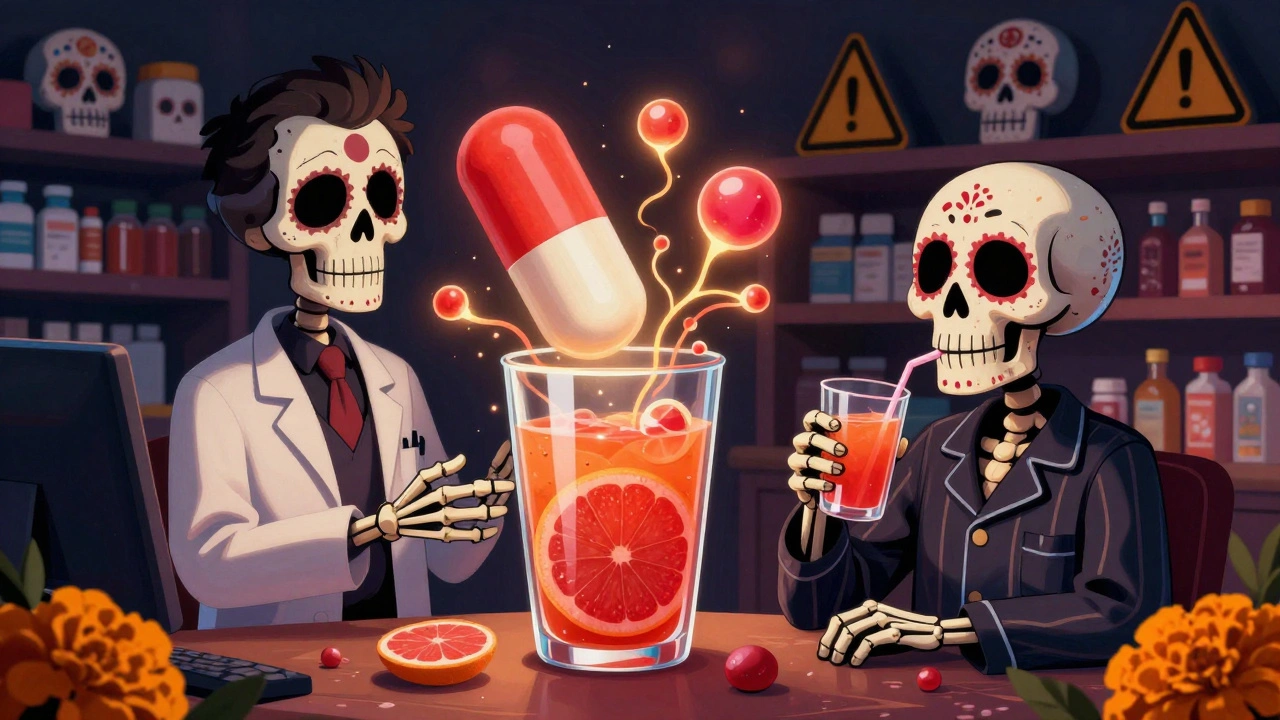
Drug interactions between food, supplements, and medications can cause serious harm-even death. Learn how grapefruit, vitamin K, St. John’s wort, and other common items can clash with your prescriptions-and what to do to stay safe.
Chris Gore Dec 3, 2025