

Polysomnography: What Happens During a Sleep Study and How Results Are Interpreted
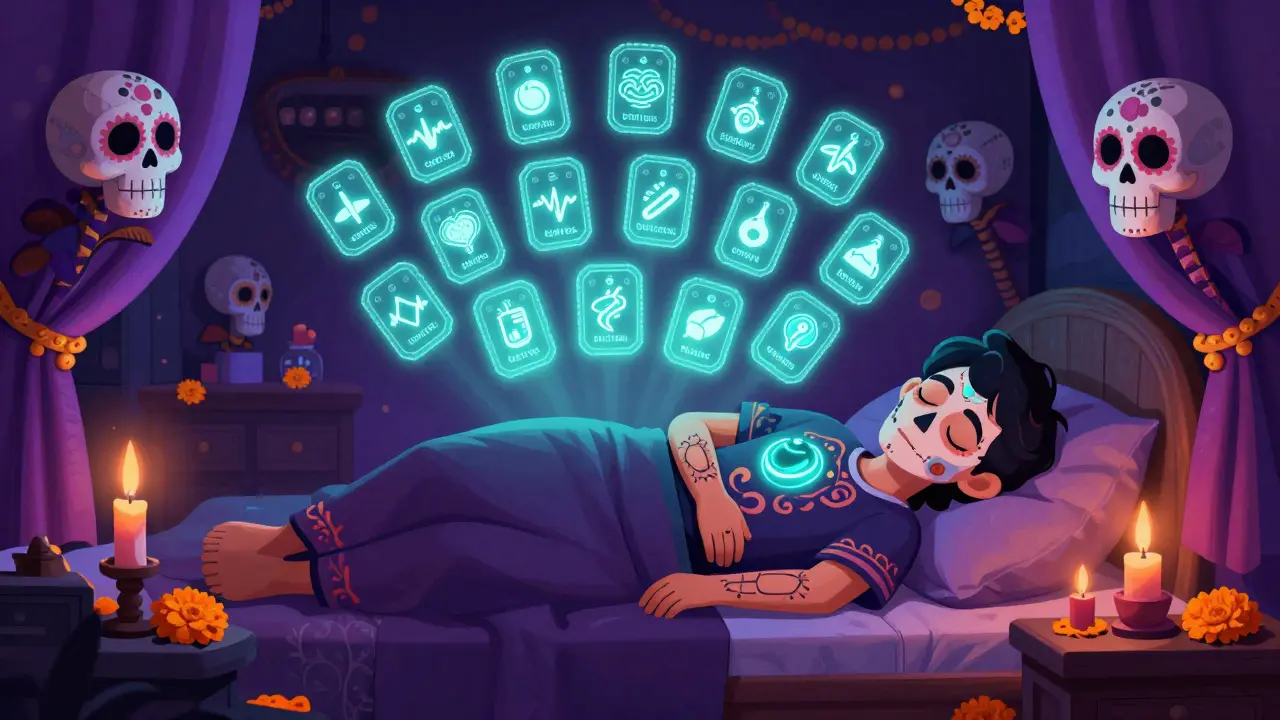
When you’re exhausted every day but can’t figure out why, it’s not just stress or bad habits. It could be something deeper - something your body shows during sleep but you never see. That’s where polysomnography comes in. It’s not a fancy gadget or a quick home test. It’s the most detailed sleep study doctors use to find out what’s really going on when you’re asleep.
What Exactly Is a Polysomnography?
Polysomnography, or PSG, is a full-night sleep study that records how your body behaves while you sleep. The word breaks down simply: poly means many, somno means sleep, and graphy means recording. So, it’s a multi-parameter sleep recording. And that’s the key - it doesn’t just check your breathing. It watches your brain, eyes, heart, muscles, oxygen levels, and even how you move through the night. This isn’t something you can do at home with a wearable device. It’s done in a sleep lab, usually in a quiet, dim room that’s kept at a comfortable 68-72°F (20-22°C). You’ll sleep on a regular bed, not a hospital gurney. The goal is to make it feel as normal as possible - even if you’re wired up like a sci-fi character.What Gets Measured During the Study?
A sleep technologist attaches around 22 sensors to your body. Most feel like small stickers or soft bands. You won’t feel pain, but you might notice them. Here’s what each one tracks:- EEG (electroencephalogram): Electrodes on your scalp record brain waves. This tells the doctor which sleep stage you’re in - light sleep, deep sleep, or REM. That’s critical because disorders like narcolepsy mess with this cycle.
- EOG (electrooculogram): Sensors near your eyes track movement. Rapid eye movement signals REM sleep, the stage where dreaming happens.
- EMG (electromyogram): Small sensors on your chin and legs measure muscle tone. Twitching, grinding, or kicking during sleep shows up here.
- ECG (electrocardiogram): Monitors your heart rhythm. Irregular beats during sleep can point to heart issues linked to sleep apnea.
- Respiratory effort belts: Two elastic bands around your chest and abdomen detect if you’re trying to breathe - even if air isn’t moving.
- Airflow sensors: A thin tube under your nose measures whether air is flowing in and out.
- Pulse oximeter: A clip on your finger tracks how much oxygen is in your blood. If it drops below 90%, it’s a red flag.
- Body position sensor: Tells if you sleep on your back, side, or stomach. Many people breathe better on their side.
- Audio and video: Cameras and microphones record snoring, gasping, or strange behaviors like sleepwalking or yelling.
How Is It Different From a Home Sleep Test?
Home sleep apnea tests (HSAT) are cheaper and easier. But they’re limited. They usually only track three things: breathing effort, airflow, and oxygen levels. That’s enough to catch simple obstructive sleep apnea - but nothing else. Polysomnography catches the full picture:- It can diagnose narcolepsy - where you fall straight into REM sleep instead of going through the normal stages.
- It spots sleepwalking, night terrors, or seizures that happen during sleep.
- It tells the difference between obstructive apnea (airway blocked) and central apnea (brain doesn’t tell you to breathe).
- It measures how much deep sleep and REM sleep you get - key for feeling rested.
What Happens During a Split-Night Study?
Sometimes, the tech sees severe sleep apnea early in the night - say, over 30 breathing pauses per hour. Instead of sending you home and making you come back, they might do a split-night study. The first half is diagnostic: they record your sleep to confirm apnea. Once they see it’s serious enough, they wake you up, fit you with a CPAP mask, and start adjusting the air pressure. The second half of the night is therapy. They find the right pressure to keep your airway open. About 35% of polysomnography studies now include CPAP titration. That saves time, money, and the stress of a second visit. It’s only done if your apnea is moderate to severe - not for mild cases.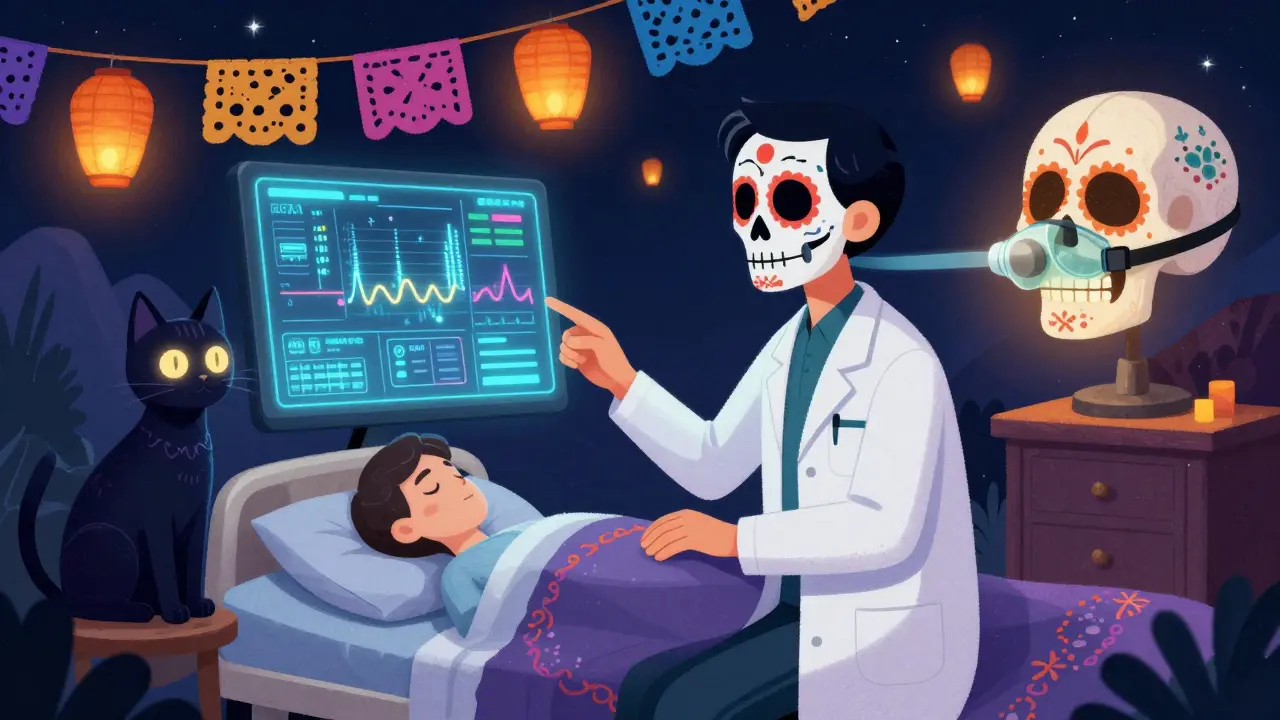
How Do You Prepare for the Test?
There’s no fasting. No needles. But you do need to follow a few simple rules:- Stick to your normal sleep schedule for at least 3 days before the test. Don’t try to “catch up” on sleep.
- Avoid caffeine after noon. That includes coffee, tea, chocolate, and soda.
- Don’t nap during the day. You need to be tired enough to fall asleep at night.
- Wash your hair and skin - no lotions, oils, or makeup. They can interfere with sensor adhesion.
- Bring comfortable sleepwear, toiletries, and anything you need for a good night’s rest - like your own pillow.
What Do the Results Show?
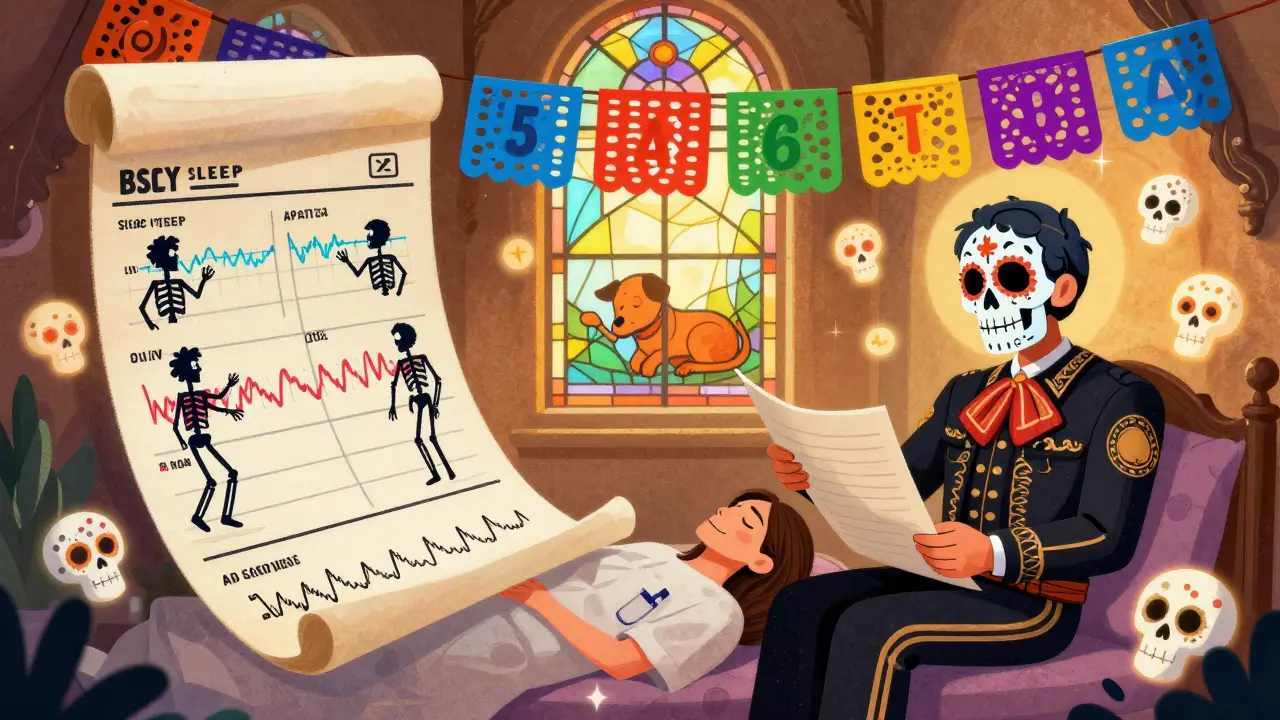
After the study, a board-certified sleep doctor spends 2-3 hours analyzing the data. That’s over 1,000 pages of raw information. The report breaks down:- Sleep efficiency: How much time you actually slept vs. time spent in bed. Below 85% suggests trouble falling or staying asleep.
- Apnea-hypopnea index (AHI): Number of breathing pauses per hour. Less than 5 is normal. 5-15 is mild, 15-30 is moderate, over 30 is severe.
- Oxygen drop index: How often your blood oxygen fell below 90%. More than 5 drops per hour is concerning.
- Sleep architecture: Percentage of time spent in each sleep stage. Too little deep sleep or REM = unrefreshing sleep.
- Leg movements: If you have periodic limb movement disorder, it shows up here.
- Abnormal behaviors: Sleepwalking, talking, or acting out dreams may point to REM sleep behavior disorder.
Who Needs This Test?
You don’t need a polysomnography just because you snore. But if you have:- Witnessed breathing pauses during sleep
- Excessive daytime sleepiness that doesn’t improve with more sleep
- Unexplained insomnia or frequent nighttime awakenings
- Morning headaches or dry mouth
- High blood pressure that’s hard to control
- History of stroke, heart disease, or obesity
- Symptoms of narcolepsy - sudden muscle weakness, hallucinations at sleep onset
- Strange behaviors during sleep - kicking, yelling, getting out of bed
What About Comfort and Anxiety?
Most people worry they won’t be able to sleep with all the wires. But here’s the truth: you don’t need a full 8 hours of perfect sleep for the test to work. Even 4-5 hours of recorded sleep can give doctors enough data to make a diagnosis. About 85% of patients complete the study successfully. Technologists are trained to help you relax. They’ll check in quietly. You can ask for a blanket, water, or to use the bathroom. Many patients say the hardest part is the setup - not the night itself. If you’re really anxious, talk to your doctor. Some centers offer a practice night - you come in early, get hooked up, and spend an hour watching TV or reading before bed. It helps.What Happens After the Results?
Your sleep doctor will schedule a follow-up to explain everything. If you have sleep apnea, they’ll recommend CPAP therapy. For narcolepsy, medication and scheduled naps may help. If you have periodic limb movements, they might suggest iron supplements or specific medications. In some cases, they’ll recommend another test - like a Multiple Sleep Latency Test (MSLT) - to confirm narcolepsy. That’s a daytime test where you’re asked to nap every 2 hours. It’s not scary, but it’s long. The goal isn’t just to label your problem. It’s to fix it. And polysomnography is the only way to get the full picture.The Future of Sleep Studies
Newer systems use wireless sensors. Instead of 20 wires, you might only have 5-7. That’s less hassle and more comfort. Some labs now use AI to help analyze data faster - spotting patterns humans might miss. But the core hasn’t changed. You still need the full set of measurements. Home tests are improving, but they still can’t replace in-lab polysomnography for complex cases. The American Academy of Sleep Medicine says this will remain the gold standard through at least 2030. Because when your sleep is broken, you need more than a guess. You need the truth - recorded, measured, and understood.Is polysomnography painful?
No, it’s not painful. Sensors are attached with gentle adhesive or soft bands. You might feel slight pressure or notice the wires, but there are no needles, shocks, or invasive procedures. Most people say the discomfort is minimal compared to the benefit of finding out why they’re so tired.
Can I use the bathroom during the study?
Yes. The sleep technologist can quickly disconnect the main cable so you can walk to the bathroom. Most labs have a call button you can press if you need help. It’s designed to be as normal as possible - including getting up to use the toilet.
How long does it take to get results?
It usually takes 1-2 weeks. The data is complex - over 1,000 pages of information - and must be reviewed by a board-certified sleep specialist. Some centers offer faster turnaround for urgent cases, but don’t expect results the next day.
Will insurance cover a polysomnography?
Most insurance plans, including Medicare, cover polysomnography if it’s ordered for a documented sleep disorder like sleep apnea, narcolepsy, or parasomnias. You’ll need a referral from your doctor and proof of symptoms. Some insurers require prior authorization, so check with your provider before the test.
Can I bring someone with me to the sleep center?
You can usually bring someone to drop you off, but they can’t stay overnight. The sleep lab is designed for individual privacy. If you have a caregiver or need assistance due to a disability, let the center know in advance - they may make special arrangements.
What if I can’t sleep during the study?
It’s common to have trouble sleeping the first night in a new place - even without wires. But you don’t need a full 8 hours. Even 4-5 hours of sleep with clear breathing events or abnormal movements can give doctors enough data to make a diagnosis. The techs are trained to help you relax, and many patients sleep better than they expect.



Look, I’ve had three sleep studies in five years. The first one? I didn’t sleep at all. The second? I slept four hours and they still diagnosed severe apnea. The third? I slept like a baby - and they found narcolepsy I didn’t even know I had. People think it’s just about snoring, but no - it’s about your brain not knowing when to shut off. The sensors? Barely noticeable after ten minutes. The real pain is realizing you’ve been functionally disabled for years and just thought you were ‘bad at sleeping.’
And don’t get me started on home tests. My insurance pushed me to do one first. Got a ‘normal’ result. Went to work the next day, fell asleep driving to the grocery store. That’s not normal. That’s a traffic hazard. Polysomnography isn’t optional if you’re tired all the time. It’s survival.
Also, the techs? They’re angels. One time I woke up panicked because I thought the wires were choking me. She came in quietly, adjusted everything, handed me a warm blanket, and said, ‘You’re safe. Just breathe.’ I cried. Not because of the test. Because someone finally saw me.
Don’t fear the lab. Fear the years you’ll waste pretending you’re just ‘tired.’
This is one of the most thorough explanations I’ve ever read on sleep studies. I’ve been avoiding this test for years because I thought it’d be like a hospital nightmare. Turns out, it’s more like a weird Airbnb with sensors. I did mine last year - slept okay, got diagnosed with mild sleep apnea, and now I use CPAP. Life changed. No more afternoon naps. No more brain fog. Just… clarity.
Thanks for writing this. I’m sharing it with my brother - he’s still convinced he’s just ‘a heavy sleeper.’
I used to think sleep was just a biological afterthought until I started tracking my own patterns. The moment I realized my body was screaming for help and I was ignoring it - that’s when everything changed. This test isn’t about medical intrusion. It’s about listening to the quietest voice you have: your own biology.
Let me tell you something they don’t want you to know. The sleep lab? It’s not just recording your sleep. They’re watching you. Always. The cameras, the audio, the AI algorithms - they’re building a behavioral profile. Your dreams, your movements, your breathing patterns - all stored in a database. Who owns that data? Who sells it? The FDA doesn’t regulate the algorithms. The sleep techs are just employees. You think you’re getting help? You’re being cataloged.
And don’t believe the ‘no needles’ lie. They’re using subcutaneous sensors now in newer labs. You feel nothing because they’ve numbed the area first. No consent forms mention that. You’re not a patient. You’re a data point.
And the CPAP titration? That’s just the beginning. Once they have your baseline, they can adjust your therapy remotely. Without you knowing. Welcome to the sleep surveillance state.
Respectfully, this article is a masterpiece of clarity and compassion. As someone from India where sleep disorders are still stigmatized as ‘laziness’ or ‘lack of discipline,’ seeing such a detailed, science-backed explanation in English is deeply meaningful. My cousin, who used to snore so loudly neighbors complained, finally got tested after reading this. She was diagnosed with OSA and is now on CPAP - her energy, mood, and even her relationships have improved dramatically.
Thank you for normalizing this. 💙
Let’s be precise here. The AHI threshold for moderate sleep apnea is 15–30 events per hour, not ‘15–30’ as a standalone range - it’s per hour, and that’s non-negotiable in clinical terminology. Also, the term ‘sleep architecture’ is correctly defined, but many clinicians misuse it to refer to sleep stages alone. Architecture includes microarousals, cyclical alternating patterns, and sleep efficiency metrics - all of which are critical for differential diagnosis.
And yes, home sleep tests fail in 15–20% of cases - but that’s because they’re used inappropriately. They’re not meant for narcolepsy, PLMD, or parasomnias. Misapplication ≠ flawed technology. The gold standard remains polysomnography because it’s multivariate, not because it’s expensive.
Also, if you’re washing your hair before the study, you’re doing it right. Oils interfere with EEG electrode impedance. This isn’t folklore - it’s electrophysiology 101.
OMG I DID THIS LAST YEAR AND IT CHANGED MY LIFE 😭
I thought I was just ‘a night owl who needed coffee’ - turns out I was having 87 apneas an hour. 87. Like, every minute. My husband said I’d stop breathing for 20 seconds at a time and then snort like a chainsaw. I didn’t even know.
The setup was weird, yeah - but the techs were like, ‘Hey, wanna watch a Netflix show while we hook you up?’ I did. I fell asleep during ‘Stranger Things.’
Now I sleep 8 hours straight. I don’t nap at 3 PM. I remember people’s names. I didn’t realize how much my brain was just… offline.
If you’re tired and you think it’s ‘stress’ - please, for the love of all that is holy, get tested. It’s not a weakness. It’s a hardware issue. And your brain deserves an upgrade.
I did this test and it was the most humiliating experience of my life.
They had a camera on me. A microphone. I was wired up like a robot. I tried to sleep. I couldn’t. I moved. I sighed. I rolled over. I swear I heard one of the techs laugh when I snored. I felt like a lab rat.
And then they told me I had ‘severe sleep apnea’ - but I’m not even overweight! I run 5Ks! How is that possible?
Now I have this CPAP mask. I look like a sci-fi villain. My partner won’t kiss me with it on. I hate it. I hate the machine. I hate the noise. I hate that I have to sleep with a tube up my nose.
And the worst part? They said I’ll need it for life.
So now I don’t use it. I just suffer. Because I’d rather be tired than feel like a broken machine.
Bro, I was skeptical too. But after my study, I found out I was waking up 40 times a night from leg movements. No idea. Now I take iron and magnesium - and I actually wake up feeling human. This test saved my job. Don’t overthink it. Just do it.
Thank you for writing this with such care. I’ve worked in sleep medicine for over a decade, and I still get emotional when patients say, ‘I didn’t know I was this broken.’ The beauty of polysomnography is that it doesn’t judge - it just reveals. And sometimes, that’s the first step toward healing.
To anyone reading this: you’re not lazy. You’re not failing. You’re just out of sync. And this test is a quiet way to come back to yourself.
In India, people still think sleep apnea is just for old men who smoke. My dad had it - no one believed him until he collapsed at work. We got him tested. CPAP changed everything. He started talking again. Started laughing. This isn’t just medicine - it’s giving back someone’s life. Thank you for explaining it so well.