

How to Compare New Prescription Labels with Your Old Medication for Safety
Every time you pick up a refill, your pills might look different. Same medicine. Different color. Different shape. Different markings. It’s not a mistake-it’s normal. But it’s also where mistakes happen. In the U.S., 90% of prescriptions are filled with generic drugs, and each time you refill, you could get a new manufacturer’s version. That’s why comparing your new prescription label to your old one isn’t optional-it’s a safety step you need to do every single time.
Check the Patient Name and Rx Number First
Before you even look at the pill, verify the basics. Your name on the label must match your ID exactly. Misspellings happen. So does mixing up patients in busy pharmacies. If your name is Lisa Johnson but the label says L. Johnson or Lisa Johnston, stop. Ask the pharmacist to double-check. This isn’t just about paperwork-it’s about avoiding a deadly mix-up. Next, find the Rx number. It’s usually at the top of the label. This is your prescription’s unique ID. If the Rx number changed from your last fill, that’s normal-it updates with each refill. But if it’s the same number as your last bottle, and you’ve already used it up, something’s wrong. That could mean the pharmacy didn’t process your refill properly. Don’t take the pills. Call them.Match the Medication Name and Strength Exactly
Look for two names on the label: the brand name and the generic name. For example, you might see atorvastatin (the generic) and Lipitor (the brand). The generic name is what matters most. It’s the active ingredient that does the work in your body. Now compare the strength. Is it 10 mg? 20 mg? 5 mg? Write it down. Don’t trust your memory. A difference of just 5 mg on blood thinners or thyroid meds can cause serious problems. If your last bottle said 20 mg and the new one says 10 mg, that’s not a small change-it’s a red flag. Call your pharmacy immediately. Never assume they meant to give you half the dose.Understand Why the Pills Look Different
You’ve probably noticed this: your pills used to be blue and oval. Now they’re white and round. You’re not going crazy. Generic drug makers aren’t allowed to copy the exact look of brand-name pills. Color, shape, size-they can all change between manufacturers. That’s FDA policy. The active ingredient stays the same, but the outside doesn’t have to. This is where most people get confused. One Reddit user shared how they almost missed a dangerous error because they thought the new pills were fake. The new bottle had pills twice the size of the old ones-but same dosage. They took a photo of both bottles and showed it to their pharmacist. Turns out, it was a different generic version. The pharmacist confirmed it was safe. Without that photo, they might have thrown out the new pills-or worse, taken them without checking.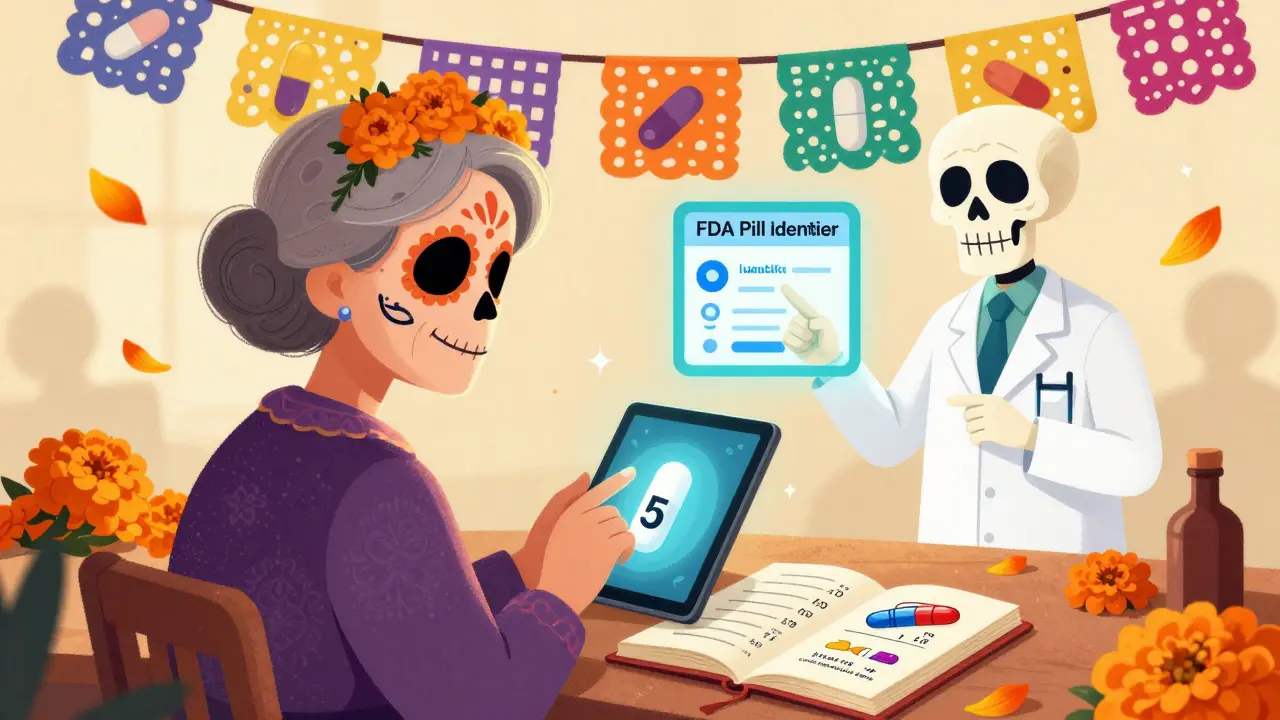
Find the Manufacturer and Lot Number
Look for a line that says “Mfg:” or “Manufactured by.” It might say “ACCORD HEALTHCARE,” “TEVA,” or “SANDOZ.” These are generic drug makers. If your last bottle said “TEVA” and now it says “ACCORD,” that’s normal. But if you’re on a narrow-therapeutic-index drug-like warfarin, levothyroxine, or seizure meds-stick with the same manufacturer if you can. Small differences in how generics are made can affect how your body absorbs the drug. The lot number is usually near the manufacturer’s name. It’s not something you need to track daily, but if you have a reaction or side effect, having the lot number helps the pharmacy and FDA trace the problem. Keep a note of it in your phone or a small notebook.Verify the Instructions and Refills
Read the directions. Does it say “take one tablet daily”? Or “take one tablet twice daily”? Compare it word-for-word to your old label. Sometimes, a pharmacy will misread a doctor’s note-especially if it’s handwritten. Electronic prescriptions are more accurate, but errors still happen. Also check the refill count. If your label says “2 refills remaining” and you’ve used all your refills, that’s a problem. If it says “0 refills” but your doctor said you should have three more, call them. You might need a new prescription.Use the FDA’s Pill Identifier Tool
If you’re unsure about the pill, don’t guess. Go to FDA’s Pill Identifier (or use Drugs.com’s version). You can search by color, shape, and imprint-the letters or numbers stamped on the pill. For example, if your old pill had “20” on one side and “L” on the other, type that in. The tool will show you what drug it is and which manufacturers make it. This is especially helpful if your pills changed shape and you don’t recognize them. One 72-year-old woman used this tool after her blood pressure pills changed from a blue oval to a white capsule with “5” stamped on it. The tool confirmed it was still lisinopril 5 mg. She felt safe taking it. Without it, she’d have been too scared to use it.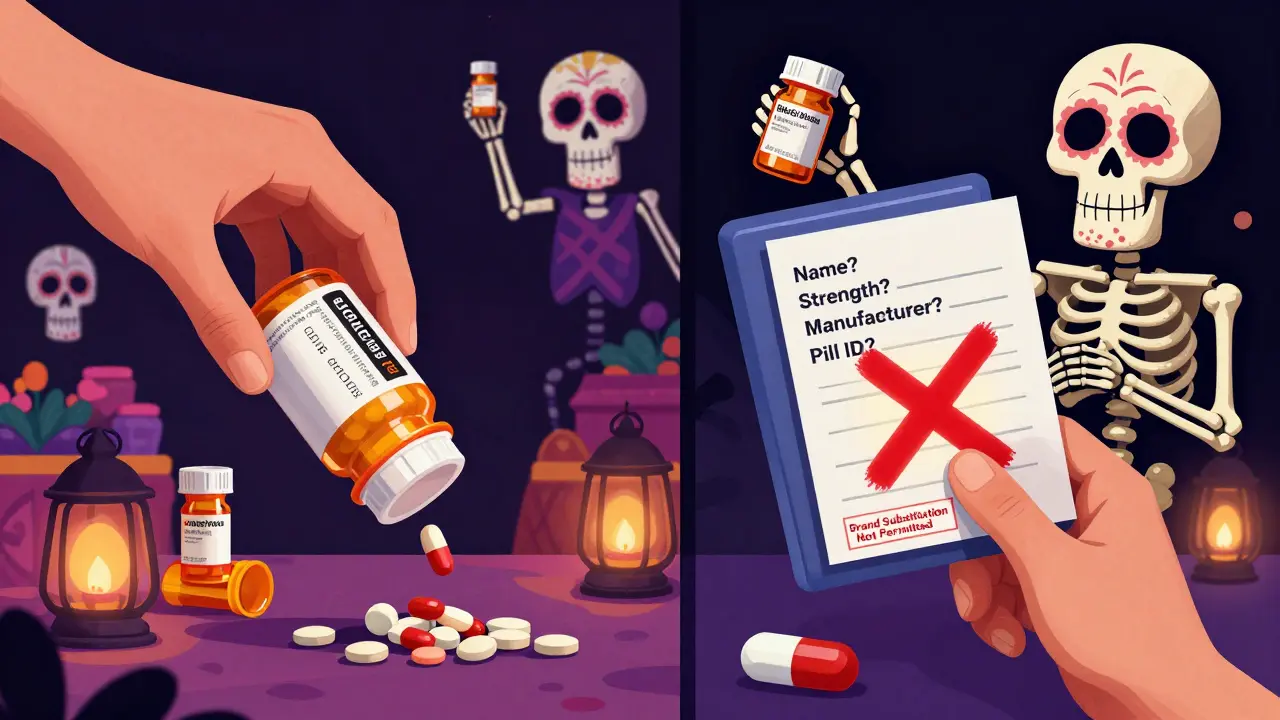
Red Flags That Mean Stop and Call
Don’t ignore these warning signs:- The active ingredient changed (e.g., from atorvastatin to rosuvastatin)
- The dosage strength is different and wasn’t approved by your doctor
- The label says “Brand substitution not permitted” but you got a generic
- You’re on a critical drug like warfarin, digoxin, or epilepsy meds and the manufacturer switched unexpectedly
- The pill looks completely wrong and the identifier tool can’t find it
Build a System That Works for You
People who stay safe with their meds don’t just check labels once-they build habits. Here’s what works:- Take a photo of every new pill bottle when you get it. Store them in a folder on your phone labeled “Medications.”
- Keep a small notebook with each drug’s name, strength, manufacturer, and pill appearance. Update it every refill.
- Ask your pharmacist: “Is this the same as my last bottle?” They’ll tell you if it’s a different generic.
- Use a pill organizer with clear labels. Don’t mix pills from different bottles-even if they’re the same drug.
Why This Matters More Than You Think
The Institute of Medicine estimates 1.5 million preventable drug errors happen every year in the U.S. Many of them start with a label that wasn’t checked. For older adults, 42% rely on color or shape to tell their pills apart. If those change without warning, confusion follows-and so can overdose, underdose, or dangerous side effects. Generic drugs are safe. They’re cheaper. They’re the standard. But safety doesn’t come from the label alone. It comes from you. You’re the last line of defense. You’re the one who holds the bottle. You’re the one who swallows the pill. Don’t let a small change slip by.What should I do if my new pills look completely different from the old ones?
Don’t assume it’s a mistake or that the pills are fake. First, check the medication name and strength on the label. If they match your old prescription, use the FDA’s Pill Identifier tool to confirm the pill’s identity. If the tool confirms it’s the same drug, it’s likely just a different generic manufacturer. If you’re still unsure, call your pharmacist. They can tell you exactly which company made the pills and whether it’s safe.
Can I switch between different generic manufacturers safely?
For most medications, yes. But if you’re taking a drug with a narrow therapeutic index-like blood thinners (warfarin), thyroid meds (levothyroxine), or seizure drugs (phenytoin)-small differences in how the generic is made can affect how your body absorbs it. In these cases, it’s safer to stick with the same manufacturer. Ask your pharmacist to fill your prescription with the same brand of generic each time, if possible.
Why do pharmacies switch generic manufacturers?
Pharmacies switch to save money. Generic drug prices change based on supply, competition, and contracts with distributors. If one manufacturer lowers their price, the pharmacy may switch to save costs. It’s not personal-it’s business. But that doesn’t mean you should ignore the change. Always check the label and confirm the drug is still the same.
What if my prescription says “Brand substitution not permitted” but I got a generic?
That’s a serious error. If your doctor checked “brand substitution not permitted” on the prescription, the pharmacy is required to give you the brand-name drug or a specific generic they’ve been approved to use. If you got a different generic, call the pharmacy immediately. They may have missed the note. Ask them to recheck the prescription and correct it. Never take a drug if the label contradicts your doctor’s instructions.
Is it safe to rely on the color or shape of my pills to tell them apart?
It’s common, but risky. Many patients over 65 use color and shape to identify their pills. But generics change appearance often. What was a blue oval last month could be a white capsule this month. Always verify the name and strength on the label, not just how the pill looks. Use the Pill Identifier tool or ask your pharmacist to confirm. Never rely on appearance alone.

OMG YES!! I almost took a whole bottle of wrong pills last month because I didn't check!! My heart was pounding!! Don't be that person who just throws pills in their mouth like candy!!
The FDA’s pill identifier tool is useless if you don’t know the imprint code. Most generics have micro-printed alphanumeric codes that are unreadable without a 10x magnifier. This is a performative safety measure for people who think they’re doing their due diligence while actually just scrolling through a website that returns 12 matches.
I swear to god, if one more pharmacy switches my levothyroxine from Teva to Accord I’m going to storm the building with a megaphone and a signed affidavit from my endocrinologist. My TSH levels are not a cost-saving experiment!!
I started taking photos of every bottle when I got my first new generic. It’s crazy how much easier it is to spot changes now. I even made a little spreadsheet with the pill shape, color, and manufacturer. It’s become a weirdly satisfying habit. You’re not crazy for caring - you’re smart.
I used to panic every time my pills changed shape - like, full-on panic attack, hyperventilating, calling my mom at 2 a.m. But then I learned to treat it like a new phone model: same core function, different casing. Now I just check the name and strength, snap a pic, and breathe. You’re not alone in this fear - but you don’t have to live in it.
Always verify the active ingredient. It’s the only thing that matters. Brand names, shapes, colors - these are marketing. The generic name is the science. If atorvastatin is listed, you’re getting atorvastatin. The rest is window dressing. Don’t let aesthetics scare you - educate yourself.
The notion that 'pharmacies switch manufacturers to save money' is an oversimplification. The actual driver is the PBM (Pharmacy Benefit Manager) formulary tiering system, which incentivizes low-cost generics regardless of therapeutic equivalence. This is a systemic failure, not a pharmacy error. You are not being paranoid - you are the only check against a broken supply chain.
i just check the name and dose and if it looks kinda similar i take it 😅 my grandma says its fine and she's been on 10 meds since 1980 so i trust her
Oh so now I’m supposed to become a pharmaceutical detective just because Big Pharma and PBM’s can’t keep their supply chains straight? I work two jobs and still have to pay $400 for insulin. You want me to photograph pills? Cool. I’ll photograph your paycheck.
Let me be the one to say it: this entire post is a glorified PSA that ignores the root cause - the monopolistic consolidation of generic drug manufacturers. Since 2010, 80% of generic drugs are produced by 12 companies, and many of them are owned by the same parent conglomerates. The 'different manufacturer' you see? It’s probably the same corporate entity with a different label. You’re not protecting yourself - you’re performing compliance theater.
People think safety is about checking labels but real safety is about trusting your doctor not to prescribe something dangerous in the first place. Why are we being forced to become pharmacists? Why is the system designed to make patients the last line of defense? This isn't empowerment - it's negligence dressed up as responsibility
i took a pic of my pills last week and i swear the new ones looked like tiny dinosaurs but the label said same thing so i kept em 😅
You think this is about generics? No. This is about the FDA allowing foreign manufacturers to produce 80% of our meds. China and India control the supply chain. The pills change because they’re made in different factories with different quality controls. The FDA doesn’t inspect them properly. The lot number? It’s a red herring. The real question is: who made this, and what are they feeding their workers? I’ve seen videos. You don’t want to know.
In South Africa, where I grew up, we didn’t have brand-name drugs at all - just generics, often without even a manufacturer name. We learned to read the imprint codes by heart. The real lesson here isn’t about American pharmacy logistics - it’s about patient literacy. You don’t need a PhD to read a label. You just need to be taught how. This is why health education should start in middle school.
I mean… if you’re the kind of person who needs to photograph their pills to feel safe, maybe you shouldn’t be on 7 medications. This isn’t a pharmacy problem - it’s a lifestyle problem. You’re not a patient. You’re a pharmacy inventory.