

Behind-the-Counter Medications: What You Can Buy Without a Prescription (And What You Can't)
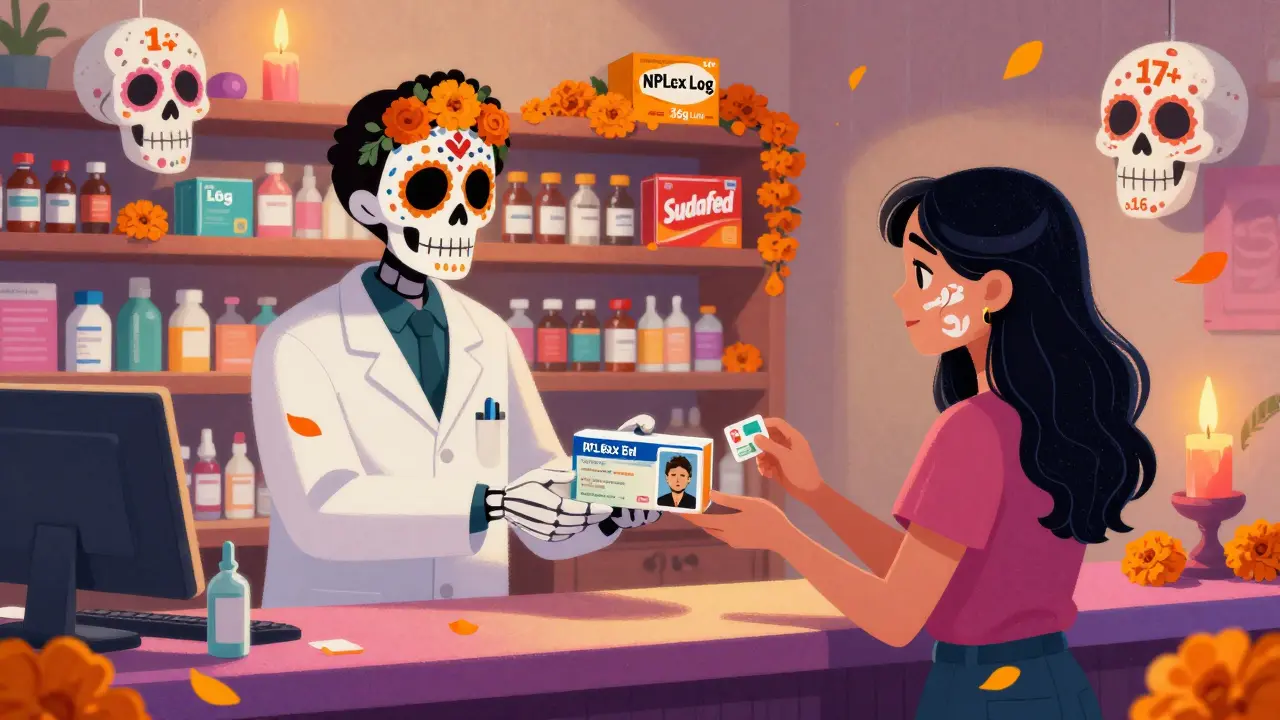
Ever walked into a pharmacy to buy Sudafed, only to find it locked behind the counter? Or tried to pick up Plan B at 11 p.m. and had to wait for the pharmacist to come out? You’re not alone. These aren’t random store policies-they’re part of a growing category called behind-the-counter (BTC) medications. Unlike regular over-the-counter (OTC) pills you can grab off a shelf, BTC drugs require a pharmacist to hand them to you. No prescription needed. But you do need ID, a conversation, and sometimes a wait.
What Exactly Are Behind-the-Counter Medications?
BTC medications sit between prescription drugs and regular OTC items. They’re not illegal. They’re not banned. But they’re not just sitting on a shelf either. The system was created in 2006 after Congress passed the Combat Methamphetamine Epidemic Act. The goal? Stop people from buying massive amounts of pseudoephedrine-the active ingredient in Sudafed-and turning it into methamphetamine. Since then, the model has expanded. Now, it’s used for drugs that are safe and effective but need a little extra oversight. Pharmacists aren’t just cashiers here. They’re gatekeepers, advisors, and sometimes the only medical professional you’ll talk to before taking the medicine. You can’t buy these at Walmart’s general merchandise aisle. You can’t order them online without a pharmacist verifying your identity. And you can’t walk out with more than the legal limit-even if you’re willing to pay extra.Common BTC Medications You Can Buy Right Now
Here are the most common BTC medications you’ll actually find in U.S. pharmacies as of 2026:- Pseudoephedrine (Sudafed, Claritin-D, Allegra-D): The original BTC drug. Each tablet usually contains 30-60 mg. You’re limited to 3.6 grams per day and 9 grams in 30 days. That’s about 6-12 tablets, depending on strength. You must show ID, and your purchase is logged in a national database called NPLEx, active in 45 states.
- Emergency Contraceptives (Plan B One-Step, Next Choice): Available without a prescription to anyone 17 and older. You still need to ask the pharmacist, and they must verify your age. These are 89% effective if taken within 72 hours of unprotected sex. Between 2007 and 2017, teen pregnancy rates dropped 46%-partly because Plan B became easier to get.
- Insulin (Walmart’s ReliOn brand): Regular insulin (Humulin R) and NPH insulin (Novolin N) are sold behind the counter for $25-$40 per vial. No prescription needed. This is a huge deal for people without insurance. Newer insulins like NovoLog still require a prescription.
- Codeine Cough Syrups (in a few states): Oregon and Mississippi still allow low-dose codeine (up to 12.8 mg per dose) without a prescription. But in most states, any codeine now requires a prescription due to abuse risks.
These aren’t random choices. Each one has a history of misuse, high effectiveness, or both. Pseudoephedrine helps with congestion but can be turned into a dangerous drug. Plan B prevents pregnancy but shouldn’t be used as regular birth control. Insulin saves lives but can be deadly if misused.
Why Not Just Make Them Fully OTC?
You might wonder: why not just let anyone buy these like aspirin? The answer is science. Take pseudoephedrine versus phenylephrine. Both are decongestants. But pseudoephedrine works. A 2019 study in the Journal of Allergy and Clinical Immunology found it relieved congestion in 72% of users. Phenylephrine? Only 38%. So why is phenylephrine on the shelf and pseudoephedrine behind the counter? Because pseudoephedrine can be used to make meth. The trade-off: better relief, but more rules. Same with Plan B. If it were fully OTC, minors could buy it without any oversight. The BTC model lets teens get it quickly-but still requires age verification. It’s not perfect. A 2022 Kaiser Health News investigation found 22% of pharmacies sold Plan B to underage teens without checking ID. But overall, access improved.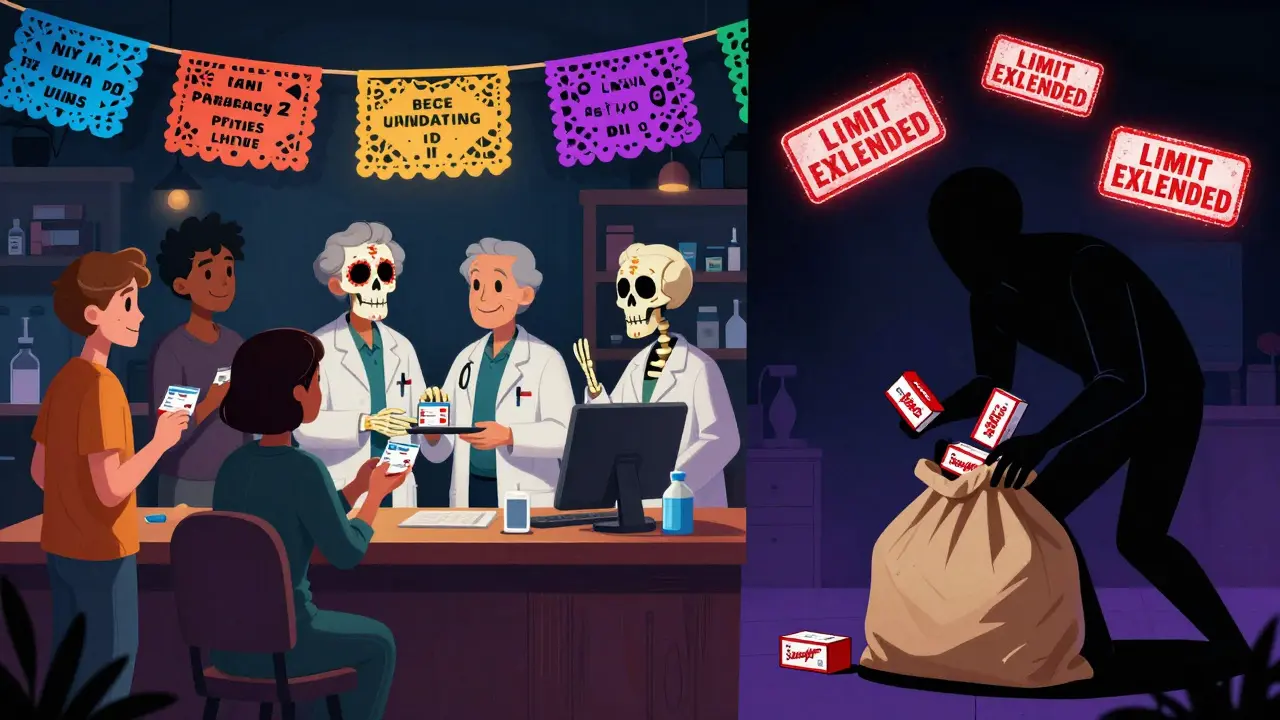
The Downsides: Inconvenience, Confusion, and Bias
BTC sounds good on paper. But in real life, it’s messy. First, it’s inconvenient. You can’t just grab it while buying milk. You have to go into the pharmacy, wait for someone, show ID, answer questions, and get logged into a system. That’s 5-7 minutes of your time, every single time. Second, rules vary by state. Oregon lets you buy 7.5 grams of pseudoephedrine a month. Texas lets you buy 9 grams. Some states require you to sign a logbook. Others use electronic systems. If you travel, you might get turned away because you hit your limit in another state. Third, there’s bias. A 2021 University of Michigan study found Black customers were 3.2 times more likely to be questioned or refused when buying pseudoephedrine-even when their purchase patterns matched white customers exactly. That’s not about policy. That’s about perception. And pharmacists aren’t always consistent. A 2022 study in the American Journal of Public Health found 18% of people seeking Plan B were delayed or denied-even though it’s legal. Some pharmacists refuse on moral grounds. Others just don’t know the rules.What’s Changing? The Future of BTC
The BTC model isn’t standing still. In May 2023, the FDA approved LoRez, a low-dose naltrexone, as the first BTC medication for alcohol use disorder. That’s a big deal. It means medications for addiction-once strictly prescription-only-are now being reconsidered. Industry experts predict 5-7 more prescription drugs will move to BTC status by 2027. Top candidates:- Low-dose atorvastatin (for cholesterol)
- 150mg mifepristone (for gynecological conditions)
- Higher-dose epinephrine auto-injectors (for anaphylaxis)
Why? Because pharmacists are trained to spot drug interactions, side effects, and misuse. They’re often more accessible than doctors. And for conditions like high cholesterol or early-stage addiction, you don’t always need a full doctor visit-you just need someone to check if it’s safe for you.
The market is growing, too. BTC medications made up 3% of all OTC sales in 2023. That’s about $3.6 billion. By 2026, that number could hit $8.5 billion. Retailers like Walmart are betting on it-ReliOn insulin now controls 18% of the OTC insulin market.
What You Need to Know Before You Buy
If you’re planning to buy a BTC medication, here’s what to expect:- Bring ID-government-issued photo ID only. No student cards, no expired licenses.
- Know your limits-pseudoephedrine is capped at 3.6g/day, 9g/month. Don’t try to buy from multiple stores. NPLEx tracks it all.
- Ask questions-pharmacists are there to help. If you’re unsure about dosage, timing, or side effects, ask. 76% of people who get BTC meds say they feel more confident after talking to a pharmacist.
- Check your state rules-some states have stricter limits. Look up your state’s pharmacy board website if you’re unsure.
- Don’t assume it’s automatic-some pharmacists may hesitate, especially with Plan B or insulin. Know your rights. If you’re legally allowed to buy it, you should be able to.
For insulin buyers: Walmart’s ReliOn brand is the most affordable option. But make sure you’re getting the right type-regular or NPH. Don’t confuse it with fast-acting insulins like Humalog, which still need a prescription.
What’s Next?
The BTC model is here to stay. It’s not perfect, but it’s better than the alternatives. Fully OTC? Too risky for some drugs. Prescription-only? Too slow for urgent needs. The real question isn’t whether BTC works. It’s whether we’ll fix the gaps. Standardize rules across states. Train pharmacists to reduce bias. Improve patient education. Make it easier for people in rural areas to access these drugs. Until then, if you need pseudoephedrine, Plan B, or insulin-be prepared. Bring your ID. Know the rules. And don’t be afraid to ask for help. That’s what the pharmacist is there for.Can I buy pseudoephedrine without showing ID?
No. Federal law requires photo ID for all pseudoephedrine purchases. Pharmacies must verify your identity and log the transaction in the NPLEx system. If you don’t have ID, you won’t be able to buy it-even if you’ve bought it before.
Why is Plan B behind the counter if it’s OTC?
Plan B is technically OTC, but the FDA required age verification to prevent misuse by minors. Behind-the-counter placement ensures pharmacists confirm you’re 17 or older. It’s not a restriction on the drug-it’s a safeguard on access. Anyone 17+ can buy it without a prescription.
Can I buy insulin without a prescription anywhere?
Only certain types, and only at specific retailers. Walmart’s ReliOn brand sells regular insulin (Humulin R) and NPH insulin (Novolin N) without a prescription. Other brands like NovoLog, Lantus, or Humalog still require a prescription. Always check the label and ask the pharmacist.
Do all pharmacies have the same BTC rules?
No. Federal rules set the minimum, but states can add stricter limits. For example, Oregon caps pseudoephedrine at 7.5 grams per month; Texas allows 9 grams. Some states require signed logbooks; others use electronic systems. Always check your state’s pharmacy board website if you’re traveling.
Can a pharmacist refuse to sell me Plan B?
In most states, pharmacists cannot refuse to sell FDA-approved BTC medications like Plan B based on personal beliefs. However, some states allow refusal under “conscience clauses.” If you’re denied, ask to speak to the manager or go to another pharmacy. You have the legal right to access it if you’re of age.
Are BTC medications more expensive than regular OTC drugs?
Not necessarily. Pseudoephedrine and Plan B usually cost the same as their shelf versions. In fact, Walmart’s ReliOn insulin costs $25-$40 per vial-far less than branded insulins that cost $100-$300. The difference isn’t price-it’s access. You’re paying for the pharmacist’s time and oversight, not the drug itself.

It’s wild how we treat some meds like contraband just because they can be misused. Pseudoephedrine helps people breathe, Plan B saves lives, insulin keeps people alive - but we make them jump through hoops while aspirin’s just sitting there like it’s on vacation. The system’s not broken, it’s just… weirdly inconsistent. Why is it okay for a kid to buy a bottle of cough syrup with dextromethorphan but not Plan B? Same logic, different rules.
It is imperative to note, however, that the Behind-the-Counter (BTC) paradigm is not merely a regulatory artifact - it is, in fact, a pharmacoeconomic and public health intervention that balances accessibility with risk mitigation. The National Precursor Log Exchange (NPLEx) system, for instance, functions as a real-time, state-integrated, controlled-substance monitoring protocol that has demonstrably reduced methamphetamine production by over 70% since its inception. Furthermore, the pharmacist’s role as a clinical gatekeeper - not merely a transactional agent - is critical in ensuring appropriate dosing, contraindication screening, and patient education. The inconveniences you cite are, in fact, the cost of responsible stewardship.
bro i just tried to buy sudafed last week and the lady behind the counter asked me if i was making meth and i was like… i have a 2 year old and a stuffy nose. she still made me sign a paper and stare at the ceiling for 3 minutes. why does this feel like airport security for a cold?
It’s fascinating how the structure of access reflects societal priorities. We’re willing to restrict a life-saving medication because of potential misuse, yet we allow unlimited access to sugar-laden snacks or tobacco products. The real question isn’t whether the system works - it’s why we’re so much more afraid of what people might do with medicine than with things we know are far more harmful.
The BTC model represents a pragmatic synthesis of biomedical ethics and public policy. While the United States exhibits regional disparities in implementation, the underlying principle - that certain pharmacological agents require professional oversight without full medicalization - is commendable. In developing nations, where physician density is low, pharmacists often serve as the primary point of clinical contact. Thus, expanding BTC status to statins or mifepristone may represent a scalable model for global health equity - provided cultural and educational barriers are addressed.
so plan b is behind the counter but you can buy a whole shelf of energy drinks with more caffeine than a triple espresso? and you don’t need to prove you’re not a 14-year-old? lol. we’re not protecting teens, we’re just being weird about vaginas.
they're tracking your purchases so they can build a profile on you. you think they care about meth? nah. they're building a database for the next phase of the biometric surveillance state. next they'll make you sign a waiver for ibuprofen and scan your retina to buy a bandaid. don't fall for it. this is step one.
my sister got denied plan b because the pharmacist said he didn't believe in birth control and then he called the police on her. i swear to god this is how fascism starts. they're turning pharmacies into religious checkpoints and no one's talking about it
It is imperative to recognize that the Behind-the-Counter paradigm, while administratively cumbersome, represents a critical evolution in patient-centered care. Pharmacists, as accessible, licensed healthcare professionals, are uniquely positioned to provide immediate, evidence-based counseling. The logistical inconveniences are minor compared to the clinical safeguards they provide. We must not mistake friction for failure. This is not bureaucracy - it is bioethics in motion.
so you’re telling me i can buy a whole box of cough drops with codeine in them in oregon but i need to fill out a federal form to get a decongestant? oh wait - that’s because oregon is full of weirdos who think weed is a vegetable. just sayin’.
they made insulin cheaper so people don’t die - but they still make you ask for it like you’re ordering a secret menu item. what’s next? a password to buy aspirin? ‘the answer is 1984’? i’m starting to think the real conspiracy is that they want us to feel guilty for being healthy.
they’re using the NPLEx system to track who buys cold medicine and then selling that data to insurance companies. next thing you know, your premiums go up because you bought sudafed three times last winter. and the government says it’s for ‘public safety’ - but it’s really just corporate surveillance with a side of pharmacy drama.
my grandma buys insulin at walmart every month. she doesn’t have insurance. she doesn’t have a doctor. she just walks in, hands over $30, and walks out. that’s healthcare. not some fancy app or appointment. just a pharmacist who says ‘you good?’ and hands you a vial. we need more of that.