

Aspirin with Other Blood Thinners: What You Need to Know About Bleeding Risks
Bleeding Risk Calculator
Risk Assessment Tool
This tool estimates your bleeding risk when combining aspirin with anticoagulants based on medical guidelines. Results are not medical advice.
Combining aspirin with other blood thinners might seem like a smart way to protect your heart - but it could be putting you at serious risk. Many people take low-dose aspirin daily thinking it’s harmless, especially if they’ve had a heart attack or stent. But when you add it to prescription blood thinners like warfarin, rivaroxaban, or apixaban, you’re not just doubling the effect - you’re creating a dangerous overlap that can lead to life-threatening bleeding.
Why This Combination Is Riskier Than You Think
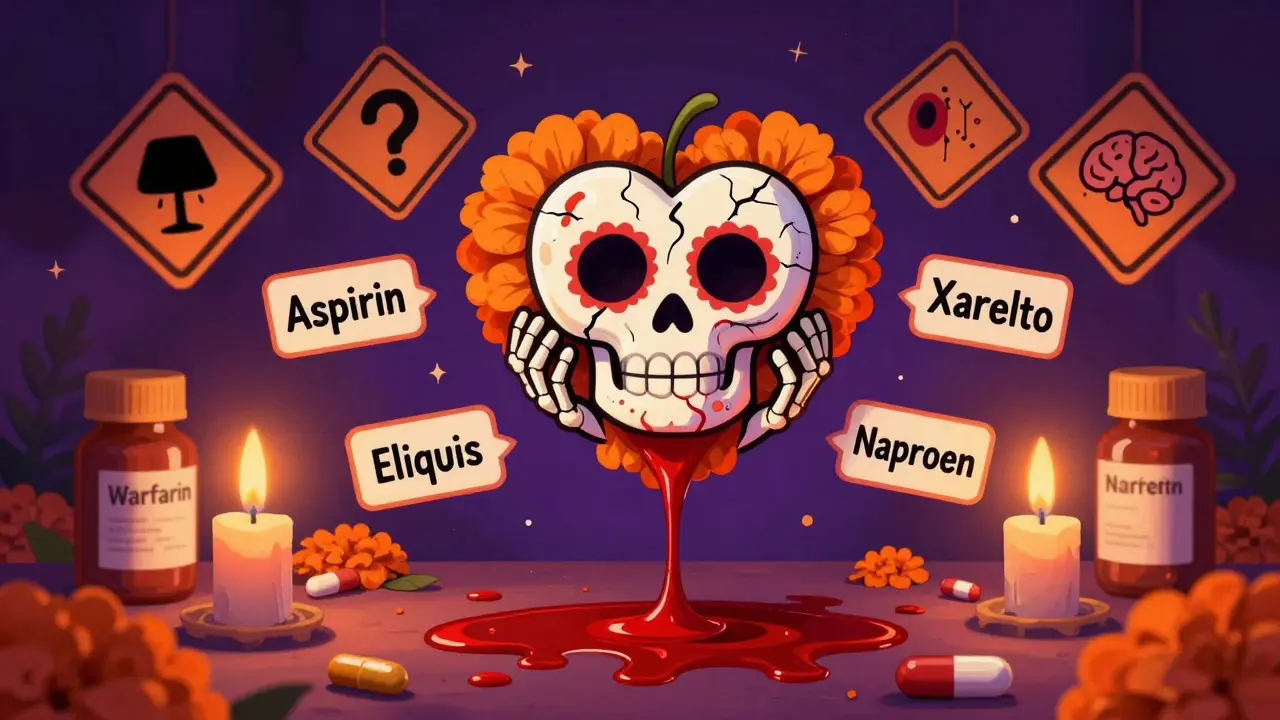
Aspirin doesn’t work like other blood thinners. While drugs like warfarin or Eliquis target clotting factors in your blood, aspirin stops your platelets from clumping together. Platelets are the tiny cells that rush to seal a cut. When aspirin blocks them, even small injuries can bleed longer. Add that to a drug that thins your whole blood, and your body loses its ability to stop bleeding naturally. Studies show this combo increases major bleeding incidents by double compared to using either drug alone. The most common places this happens? Your stomach, brain, lungs, and urinary tract. For example, people on both aspirin and a blood thinner are over twice as likely to have a gastrointestinal bleed - think black, tarry stools or vomiting blood. Intracranial bleeding (bleeding in the brain) jumps by more than three times. That’s not a small risk. That’s a medical emergency waiting to happen.Which Blood Thinners Are Most Dangerous with Aspirin?
Not all blood thinners are the same when paired with aspirin. Data from 24 studies published in 2024 found that rivaroxaban (Xarelto) had the highest bleeding risk when combined with aspirin. Apixaban (Eliquis) was slightly safer, but still risky. Warfarin, the older drug, also carries high danger - especially if your INR levels aren’t tightly controlled. Even over-the-counter painkillers can make things worse. If you’re taking aspirin and also use naproxen (Aleve), your bleeding risk spikes 4.1 times. Diclofenac (Voltaren) raises it 3.3 times. Even ibuprofen (Advil) isn’t safe - it still increases bleeding by nearly 80%. These aren’t just side effects. They’re predictable, documented dangers.Who Should Avoid This Combo Completely?
If you’re healthy and over 60, you probably shouldn’t be taking aspirin at all. The ASPREE trial followed nearly 20,000 older adults without heart disease and found that daily aspirin didn’t prevent heart attacks - but it did increase the chance of a serious brain bleed by 38%. That’s why major health groups like the National Institute on Aging now advise against routine aspirin use in healthy seniors. The real danger zone? People with:- High blood pressure (even if it’s controlled)
- Kidney disease
- A history of ulcers or GI bleeding
- Bleeding disorders like hemophilia or von Willebrand disease
- Older age (especially over 70)

When Is the Combo Actually Necessary?
There are a few situations where doctors might still prescribe aspirin with a blood thinner - but only after careful thought. These include:- Patients with mechanical heart valves (the valve can trigger clots)
- Some people after a stent placement, especially in the first few months
- Those with both atrial fibrillation and recent heart attack
What to Watch For: Signs of Internal Bleeding
Bleeding from this combo doesn’t always come with a scream. Sometimes, it’s silent. That’s why you need to know the warning signs:- Unexplained bruising, especially large patches or in unusual places
- Black, tarry stools or bright red blood in stool
- Red or cola-colored urine
- Headaches that won’t go away, dizziness, or confusion (could mean brain bleed)
- Feeling unusually tired, short of breath, or pale (signs of anemia from slow bleeding)
- Nausea, vomiting blood, or severe stomach pain
How to Reduce Your Risk If You Must Take Both
If your doctor says you need both aspirin and a blood thinner, don’t panic - but do take steps to protect yourself:- Take aspirin with food - it reduces stomach irritation
- Use an electric razor instead of a blade
- Switch to a soft-bristle toothbrush
- Avoid contact sports, heavy lifting, or activities with fall risk
- Get regular blood tests - hemoglobin levels should be checked every 3-6 months
- Ask your doctor about your HAS-BLED score - it helps predict bleeding risk based on your health history
The Bigger Picture: Why This Is Still So Common
About 29 million Americans take daily aspirin. Many started years ago on advice that’s now outdated. The FDA has added boxed warnings to NSAID-anticoagulant labels, and guidelines have shifted. Yet, many patients still get this combo because their doctor didn’t re-evaluate their plan. The global market for blood thinners is growing fast - expected to hit $66 billion by 2029. But that doesn’t mean more combinations are better. In fact, the trend is moving toward simpler, safer regimens. More people are now on single-drug therapy with NOACs (like apixaban) instead of mixing drugs.What’s Next? Personalized Medicine on the Horizon
Researchers are now looking at genetic testing to predict who’s most at risk. Some people have variations in genes like CYP2C9 or VKORC1 that affect how they process warfarin. In the future, doctors might test for these before prescribing combinations - but that’s not standard yet. For now, the message is clear: don’t assume aspirin is safe just because it’s cheap and over-the-counter. When mixed with blood thinners, it becomes a hidden danger. Always ask: Is this combo truly necessary? Is the benefit worth the risk? If you’re unsure, get a second opinion.Can I take aspirin with warfarin?
Yes, but only under strict medical supervision. The combination increases bleeding risk significantly - especially in the stomach and brain. Doctors may prescribe it briefly after a heart stent or for certain heart valve conditions. Regular INR checks and hemoglobin monitoring are essential. Most people are taken off aspirin after 6-12 months.
Is it safe to take aspirin with Eliquis or Xarelto?
No, unless your doctor specifically recommends it. Studies show combining aspirin with rivaroxaban (Xarelto) or apixaban (Eliquis) doubles the risk of major bleeding compared to using either drug alone. This combo is rarely justified outside of very specific cases like recent stent placement. For most people with atrial fibrillation, Eliquis alone is safer and just as effective.
What happens if I accidentally take ibuprofen with aspirin and a blood thinner?
One accidental dose of ibuprofen is unlikely to cause serious harm, but it still adds to your bleeding risk. Don’t make it a habit. If you need pain relief, talk to your doctor about acetaminophen (Tylenol), which doesn’t affect platelets or clotting. If you’ve taken multiple doses or notice unusual bruising, bleeding, or dark stools, contact your healthcare provider immediately.
Should I stop taking aspirin if I’m on a blood thinner?
Don’t stop without talking to your doctor. Abruptly stopping aspirin after a heart attack or stent can trigger a clot. But if you’re taking it for primary prevention (no history of heart disease), especially if you’re over 60, the risks likely outweigh the benefits. Ask your doctor to review your entire medication list - you may be able to safely stop aspirin.
Are there alternatives to aspirin for heart protection?
Yes. For people with heart disease, the best protection comes from statins, blood pressure control, exercise, and quitting smoking. For those with atrial fibrillation, single anticoagulants like apixaban or rivaroxaban are far more effective than aspirin. Aspirin alone doesn’t prevent stroke in AFib - and it still causes bleeding. Modern guidelines recommend skipping aspirin entirely for primary prevention.

I just started taking Eliquis last month after my AFib diagnosis, and my doctor didn’t mention aspirin at all. So glad I read this. I was literally about to grab an Advil for my headache. Yikes. Thanks for the clarity!
The clinical evidence presented here is methodologically sound and aligns with the 2024 meta-analysis published in the Journal of Thrombosis and Haemostasis. The synergistic anticoagulant effect of dual antiplatelet and anticoagulant therapy significantly elevates the hazard ratio for major hemorrhagic events, particularly in the gastrointestinal and central nervous systems. Clinical guidelines from the American College of Cardiology and European Society of Cardiology have consistently recommended against routine combination therapy outside of narrow, time-limited indications.
I’ve been on warfarin for 8 years after a PE. My doc pulled me off aspirin after my last INR spike. Just wanted to say - this info matters. Don’t assume it’s harmless.
You people are so gullible. The FDA is controlled by Big Pharma. They want you on expensive drugs so you keep paying. Aspirin has been used for 120 years. Why would they suddenly say it’s dangerous? It’s because they’re replacing it with 300-dollar-a-month pills. Wake up. This is a money grab.
America’s healthcare system is a joke. You take one pill, then another, then another - all because some guy in a lab coat says so. Meanwhile, in Germany, they just tell you to eat better and move. We’re overmedicating ourselves into an early grave. Aspirin’s fine. Just don’t be a zombie on 7 different prescriptions.
Did you know the WHO secretly funded studies to discredit aspirin? It’s all about controlling the narrative. They don’t want you to know that aspirin also prevents cancer. The bleeding risk? That’s just a scare tactic. I’ve been taking 325mg daily for 15 years. I’m 72 and feel better than my 45-year-old neighbor. Coincidence? I think not.
I’m 68, no heart issues, never had a stroke, and I’ve been on daily aspirin since 2010 because my mom did. This article made me pause. I actually called my doctor today. Turns out I was in the ASPREE trial group. They didn’t tell me. I’m so glad I read this - I’m going to stop. I didn’t realize I was part of a study. Honestly, it’s kind of scary how little we’re told.
The data is clear. The risk-benefit ratio for aspirin monotherapy in primary prevention is unfavorable in patients over 60. The 2019 ACC/AHA guidelines reflect this. Dual therapy with NOACs and aspirin should be limited to transient high-risk states such as post-PCI with high thrombotic burden. Long-term dual therapy is not supported by evidence and increases morbidity.
I’ve been on Eliquis and aspirin for 3 years. My wife had a stroke last year. I thought this combo was saving me. Then I started seeing black stools. I thought it was just my diet. I went to the ER. They said I was one day away from a transfusion. I’m lucky. I’m off aspirin now. Don’t wait. Listen to your body. I didn’t.
This whole thing is a lie. They’re scared of people getting healthy on their own. Aspirin is cheaper than a coffee. Why would the system want that? They want you hooked on pills. I’ve been taking aspirin with Xarelto for 4 years. No problems. They just want you scared so you keep paying.
It’s fascinating how laypeople misinterpret pharmacokinetics. The real issue isn’t the drugs - it’s the lack of therapeutic drug monitoring. Most patients on dual therapy have no INR checks, no platelet function tests, no hemoglobin tracking. The problem isn’t the combination - it’s the negligence. This article is good, but it’s still too soft. We need mandatory monitoring protocols. Not just ‘ask your doctor’ - enforceable standards.
Aspirin is the people’s drug. The government doesn’t want you to know it prevents cancer. They want you on $500/month pills. I’ve been on both for 6 years. I’ve never had a bleed. My doc says I’m fine. You’re being manipulated. The real danger? Trusting the system.
Just got off Eliquis last week after 2 years. Doc said my CHA2DS2-VASc was low and I didn’t need anticoagulation anymore. Also ditched aspirin. Honestly? Felt better. No more worrying about bruises. No more ‘don’t take NSAIDs’ anxiety. Sometimes the best treatment is just stopping stuff you don’t need. Simple. Clean. No drama.