State Laws on Generic Drug Substitution: What Pharmacists and Patients Need to Know
Chris Gore
Drug Allergy: Symptoms, Triggers, and What to Do When You React
When your body mistakes a medicine for a threat, it can trigger a drug allergy, an immune system response to a medication that causes harmful symptoms. Also known as medication hypersensitivity, a drug allergy isn’t just a side effect—it’s your body attacking something it thinks is dangerous. This isn’t rare. About 5-10% of people report having one, and some reactions can be life-threatening.
Not every bad reaction is an allergy. Nausea from antibiotics? That’s likely a side effect. A rash after penicillin? That could be an allergy. The key difference is your immune system gets involved. Common triggers include penicillin, a class of antibiotics that causes the most frequent allergic reactions, sulfa drugs, NSAIDs like ibuprofen, and chemotherapy agents. Even aspirin, a widely used pain reliever that can trigger severe reactions in some, can cause problems for people with asthma or nasal polyps. These aren’t guesses—they’re well-documented patterns from real patient data.
Symptoms range from mild—like hives, itching, or a runny nose—to serious, like swelling of the throat, trouble breathing, or a sudden drop in blood pressure. That last one is called anaphylaxis, a rapid, full-body allergic reaction that requires immediate emergency care. If you’ve ever had one, you know it doesn’t wait for an appointment. That’s why knowing your triggers matters. Many people don’t realize they’re allergic until they get sick after a new prescription. Others have reactions years after using a drug safely before.
Doctors can’t always test for drug allergies like they do for pollen or peanuts. Skin tests work for penicillin, but not much else. The best tool is your history: what happened, when, and how bad. If you’ve had a reaction, write it down. Tell every provider you see. Don’t just say "I’m allergic to antibiotics"—be specific. "I broke out in hives after amoxicillin" gives them the real info they need.
And here’s the thing: avoiding a drug you’re allergic to doesn’t mean you’re stuck without options. Pharmacists and doctors know alternatives. If you react to one painkiller, another might be safe. If penicillin isn’t an option, there are other antibiotics that work just as well. The goal isn’t to avoid all meds—it’s to avoid the ones that hurt you and find the ones that help.
What you’ll find below are real stories and facts about how drug allergies show up, how they’re misdiagnosed, and how people manage them every day. From how generic switches can trigger unexpected reactions, to why some people react to ingredients they never knew were in their pills, these posts give you the practical knowledge you need to speak up, stay safe, and get the right care.
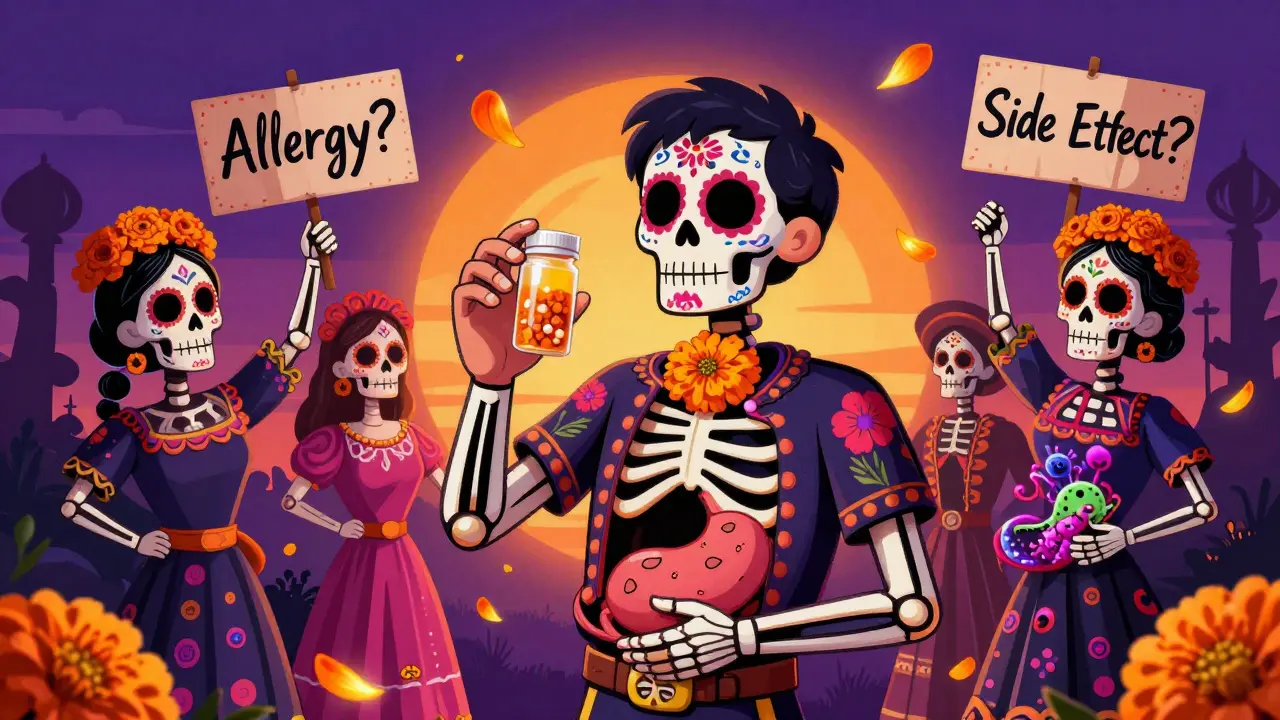
Learn how to tell the difference between a drug side effect and a true allergy-why confusing them can be dangerous, and what steps to take for accurate diagnosis and safer treatment.
Chris Gore Jan 19, 2026
Anaphylaxis from medication is fast, deadly, and often misunderstood. Learn the critical emergency steps-epinephrine first, lay flat, call 911-that save lives when seconds count.
Chris Gore Nov 27, 2025