

State Laws on Generic Drug Substitution: What Pharmacists and Patients Need to Know
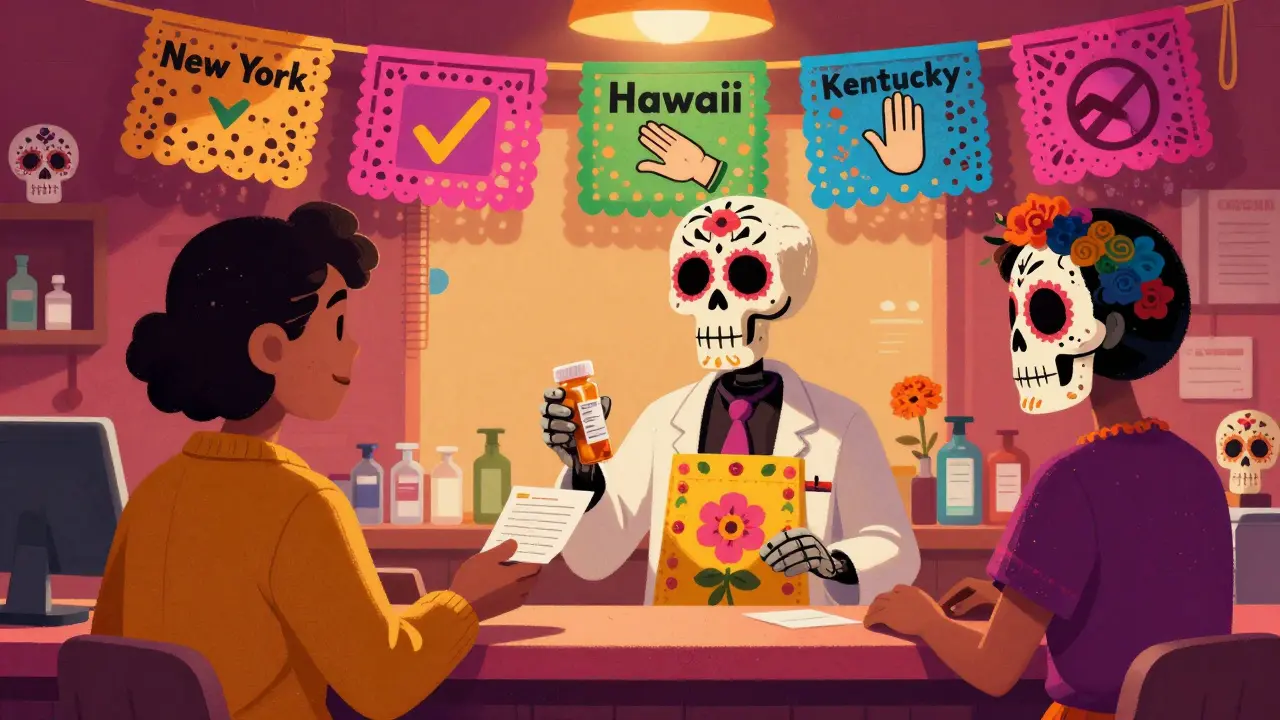
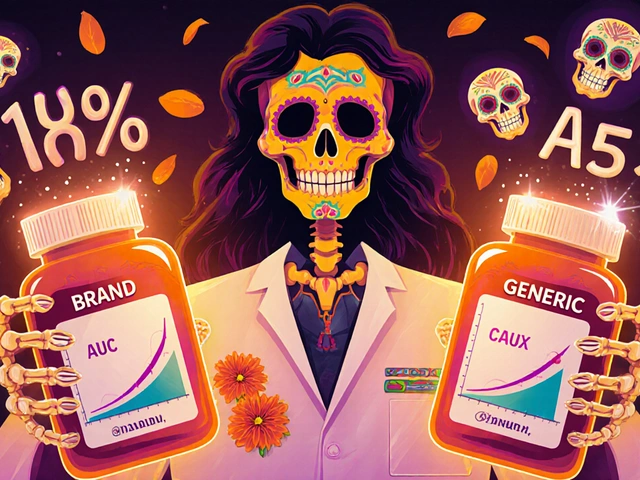
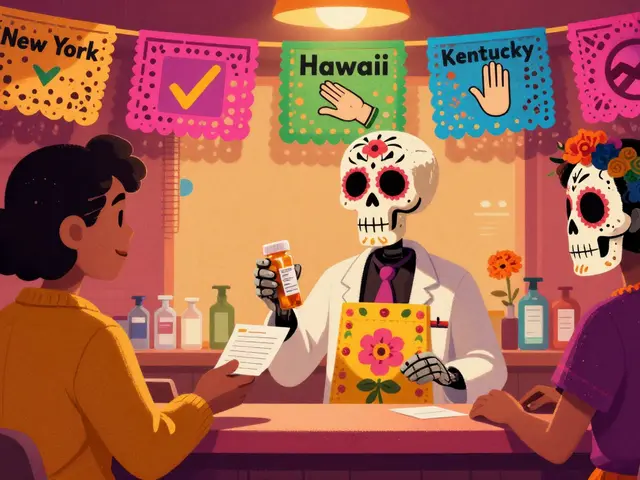
Every year, over 6 billion prescriptions are filled in the U.S. About 92.5% of them are for generic drugs. That’s not just a trend-it’s the result of a patchwork of state laws that decide whether a pharmacist can swap a brand-name drug for a cheaper generic without asking you. And here’s the thing: generic substitution isn’t the same in New York as it is in Hawaii. One state might let the pharmacist switch automatically. Another might require you to sign a form. Some don’t allow substitutions for certain drugs at all-even if the FDA says they’re identical.
How State Laws Decide Who Can Swap Your Prescription
Each state has its own rules about when and how pharmacists can substitute generic drugs. These aren’t just suggestions-they’re legally binding. The federal government, through the FDA’s Orange Book, lists which generics are considered therapeutically equivalent to brand-name drugs. But states decide whether pharmacists must, can, or can’t make the switch. There are four big ways these laws differ:- Duty to substitute: In 22 states, pharmacists are required to substitute generics unless the doctor or patient says no. In the other 28 states and D.C., substitution is optional. The pharmacist can choose to fill the brand name if they want.
- Patient consent: Thirty-two states use presumed consent. That means the pharmacist swaps the drug unless you say, "No, I want the brand." Eighteen states require explicit consent-you have to say yes before the switch happens.
- Notification: Forty-one states require pharmacists to tell you after they’ve substituted the drug. That might be a printed note, a verbal explanation, or a message on your receipt.
- Liability protection: Thirty-seven states protect pharmacists from lawsuits if they follow the rules. If you’re unhappy with the generic and sue, the pharmacist can’t be held liable as long as they followed state law.
Why Some Drugs Are Off-Limits for Substitution
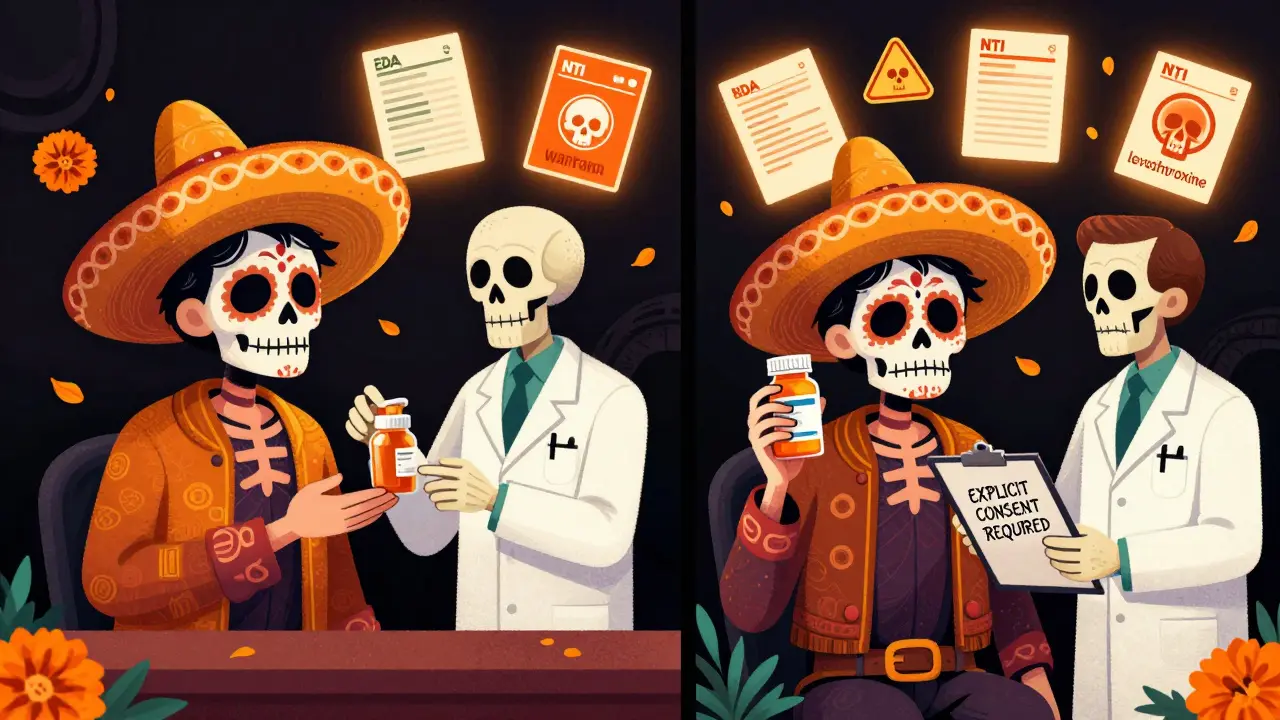
Not all drugs can be swapped. The FDA says most generics are just as safe and effective. But for drugs with a narrow therapeutic index (NTI), even tiny differences can cause serious problems. These are drugs where the difference between a helpful dose and a dangerous one is very small. Examples include:- Warfarin (blood thinner)
- Levothyroxine (thyroid hormone)
- Phenytoin and other antiepileptic drugs
- Digitalis glycosides (heart medication)
What’s Different About Biosimilars?
Biosimilars are a newer kind of generic-made from living cells, not chemicals. They’re used for conditions like rheumatoid arthritis, cancer, and Crohn’s disease. As of 2023, 49 states and D.C. have laws for biosimilar substitution. But the rules are even more complex. In Florida, pharmacies must create a formulary that says which biosimilars they’ll use, and they have to prove it won’t harm patients. In Iowa, pharmacists are told to stick to the FDA’s Orange Book for determining if a biosimilar can be swapped. Hawaii is the strictest: it requires both the doctor and the patient to give written consent before substituting any biosimilar for an antiepileptic drug. The FDA now has a special "interchangeable" designation for biosimilars that can be swapped without the prescriber’s involvement. Twelve states updated their laws in 2023 to reflect this. But many haven’t. That means a patient in Ohio might get a biosimilar automatically, while someone in California might need a new prescription just to switch.How This Affects Patients and Pharmacists
For patients, the biggest issue is confusion. One person might live in New York, where pharmacists must ask permission to switch. Their neighbor in New Jersey gets the generic without being asked. When they visit each other, they’re confused. Reddit threads and patient forums are full of stories like: "I asked for my usual generic, but the pharmacist said I can’t get it here because of state law." A 2022 survey of 1,200 independent pharmacists found that 63% saw fewer patients abandon their prescriptions when substitution was automatic. That’s good-people stick with their meds. But 217 complaints were filed with the FDA between 2020 and 2022 about side effects after switching. Most involved levothyroxine and warfarin. For pharmacists, it’s a nightmare. On average, they spend nearly 13 minutes per prescription checking state laws, FDA ratings, NTI lists, and patient preferences. Chain pharmacies handle prescriptions that cross state lines 18% of the time. That means a prescription written in Pennsylvania might be filled in New Jersey. The pharmacist has to know both states’ rules. To help, 83% of pharmacy software now automatically checks the patient’s state and blocks substitutions that aren’t allowed. That’s cut errors by 64%. But it’s still not perfect. Pharmacists still need to know the law-and they’re tested on it in licensing exams. Ninety-two percent of states require this knowledge to become licensed.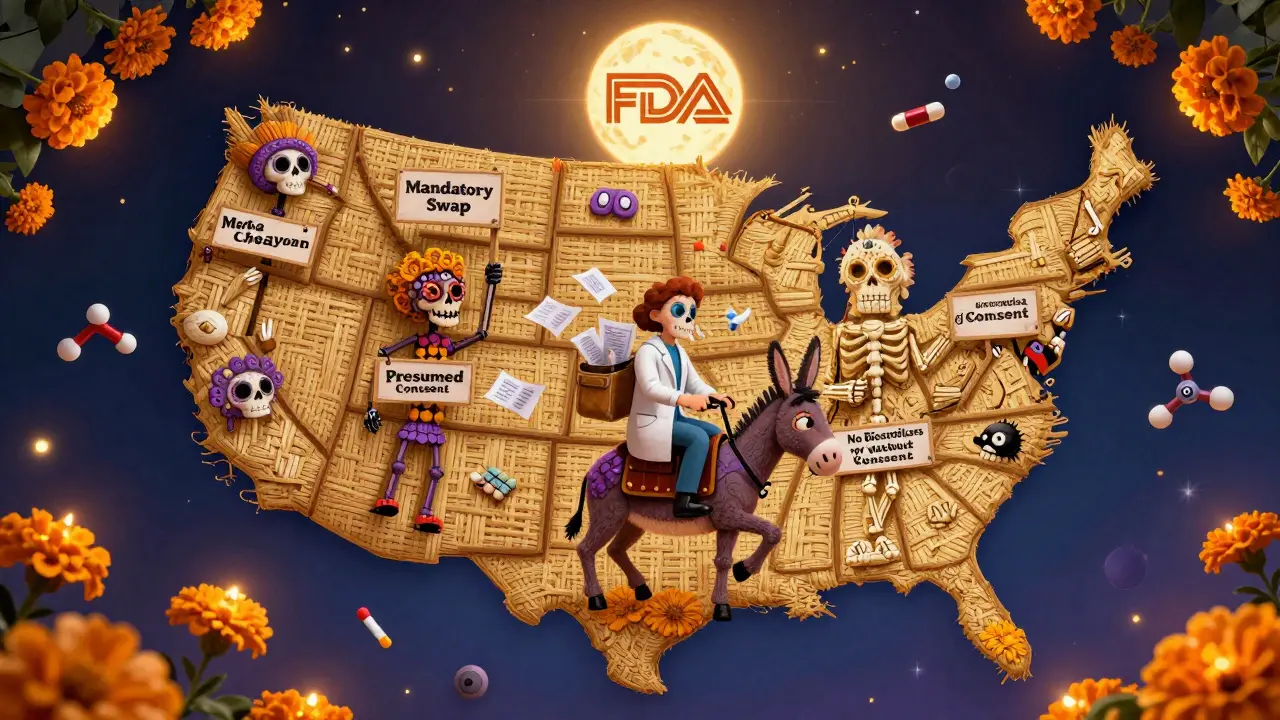
Who Saves Money-and Who Doesn’t
The goal of these laws is cost savings. From 2009 to 2019, generic drugs saved the U.S. system $1.7 trillion. In states with mandatory substitution, generic fill rates hit 94.1%. In permissive states, it’s only 88.3%. That’s a 5.8% gap-and it adds up fast. A 2018 study found mandatory substitution increased generic use for statins by 12.3%. States with presumed consent saw an 8.7% rise across multiple drug classes. Medicaid programs save about $1.2 billion a year because of mandatory laws. But not everyone benefits equally. Patients with rare diseases-25 to 30 million Americans-often take NTI drugs. They’re the ones most at risk if a substitution goes wrong. Advocacy groups like the National Organization for Rare Disorders warn that pushing for maximum substitution could hurt the people who need stability the most.The Push for Change
Pharmacists are tired of the confusion. The American Pharmacists Association says 78% of them struggle with inconsistent rules across states. The Uniform Law Commission is drafting a Model State Biologics and Biosimilars Act to bring some order. The Congressional Budget Office estimates that if all states aligned their laws, we could save another $8.7 billion by 2028. But others argue that states should keep control. Rural areas might need more flexibility. States with high rates of chronic illness might want tighter controls. There’s no one-size-fits-all solution. Right now, the system works-sort of. It saves money. It keeps most people on their meds. But it’s complicated, inconsistent, and sometimes risky. And until there’s a national standard, you’ll keep getting different answers depending on where you live.Can my pharmacist switch my brand-name drug to a generic without asking me?
It depends on your state. In 32 states, pharmacists can substitute automatically unless you say no (presumed consent). In 18 states, they must ask for your permission first (explicit consent). Check your state’s pharmacy board website or ask your pharmacist directly.
Are generic drugs really the same as brand-name ones?
The FDA says yes-for most drugs. All generics must meet the same standards for strength, purity, and performance. But for drugs with a narrow therapeutic index-like warfarin or levothyroxine-even small differences can affect how your body responds. That’s why some states restrict substitution for these drugs.
What if I don’t want a generic version?
You always have the right to refuse. Ask your doctor to write "dispense as written" or "no substitution" on your prescription. In states with presumed consent, you can still tell the pharmacist you want the brand. In mandatory substitution states, you can still say no. Your preference overrides the law.
Why do some states block substitution for epilepsy drugs?
Because small changes in blood levels of antiepileptic drugs can trigger seizures. Even though generics are approved as equivalent, some patients report differences in effectiveness or side effects after switching. States like Kentucky, Hawaii, and California restrict substitution for these drugs to reduce that risk.
Do biosimilars follow the same rules as regular generics?
No. Biosimilars are more complex and are regulated under separate state laws. Some states require both doctor and patient consent before substitution. Others allow substitution only if the drug has an "interchangeable" designation from the FDA. Rules vary widely-check your state’s pharmacy board for details.
How can I find out what my state’s substitution rules are?
Visit your state’s Board of Pharmacy website. Most have a section on generic substitution or drug product selection laws. You can also ask your pharmacist-they’re required to know the rules. If you’re unsure, call the board directly. They can tell you whether your state uses mandatory, permissive, or explicit consent rules.



So my pharmacist just swapped my levothyroxine last week and I felt like a zombie for two days. Turns out my state lets them do it without asking. I had no idea. Now I always say "no substitution" on the script. Seriously, why isn’t this on the receipt?
Also why do I have to know state laws just to get my thyroid meds?
Wow this is so eye opening i never realized how wild the patchwork of laws is across states like seriously in india we just get generic and its fine but here its like playing russian roulette with your meds
imagine being in new york and your neighbor in texas gets the same pill but its switched without consent and you get asked every time its just so inconsistent and honestly its exhausting for patients and pharmacists alike
why cant we just have one simple rule like if its in the orange book and its safe then let the pharmacist do it unless the doc says no
also i hope they fix the biosimilar mess soon because my cousin with rheumatoid arthritis got stuck with a brand name because the pharmacy in minnesota didnt know the florida rules
we need federal guidance here not 50 different rulebooks
As someone who’s lived in five states, this is the most chaotic healthcare thing i’ve ever seen. In California, I had to sign a form every time. In Texas, they swapped it and mailed me a note. In Florida, they asked me in person. In New York, they didn’t even mention it until I checked my receipt.
And don’t get me started on biosimilars. My mom’s arthritis drug switched twice in six months because the pharmacy changed its formulary. She didn’t even know until her joint pain came back.
It’s not just about money. It’s about dignity. You should know what you’re getting. Period.
My pharmacist just swapped my warfarin and i almost had a stroke. Dont trust the system. Say no substitution. Always.
It is evident that the current regulatory framework is fragmented and inefficient. The absence of harmonized standards across jurisdictions imposes unnecessary administrative burdens on pharmacists and creates significant risks for patients taking medications with narrow therapeutic indices.
Empirical data from the FDA and state pharmacy boards confirms that substitution errors correlate with geographic boundaries rather than clinical necessity. A uniform model code would reduce liability exposure and improve medication adherence.
It is regrettable that cost-saving incentives have outpaced patient safety protocols.
Hey everyone i just want to say this is actually really cool how pharmacists are trying to help save money and keep people on their meds
yeah the system is messy but think about it-88% of prescriptions are generics now and most people are fine
if you’re worried about your thyroid or seizure meds just tell your doc to write no substitution
and hey if your pharmacist gives you a note after switching that’s actually pretty cool they’re being transparent
we can fix this without freaking out. small steps. trust the process.
This whole system is a controlled demolition. The FDA says generics are identical. But every time someone has a seizure or a bleed, the same people scream "it’s the generic!"
Who benefits? The drug companies that make the brand-name versions. They lobby state legislatures to block substitution. They fund patient groups. They pay doctors to write "dispense as written".
And now they’re pushing biosimilar restrictions too. Same playbook.
They don’t care about you. They care about profits. And the state laws? They’re just the cover.
Let’s be real. The entire generic substitution framework is a regulatory theater designed to make pharmacists look like heroes while shifting liability onto patients.
The FDA’s Orange Book is a joke. Bioequivalence thresholds are laughably lenient. NTI drugs? They’re not "equivalent"-they’re statistically similar within a 20% margin of error.
And the 13 minutes per script? That’s just the paperwork. The real time is spent calming down panicked patients after they switch from one levothyroxine batch to another and suddenly feel like they’re drowning.
Pharmacies don’t want to know the laws. They want to be shielded from lawsuits. And the states? They’re just passing the buck to avoid federal intervention.
It’s not a system. It’s a liability minefield with a side of cost savings.
They swapped my seizure med. I had three in a week.
They knew. They didn’t care.
Now I carry my script in my wallet.
And I scream at every pharmacist.
They’re not heroes. They’re clerks with a rulebook.
I’ve been on the same generic for 10 years. Never had an issue. But I always ask. Just to be safe.
It’s not about fear. It’s about knowing your body.
And if your pharmacist takes the time to explain it? That’s a good one.
Hold onto those.
While the current regulatory architecture presents considerable logistical complexity, it is imperative that we recognize the underlying intent: to balance cost containment with clinical safety.
Pharmacists, as medication experts, are uniquely positioned to navigate these state-specific statutes. The implementation of automated decision-support systems has demonstrably reduced error rates by 64 percent, a significant achievement.
It is my sincere hope that the Uniform Law Commission’s Model Act will foster greater alignment, while preserving the autonomy of states to address regional health disparities.
Let us proceed with diligence, not disruption.
As a pharmacist with 18 years of experience, I can say this: the system works when we’re given the tools and training.
Our software blocks 95% of illegal substitutions before we even open the bottle.
But when a prescription crosses state lines, we still have to pause, verify, and sometimes call the prescriber.
I’ve had patients thank me for taking the time to explain why we couldn’t switch their warfarin.
It’s not about the law. It’s about trust.
And that’s worth every extra minute.