

Pharmaceutical Prices across Different Countries: A Comparison
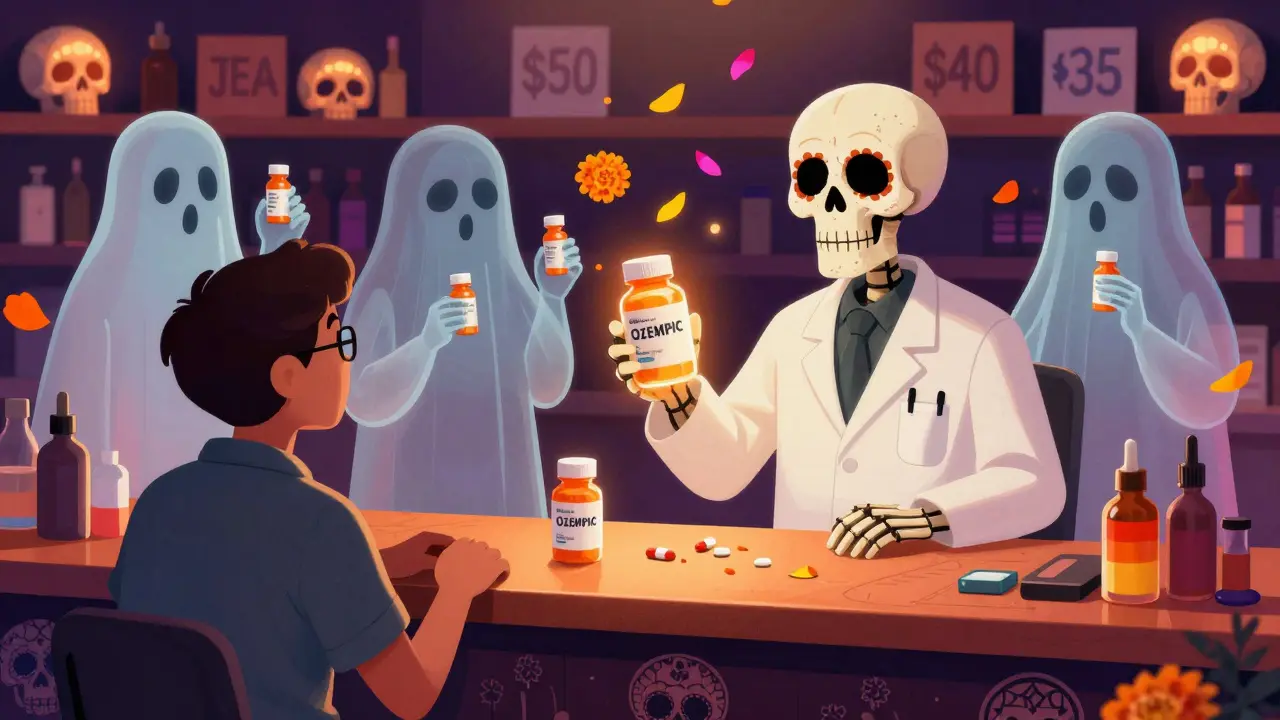
When you walk into a pharmacy in the U.S. and see a $1,200 price tag for a month’s supply of Ozempic, it’s easy to think you’re being ripped off. But if you fly to Japan or Australia, you might pay under $50 for the same drug. Why does this happen? It’s not about quality. It’s not about manufacturing. It’s about policy.
Why Drug Prices Vary So Much
Pharmaceutical companies don’t set prices randomly. They respond to what each country allows. In the U.S., drugmakers can charge whatever the market will bear - until recently. Medicare didn’t have the legal power to negotiate prices for most drugs until the Inflation Reduction Act of 2022. Now, for the first time, it’s negotiating prices on 10 high-cost medications, starting in 2025. But even these new prices are still far higher than what other countries pay.Take Jardiance, a diabetes drug. In the U.S., Medicare’s negotiated price is $204 per month. In Japan, it’s $52. That’s nearly four times cheaper. Australia, which uses international price comparisons to set its own prices, charges even less for Eliquis and Xarelto. These aren’t knockoffs. They’re the exact same pills, made by the same factories.
The difference comes down to how countries control costs. Most developed nations use reference pricing. They look at what other countries pay and set their own price below the average. Canada, Germany, and the UK do this. France and Japan often have the lowest prices in the OECD because they aggressively cap what manufacturers can charge.
The U.S. Double Standard
Here’s the twist: the U.S. isn’t just expensive for brand-name drugs - it’s cheap for generics. About 90% of prescriptions filled in the U.S. are for generic drugs. And those? They’re often cheaper than anywhere else. A 30-day supply of metformin might cost $5. In the UK, it’s $10. In Germany, $12. Why? Because U.S. pharmacies and pharmacy benefit managers (PBMs) have enormous buying power. They negotiate bulk discounts. The system works well for generics - but not for new, patented drugs.Brand-name drugs make up only 7% of U.S. prescription volume, but they account for nearly 80% of total drug spending. That’s why the cost of drugs like Enbrel, Stelara, and Imbruvica drives headlines. These are drugs with no competition. No generics. No substitutes. And in the U.S., manufacturers have had free rein to raise prices for years.
How Other Countries Do It
In Australia, the Pharmaceutical Benefits Scheme (PBS) reviews every new drug. If the price is too high, they negotiate - or they won’t list it. If it’s listed, Australians pay a flat co-pay of around $30 per script (or $7.50 if they’re low-income). The government pays the rest. This system keeps prices low without killing innovation.Japan uses a similar model. The government sets a national price for every drug based on cost-effectiveness and what’s paid in other countries. They also require manufacturers to cut prices every few years. As a result, Japan consistently has the lowest prices for biologics and specialty drugs in OECD studies.
Germany uses a mix of reference pricing and mandatory discounts. If a drug is priced above the average of similar drugs, the manufacturer must offer a rebate. If they refuse, the drug gets removed from insurance coverage. This forces companies to compete on price - not marketing.
The U.S. Exception
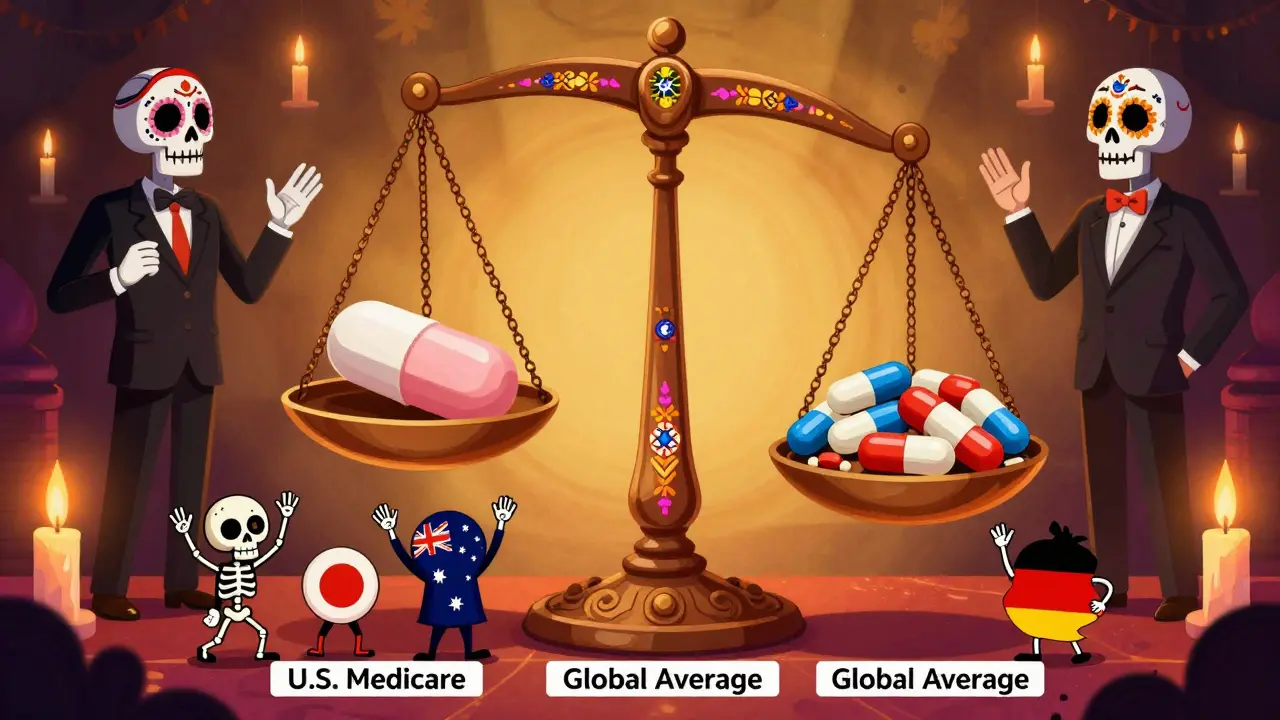
The U.S. is the only high-income country without a national drug pricing system. Instead, private insurers, PBMs, and Medicare negotiate separately. This creates a patchwork. One insurer might pay $150 for a drug. Another might pay $800. The list price - the sticker price you see - is often meaningless. It’s what the manufacturer charges before discounts. But those discounts are hidden. You never see them.That’s why the University of Chicago’s 2024 analysis found something surprising: when you look at net prices (after discounts and rebates) across six countries, the U.S. actually pays 18% less than peers. But here’s the catch - that’s only true if you include generics. For brand-name drugs alone? U.S. prices are 422% higher than other countries.
So the U.S. isn’t expensive because it pays too much for everything. It’s expensive because it pays way too much for a small number of drugs - the ones that don’t have competition.
What the Data Shows
A 2024 study in JAMA Health Forum looked at 549 essential medicines across 72 countries. They adjusted for purchasing power, so a $100 drug in the U.S. isn’t compared to a $100 drug in India. Instead, they measured how much it cost relative to Germany (set at 100). Here’s what they found:- Lebanon: 18.1 - prices at 18% of Germany’s
- Japan: 42.3 - one of the lowest
- Australia: 45.6 - low due to PBS
- France: 48.9 - strict price controls
- Germany: 100 - baseline
- Canada: 131.4 - higher than Europe
- United Kingdom: 135.2 - similar to Canada
- United States: 165.3 - highest among wealthy nations
- Argentina: 578.6 - inflated due to currency and supply issues
Even after adjusting for income, the U.S. still pays nearly 65% more than the average wealthy country for essential medicines.
Medicare’s New Role
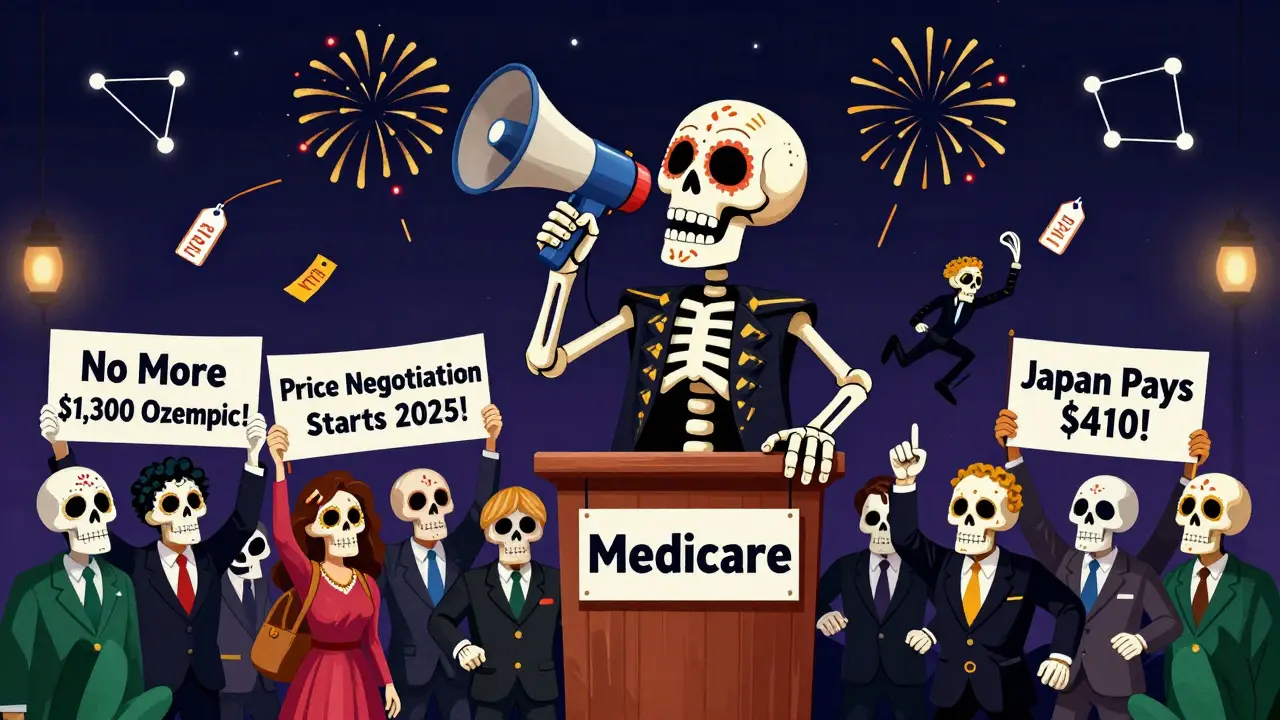
The 10 drugs chosen for Medicare negotiation in 2023 are a turning point. These include Jardiance, Entresto, Enbrel, Imbruvica, Eliquis, Xarelto, Farxiga, Stelara, Ozempic, and another unnamed drug. Medicare’s prices for these are already 2.8 times higher than the average in 11 other OECD countries.For example:
| Drug | Medicare Price (Monthly) | OECD Average Price | Ratio (U.S. vs. OECD) |
|---|---|---|---|
| Jardiance | $204 | $52 | 3.9x |
| Stelara | $4,490 | $2,822 | 1.6x |
| Ozempic | $1,300 | $410 | 3.2x |
| Eliquis | $670 | $320 | 2.1x |
Japan had the lowest price for Jardiance, Entresto, Enbrel, and Imbruvica. Australia had the lowest for Eliquis, Xarelto, and Farxiga. Germany and Canada were second-highest - meaning even they pay less than the U.S. does.
By 2025, Medicare’s negotiated prices will be the new baseline for millions of seniors. It won’t fix everything - but it’s the first real step toward bringing U.S. prices closer to global norms.
What This Means for Patients
If you’re on Medicare, you’ll start seeing lower prices for these 10 drugs in 2025. But if you’re privately insured? Your insurer might not get the same deal. And if you’re uninsured? You’re still stuck with the full list price.For people outside the U.S., the system feels unfair. Why should a Japanese person pay $52 for a drug that an American pays $204 for? The answer is simple: the U.S. system lets drugmakers extract high prices to fund innovation. But critics say that’s a myth. Most innovation comes from publicly funded research. The high prices mostly pay for marketing, lobbying, and profit.
There’s no easy fix. But one thing is clear: the U.S. doesn’t have to pay these prices. Other countries don’t. And now, Medicare is proving it.
What’s Next?
By February 1, 2025, Medicare will announce the next 10 drugs for negotiation. The list will likely include more diabetes, heart, and autoimmune drugs - the ones with the highest spending. If these negotiations work, more countries may follow. And pressure will grow on private insurers to match Medicare’s prices.For now, the message is simple: drug prices aren’t set by science. They’re set by politics. And in the U.S., that politics is finally changing.
Why are drug prices so much higher in the U.S. than in other countries?
The U.S. doesn’t have a national system to control drug prices. While most countries use price caps, reference pricing, or government negotiation, the U.S. lets manufacturers set high list prices, especially for brand-name drugs with no competition. Medicare couldn’t negotiate until 2022, and even now, it only applies to 10 drugs. Private insurers negotiate separately, often paying much more.
Do generics cost less in the U.S. than elsewhere?
Yes. Generic drugs are often cheaper in the U.S. than in other wealthy countries. About 90% of prescriptions in the U.S. are for generics, and due to intense competition and bulk buying by pharmacies and PBMs, prices are low - sometimes 67% lower than international averages. The problem isn’t generics; it’s the high cost of new, patented drugs.
Which countries have the lowest drug prices?
Japan and Australia consistently have the lowest prices for brand-name drugs. France and Germany also rank low due to strict price controls and reference pricing. These countries negotiate directly with manufacturers or set prices based on what other countries pay. As a result, patients pay less out of pocket and the government covers the rest.
How does Medicare’s new drug negotiation program work?
Under the Inflation Reduction Act, Medicare can now negotiate prices for up to 10 high-cost drugs per year starting in 2025. The program targets drugs with no generic competition and high spending. Medicare sets a price based on international comparisons and what other payers pay. Manufacturers must agree or lose access to Medicare. The first 10 drugs were announced in 2023, with prices taking effect in 2025.
Will Medicare’s lower prices affect what private insurers pay?
Not directly - but they likely will. Many private insurers use Medicare’s negotiated prices as a benchmark. If Medicare pays $670 for Eliquis, private insurers may push to pay the same. Some insurers have already started using Medicare’s prices as a ceiling. Over time, this could bring down prices across the board, not just for seniors.
Is the U.S. paying more because it funds drug innovation?
The argument that high U.S. prices fund global innovation doesn’t hold up under scrutiny. Most early-stage research is publicly funded - through the NIH and universities. High prices mostly cover marketing, executive pay, and profit. Countries like Japan and Australia pay less but still get access to new drugs. Innovation isn’t tied to price - it’s tied to research investment, which the U.S. already leads in.


lol at $1200 for Ozempic... my buddy in Japan paid $40 for the same thing. 🤡 U.S. healthcare is a joke.
Honestly? This makes so much sense. We’re not paying for innovation - we’re paying for corporate greed. The fact that generics are cheap proves we can do better. Let’s keep pushing for reform!
They don't want you to know this but the real reason prices are high is because Big Pharma owns Congress. The same people who write the laws get stock options. It's not a coincidence - it's a system. And now they're trying to make Medicare pay even more? 🤔
I’ve been on metformin for 8 years. $5 a month. Perfect. But yeah, the specialty drugs? Wild. Glad Medicare’s finally stepping in.
The data doesn’t lie. Japan and Australia are crushing it. We’ve got the resources. We’ve got the technology. We just don’t have the will. Maybe this is the start.
So basically we pay 4x because we believe in capitalism? Cool. I guess the 70% of us who cant afford these drugs are just collateral damage. No big deal right? 😅
This is why I love when people say "U.S. pays more to fund innovation" - bro, NIH funded 80% of the research. You’re paying for ads and lawyers. 🙃
As someone from India, I see this daily. Even our public health system offers insulin for $2. Here, the U.S. is an outlier not because of innovation, but because of power. The system is designed to extract, not to heal.
Oh honey, you think this is about fairness? No. It’s about who gets to be the billionaire. The same people who bought their yachts with your insulin money. And now they’re going to "negotiate"? Cute. 😘
The fact that you’re surprised by this means you’ve been living under a rock. The U.S. doesn’t have a healthcare system. It has a billing department with a side of placebo pills.
Medicare’s negotiation is a start. But private insurers need to follow. If they don’t, they’re just enabling the same exploitation.
It’s not just about cost - it’s about dignity. No one should have to choose between their medication and their rent. The fact that we’ve normalized this is a moral failure. But change is possible. We’ve seen it in other countries. We can do it too.