

Low-GI Diet for Weight Control: What Actually Works
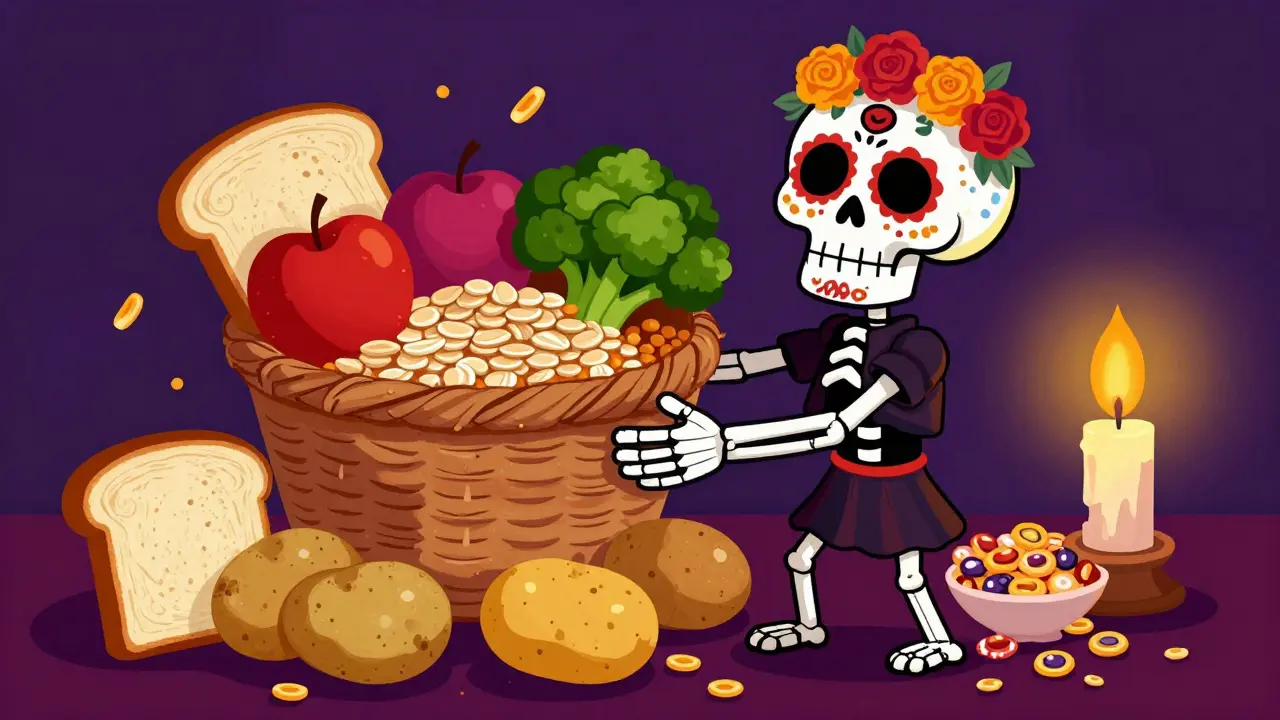
When you hear "low-GI diet," you might think it’s a magic key to losing weight. But here’s the truth: it’s not about cutting carbs or counting calories-it’s about how your body handles the carbs you eat. The glycemic index (GI) measures how quickly a food turns into sugar in your blood. High-GI foods like white bread, sugary cereals, and potatoes spike your blood sugar fast. Low-GI foods-like lentils, oats, apples, and most vegetables-release sugar slowly. That difference might seem small, but it changes how hungry you feel, how your body stores fat, and whether your energy stays steady all day.
How the Glycemic Index Actually Works
The glycemic index was created in 1981 by Dr. David Jenkins at the University of Toronto. It ranks foods from 0 to 100 based on how much they raise blood sugar after eating. Pure glucose is 100. White bread? Around 75. A pear? 38. Broccoli? 15. Foods under 55 are low-GI, 56-69 are medium, and 70+ are high. But here’s what most people miss: GI isn’t about how healthy a food is. It’s about how fast it digests. Fiber slows digestion. Fat and acid slow it too. That’s why whole grain pasta cooked al dente has a GI of 45, but overcooked pasta jumps to 65. A green banana has a GI of 30. A ripe one? 51. Even the same food can behave differently depending on how it’s prepared. Low-GI foods keep your blood sugar from shooting up and crashing. That means fewer cravings, less hunger between meals, and less insulin floating around your body. Insulin is the fat-storage hormone. When it’s constantly high, your body holds onto fat. When it’s steady, your body can burn fat more easily.Does Low-GI Help You Lose Weight?
This is where things get messy. Some studies say yes. Others say no. A 2021 Cochrane Review looked at 17 trials and found only five showed clear weight loss benefits from low-GI diets. Another study from 2022 by the American Institute for Cancer Research analyzed 12 controlled trials with over 1,300 people. When calories were kept equal, low-GI diets didn’t lead to more weight loss than high-GI diets. So why do some people swear by it? Because it works differently for different people. Dr. David Ludwig from Harvard says low-GI diets reduce insulin spikes, which may help your body burn 50-100 extra calories a day just by stabilizing metabolism. But Karen Collins from AICR counters: "When calories are the same, GI doesn’t change the scale." The real advantage isn’t necessarily weight loss-it’s better blood sugar control. A 2019 review of 54 studies showed people with type 2 diabetes lowered their HbA1c (a long-term blood sugar marker) by 0.5% on low-GI diets. That’s a meaningful drop. For someone with prediabetes, that could mean avoiding diabetes entirely.What Foods Are Actually Low-GI?
Not all low-GI foods are good for you. Chocolate cake has a GI of 38. Ice cream? 37. That doesn’t make them healthy choices. The goal isn’t to eat more cake-it’s to swap out junk for nutrient-rich, slow-digesting foods. Here’s what actually works:- Legumes: Lentils (GI 32), chickpeas (GI 28), black beans (GI 29)
- Whole grains: Barley (GI 25), oats (GI 55), quinoa (GI 53)
- Fruits: Apples (GI 36), pears (GI 38), berries (GI 40)
- Vegetables: Broccoli (GI 15), spinach (GI 15), carrots (GI 39)
- Nuts and seeds: Almonds (GI 0), chia seeds (GI 1), peanut butter (GI 14)
- Dairy: Milk (GI 30), yogurt (GI 33)
- White bread (GI 75)
- White rice (GI 73)
- Instant oatmeal (GI 83)
- Corn flakes (GI 81)
- Potatoes (GI 85)
- Sugary drinks and fruit juices
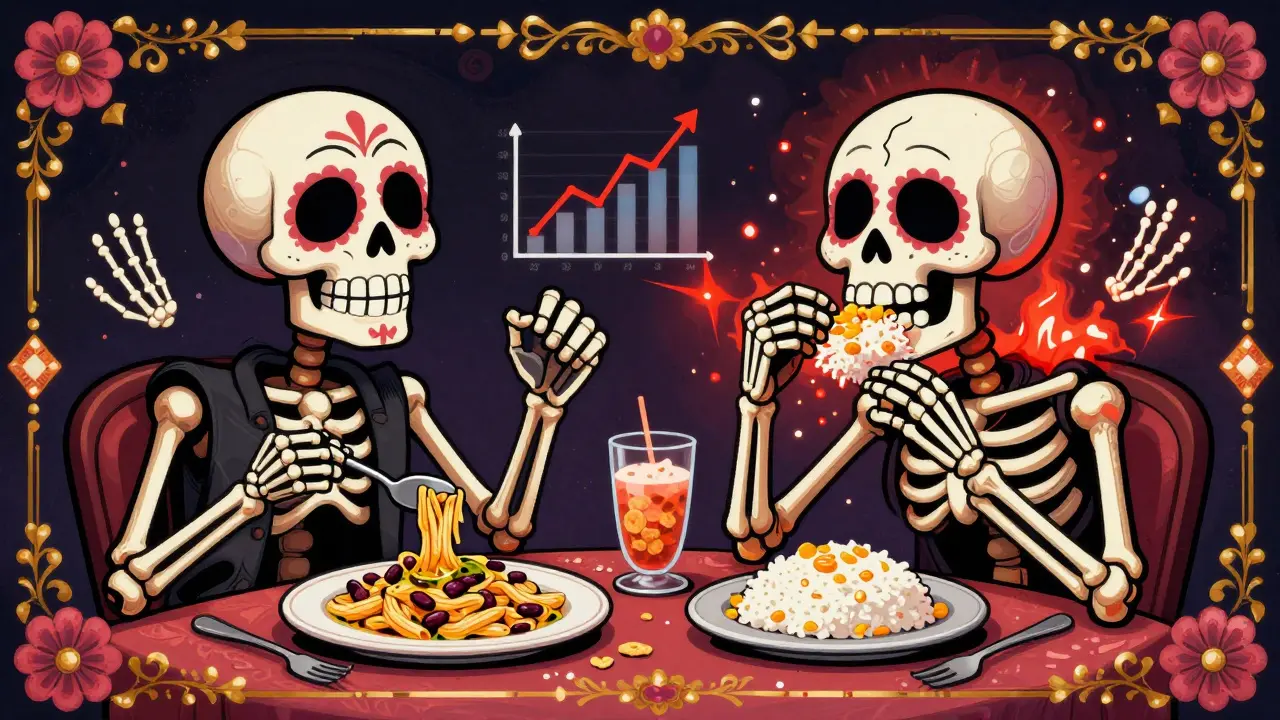
Why Low-GI Works Better Than You Think
Even if it doesn’t always make you lose weight faster, low-GI diets improve other things that matter. A 2021 review found low-GI diets lowered LDL (bad) cholesterol by 4.7 mg/dL on average. That’s a real drop in heart disease risk. People on low-GI diets also tend to have lower blood pressure and less inflammation. And here’s something most diets ignore: sustainability. Low-GI eating doesn’t require you to cut out entire food groups. You can still eat pasta, rice, and bread-you just choose whole grain, less processed versions. It fits into Mediterranean, DASH, or even vegetarian diets without feeling restrictive. In Australia and New Zealand, the GI Symbol is on over 2,500 products. That means you can scan the shelf and find certified low-GI bread, cereal, and snacks. In the U.S., the FDA doesn’t allow GI claims on labels, so you’re on your own. But you don’t need a label to know what’s good. Stick to whole, unprocessed foods, and you’ll naturally eat low-GI.What Experts Really Say
The European Association for the Study of Diabetes gives low-GI diets a Grade A recommendation-for blood sugar control, not weight loss. The American Diabetes Association says the same: focus on whole grains, legumes, fruits, and veggies. Don’t obsess over GI numbers. Just pick better carbs. Dr. John Sievenpiper from the University of Toronto says it best: "The quality of carbohydrate has modest but significant benefits for heart and metabolic health, even if you don’t lose weight." That’s the key. Low-GI isn’t a weight-loss trick. It’s a long-term health upgrade.
How to Start a Low-GI Diet (Without Going Crazy)
You don’t need to memorize GI values. Here’s how to do it in real life:- Swap refined carbs for whole ones. White rice → brown rice or barley. White bread → sourdough or rye.
- Add beans or lentils to meals. They’re low-GI, high-fiber, and filling. Toss them in salads, soups, or wraps.
- Choose fruit over juice. An apple has fiber. Apple juice is sugar water.
- Don’t overcook pasta or rice. Cook it al dente. It lowers the GI.
- Pair carbs with protein or fat. Eat toast with peanut butter, not jam. Have yogurt with berries, not granola.
- Watch portion sizes. Even low-GI foods can add up. A cup of oats is fine. Three cups? Not so much.
The Big Catch: Everyone Reacts Differently
Here’s the wildest part: your body’s response to a food might be totally different from mine. A 2015 study from the Weizmann Institute found people’s blood sugar responses to the same food could vary by 15-20 GI points. Two people eat the same banana. One spikes. The other doesn’t. That’s why personalized nutrition is the future. A 2023 study in Nature Medicine used AI to predict individual glycemic responses. People who followed personalized low-GI plans improved their blood sugar control by 25% compared to generic advice. But you don’t need an app to start. Just pay attention to how you feel after meals. If you crash after eating rice, try quinoa. If you’re hungry an hour after a bagel, add eggs or nuts. Your body gives you feedback. Listen to it.Final Takeaway: It’s Not About Losing Weight Fast
If you’re looking for a quick fix, low-GI isn’t it. But if you want to stop feeling hungry all the time, avoid sugar crashes, reduce your risk of diabetes and heart disease, and eat in a way that lasts a lifetime-then this is one of the most practical tools you have. Forget the hype. Low-GI isn’t a diet. It’s a smarter way to eat carbs. And in a world full of processed foods, that’s the real win.Can I still eat bread on a low-GI diet?
Yes, but not white bread. Choose sourdough, rye, or whole grain bread with visible seeds or grains. These have a GI under 55. Avoid anything labeled "multigrain" if it’s just white flour with added seeds-it’s often still high-GI.
Is a low-GI diet good for type 2 diabetes?
Yes. Multiple studies, including a 2019 review of 54 trials, show low-GI diets improve HbA1c levels by about 0.5%, which is clinically meaningful. The European Association for the Study of Diabetes recommends it as a standard part of diabetes management.
Do low-GI foods help with cravings?
Yes. Because low-GI foods release sugar slowly, they prevent blood sugar spikes and crashes. That means fewer urges to snack on sugary or carb-heavy foods. People on low-GI diets often report feeling fuller longer and having more stable energy.
Are fruits okay on a low-GI diet?
Absolutely. Most fruits have low to medium GI values-apples (36), pears (38), berries (40). The fiber and water in whole fruit slow sugar absorption. Avoid fruit juices, which are sugar bombs with no fiber.
Why do some low-GI foods like ice cream have low GI but aren’t healthy?
Because GI only measures how fast sugar enters your blood-it doesn’t measure sugar content, fat, or nutrients. Ice cream has fat and protein, which slow sugar absorption, giving it a low GI. But it’s still high in sugar and calories. Focus on low-GI whole foods, not processed treats, even if they’re labeled low-GI.
Do I need to count GI values every day?
No. The American Diabetes Association doesn’t recommend it. Instead, focus on eating whole grains, legumes, vegetables, and fruits. Avoid processed carbs and sugary drinks. You’ll naturally eat low-GI without tracking numbers.



Low-GI is just another corporate tool to sell you expensive oats and fancy bread. The real issue? Insulin resistance from processed seed oils and chronic stress. No one talks about that.
While the glycemic index provides a useful framework for understanding carbohydrate metabolism, it is imperative to recognize its limitations as a standalone metric. Nutritional science must prioritize holistic dietary patterns over reductive numerical rankings.
People don’t get it. You can eat all the lentils in the world, but if you’re still glued to your phone at 2 a.m. scrolling through TikTok while chugging almond milk lattes? You’re gonna crash. It’s not the food. It’s the chaos.
I’ve been doing this for 8 months and honestly? My brain fog lifted. I used to need a nap after lunch. Now I just... feel present. 🌿 Also, sourdough is a miracle. Try it. You won’t regret it. 😊
So we’re told to avoid white bread, yet the same system that invented the GI also subsidizes corn syrup and high-fructose corn syrup. Coincidence? Or is this just a way to make us feel guilty while the real culprits get richer?
Let us not conflate correlation with causation. The 2021 Cochrane Review, while methodologically sound, fails to account for epigenetic variability across populations. Furthermore, the exclusion of circadian rhythm as a confounder renders the entire premise suspect. The GI, as a construct, is a relic of 20th-century reductionism - a statistical artifact masquerading as biological truth. One cannot reduce metabolic response to a single decimal point without ignoring the entire organism.
Moreover, the assertion that low-GI diets improve LDL cholesterol by 4.7 mg/dL is statistically insignificant when compared to the 15–20 mg/dL reduction achieved through time-restricted feeding. Why, then, is the former promoted while the latter is ignored? The answer lies not in science, but in institutional inertia.
The Weizmann Institute’s 2015 study, which demonstrated inter-individual glycemic variance exceeding 20 GI points, should have been the death knell for universal dietary guidelines. Instead, it was buried under a mountain of marketing brochures and Whole Foods labels. The real revolution is not in food selection - it is in personalized metabolic mapping. And that, my friends, is being monopolized by Silicon Valley.
Do not mistake this for a diet. It is a surveillance mechanism disguised as wellness.
Yeah right. Low-GI? More like low-common-sense. I ate nothing but ice cream and bacon for a month and lost 12 lbs. Who cares about GI? My body doesn’t read textbooks. It just wants food that doesn’t make me feel like trash. Stop overthinking it.
Wait-so you’re telling me that overcooking pasta increases its GI? That’s… actually fascinating. But have you considered the role of gut microbiota in modulating glycemic response? I read a 2023 paper in Cell Metabolism that showed individuals with higher Bacteroidetes abundance had significantly blunted postprandial spikes-even on high-GI meals. So maybe it’s not the food… it’s the bugs in your gut? And if that’s true, then why aren’t we testing stool samples before giving dietary advice? I mean-this is basic! Why is no one talking about this?!