

Mouth Sores from Medications: How to Prevent and Care for Them
Mouth Sores Prevention & Treatment Guide
Select Your Treatment
Why This Matters
Your medication type and treatment specifics directly impact which prevention methods work best. This tool helps you identify the most effective options based on clinical evidence from major cancer organizations.
When you’re taking powerful medications like chemotherapy or radiation for cancer, mouth sores aren’t just an annoyance-they can make eating, speaking, and even swallowing unbearable. These aren’t simple canker sores. They’re called oral mucositis, a direct result of the drugs attacking the fast-growing cells in your mouth lining. Up to 100% of patients on certain cancer treatments develop them, and for many, they’re the most painful part of therapy. The good news? You don’t have to just suffer through them. Prevention works better than treatment, and there are proven, practical steps you can take-starting before your treatment even begins.
Why Medications Cause Mouth Sores
Chemotherapy and radiation don’t just target cancer cells. They hit any rapidly dividing cells in your body, and the cells lining your mouth are among the fastest-growing. When these cells get damaged, they break down, creating open sores. The process starts within days of treatment, and by the second week, pain often peaks. It’s not an infection-it’s tissue injury. That’s why antibiotics won’t fix it, and why popping a painkiller won’t stop it from getting worse.
Some drugs are worse than others. Melphalan, 5-fluorouracil, and high-dose regimens used before stem cell transplants are especially likely to trigger severe sores. Radiation to the head and neck area is just as damaging, sometimes worse. Even some antibiotics, antivirals, and immunotherapy drugs can cause milder versions. But here’s the key: it’s predictable. If you know you’re getting one of these treatments, you can prepare.
Prevention Starts Before Treatment
Waiting until your mouth hurts is too late. The best defense is a strong offense-and it starts weeks before your first dose. A dental checkup 2-4 weeks before treatment is critical. Dentists can remove infected teeth, fix broken fillings, or treat gum disease that could turn into serious sores later. One study found that 78% of severe mouth sores could be avoided with proper pre-treatment dental care.
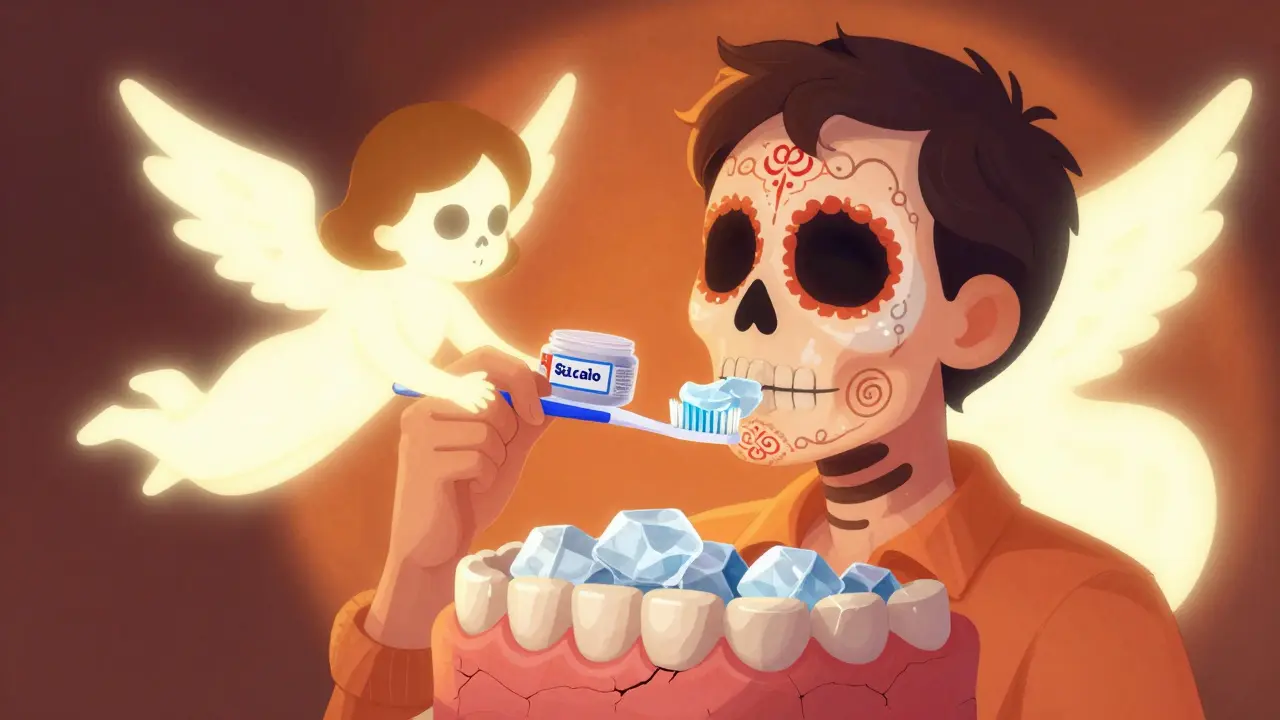
Switch your toothpaste. Avoid anything with sodium lauryl sulfate (SLS), a foaming agent that strips away protective mucus in your mouth. Look for toothpaste labeled ‘SLS-free’ or use children’s toothpaste-it’s gentler and often free of harsh chemicals. Brush with a soft-bristle brush (bristles under 0.008 inches thick) two or three times a day. Don’t scrub. Just gently clean. After meals, rinse with a baking soda solution: one teaspoon in eight ounces of water. It neutralizes acid and keeps your mouth balanced.
Proven Prevention Methods That Actually Work
Not every remedy you hear about is backed by science. Here’s what works, based on clinical trials and guidelines from major cancer organizations.
- Cryotherapy (ice chips): If you’re getting melphalan or 5-fluorouracil, suck on ice chips for 30 minutes, starting 5 minutes before your infusion. This cools your mouth, slowing blood flow and reducing how much drug reaches your oral tissues. Studies show this cuts severe sores in half. It’s free, safe, and effective-but cold sensitivity makes it hard for some. If you can’t tolerate it, skip it. There are other options.
- Benzydamine mouthwash: This is the top recommendation for radiation patients. Use a 0.15% solution four times a day, starting before treatment. It reduces severe sores by 34%. It stings a bit at first, but 82% of users keep using it because it cuts the pain. Cost? Around $15-$25 per course. Avoid if you’re allergic to aspirin.
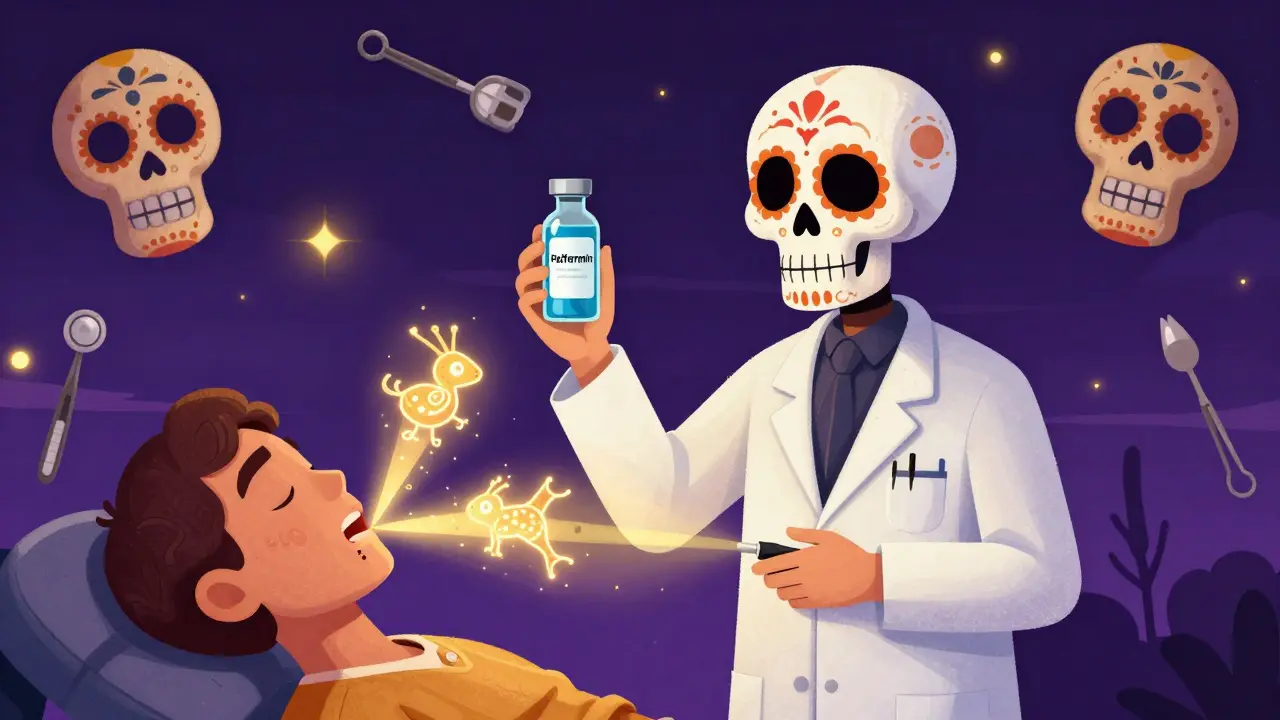
- Palifermin: For stem cell transplant patients, this injectable drug (brand name Kepivance) cuts severe sores from 63% down to 20%. But it costs over $10,500 per treatment. It’s only used in high-risk cases because of the price, and it must be given exactly 24-48 hours before and after chemo.
- Glutamine: Dissolve 15 grams in water, swish for 2 minutes, then swallow, four times a day. Some studies show it cuts the duration of sores by 43%, especially in head and neck cancer patients on radiation. But results are mixed-some trials show no benefit. Worth trying if you’re on radiation, but don’t expect miracles.
What Doesn’t Work (And Why You Should Skip It)
Many patients are told to use chlorhexidine mouthwash (like Peridex or Corsodyl). It’s cheap and common-but the evidence is weak. It only reduces risk by 15%, and long-term use can stain your teeth brown. A 2020 patient survey found 28% had taste changes or a burning feeling. It’s not worth the side effects unless you have a confirmed infection.
Don’t use benzocaine gels or sprays (like Orajel) unless your doctor says so. The FDA warns against them in children under two because of a rare but dangerous blood condition. Even for adults, they numb the area temporarily but don’t heal anything-and overuse can irritate your mouth more.
And don’t take antibiotics to prevent sores. A 2021 study found it increased the risk of a severe gut infection (C. difficile) by 27%. Your mouth sores aren’t caused by bacteria, so antibiotics won’t help-and they might hurt you.
Managing Pain When Sores Happen
Even with prevention, sores can still appear. When they do, focus on comfort and healing.
- Gelclair: This gel coats your sores like a protective film. It contains sodium hyaluronate and glycerin, which soothe and hydrate. People report immediate relief that lasts up to 4 hours. It’s pricey, but 71% of users say it’s worth it. The downside? Some say it feels slimy and makes talking awkward.
- Dexamethasone mouthwash: A steroid rinse (0.5mg in 5mL water) used four times a day reduces pain scores by 37%. It’s not for long-term use, but during peak pain, it’s a game-changer.
- Artificial saliva: If your mouth feels dry (which 63% of radiation patients report), products like Biotene help. Dryness makes sores worse. You can also try pilocarpine tablets (5mg three times a day)-they boost natural saliva by 47%.
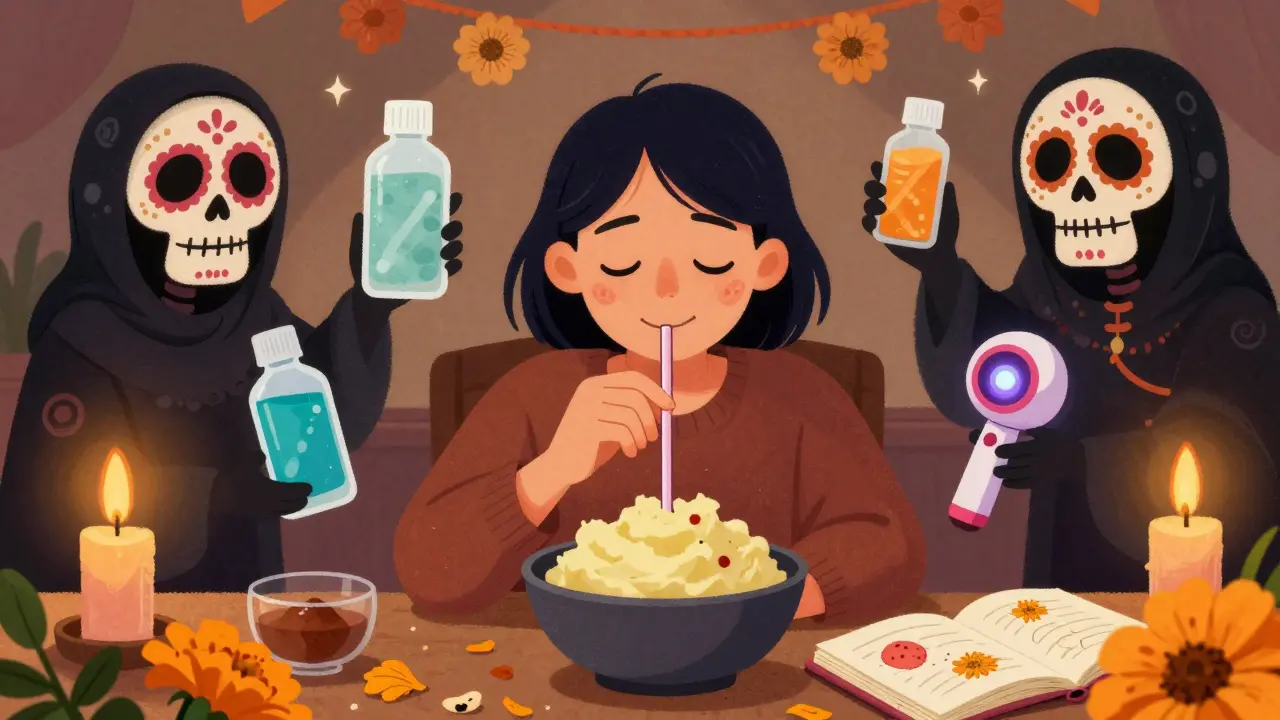
Stay hydrated. Sip water constantly. Avoid alcohol, caffeine, spicy food, citrus, and anything crunchy. Soft, bland foods like mashed potatoes, oatmeal, scrambled eggs, and yogurt are easiest to eat. Use a straw if swallowing is painful.
What Patients Are Really Saying
Real people share what works-and what doesn’t-on forums and support groups. On CancerCare’s site, 78% of people using ice chips for 5-FU said it helped. But 42% quit because the cold was too painful. On Reddit, Gelclair got 4.2 out of 5 stars. One user wrote: ‘It didn’t cure it, but it let me eat again.’
One common tip: use a child’s toothbrush. The bristles are softer, the handle is smaller, and it’s easier to reach the back of your mouth. Another: avoid mint-flavored products. Mint can irritate sores. Try flavor-free or baking soda rinses instead.
And don’t ignore your mental health. Mouth sores can make you feel isolated. You stop eating, you stop talking, you feel like a burden. Talk to your care team. Ask for a referral to a counselor or a support group. Pain isn’t just physical-it’s emotional too.
What’s New in 2026
Research is moving fast. A new drug called GC4419, which mimics an enzyme your body makes to fight inflammation, showed a 38% reduction in severe sores in a 2024 trial. Low-level laser therapy (LLLT) is also gaining traction-using specific light wavelengths to calm tissue damage. One 2023 study cut severe sores from 41% to 18% with daily laser treatments.
Hospitals are also using risk-prediction tools. Memorial Sloan Kettering developed a system that looks at 12 factors-your age, type of cancer, drug dose, dental history-to predict who’s most at risk. That way, only high-risk patients get expensive treatments like palifermin, saving money and reducing side effects.
But cost remains a barrier. Only 3 out of 12 recommended treatments meet the standard for being cost-effective in cancer care. That’s why prevention-dental visits, ice chips, gentle brushing-is still the most powerful tool you have.
What to Do Next
If you’re about to start chemotherapy, radiation, or another high-risk medication:
- See your dentist now-not when you’re sick.
- Switch to SLS-free toothpaste and a soft-bristle brush.
- Ask your oncologist: ‘Which of my drugs are known to cause mouth sores?’
- If you’re getting melphalan or 5-FU, ask about ice chips.
- If you’re getting radiation, ask about benzydamine mouthwash.
- Keep a journal: note when sores start, what helps, what makes it worse.
You’re not alone. Thousands of people face this every day. And with the right steps, you can reduce the pain, avoid hospital stays, and keep eating, speaking, and living-through treatment and beyond.
Ice chips for 5-FU changed my life. Cold = slow blood flow = less drug hitting my mouth. No more hospital stays. No more IV pain meds. Just 30 minutes of biting down on frozen water and I could eat real food again. Do it. Even if it sucks. It's worth it.
Also skip the mint toothpaste. Baking soda rinse all the way. No fancy brands needed.
My mom went through chemo last year and the only thing that kept her from screaming in pain was Gelclair. She called it ‘liquid hugs for your mouth.’ I know it’s expensive but if you can get it covered by insurance, do it. No one talks about how much these sores steal your dignity. You stop smiling. You stop laughing. You stop being you.
Also - dentist BEFORE chemo. Not after. Trust me.
In India, we don’t have access to half of these fancy treatments. No Gelclair. No Palifermin. No benzydamine. But we have turmeric. Salt. Warm water. Coconut oil swishing. And we survive. I’ve seen grandmas with stage IV cancer eat khichdi through mouth ulcers because they refused to give up.
Don’t let Western medicine make you feel like you’re failing if you can’t afford it. The body is resilient. Sometimes the oldest remedies are the quietest heroes.
Also - soft toothbrushes. Always. Even if it’s a toothbrush from a roadside stall in Delhi. It still works.
It is imperative to underscore that the utilization of cryotherapy as a prophylactic modality against oral mucositis, particularly in the context of high-dose alkylating agents such as melphalan, is not merely anecdotal - it is evidence-based, peer-reviewed, and endorsed by the Multinational Association of Supportive Care in Cancer (MASCC).
Furthermore, the omission of palifermin from routine clinical protocols due to cost-efficiency metrics is a systemic failure of healthcare economics, not a reflection of therapeutic efficacy. One must question the ethical implications of denying biologics based on insurance tiers.
Additionally, the FDA's warning regarding benzocaine is not hyperbolic - it is a black-box alert. Do not disregard it.
People think science is magic. It’s not. You’re just letting Big Pharma sell you $10,000 gels while your dentist charges $200 to pull a tooth you ignored for years. You knew this was coming. You didn’t prepare. Now you want a magic spray?
My uncle had oral cancer. He didn’t use any of this. He used salt water. He ate soup. He didn’t complain. He lived. You’re making it harder than it is.
I read this whole thing. You mentioned ‘clinical trials’ six times. Where’s the DOI? Where’s the PubMed ID? Where’s the phase? Who funded it? Did any of these studies have a control group? Or are you just repeating pharma bro marketing?
Also - ‘glutamine helps’? That’s from a 2012 study with 47 patients. I’ve seen meta-analyses that say it’s statistically insignificant. Don’t mislead people.
Thank you for writing this. I’ve been through this twice. I cried reading the part about mental health. No one tells you how lonely it gets when you can’t talk without screaming.
I used the baking soda rinse and the soft toothbrush. Didn’t use ice chips - too cold for me. But I found that sipping cold apple juice (no pulp) helped. Just enough to numb it. And I kept a journal. Wrote down what I ate, how I felt, what helped. It made me feel like I had control.
You’re not broken. You’re healing. Keep going.
So… you’re telling me sucking on ice cubes is the most effective, low-cost intervention for oral mucositis… and yet the entire oncology community doesn’t have a standardized protocol for it? How is this even possible?
Also, why is palifermin priced like a luxury yacht? Are we really supposed to believe this is about R&D and not profit? The math doesn’t add up.
And why is benzydamine not FDA-approved in the US? Is it because it’s too cheap? Or because Big Pharma doesn’t own it?
Just asking questions. Not being sarcastic. Just… confused.
They don’t want you to know this - but the government is hiding the real cure. It’s not ice chips. It’s not gel. It’s not even dentists. It’s vitamin B17. Laetrile. Banned because it cures cancer. Mouth sores? That’s just the side effect of the chemo killing your body. Don’t trust the system. Go off-grid. Find the truth.
Also - fluoride is poison. Use sea salt. Always.
My oncologist said ‘it’s normal’ and I believed him. Then I couldn’t swallow water for 11 days. I lost 30 pounds. My husband had to feed me through a straw. I thought I was dying. I didn’t know this stuff existed until I found this post.
Why didn’t anyone tell me? Why is this not standard? Why is this not on every chemo consent form?
I’m not mad. I’m just… heartbroken that no one warned me.
Bro, in Punjab, we use ghee on our tongue when it burns. Sounds weird? Try it. It’s like butter for your mouth. Not a cure, but it glides. Also - no spicy food. Ever. Even if you’re craving it. Your mouth will hate you.
And listen - if you’re getting radiation, ask for a custom mouthguard. Some hospitals make them. They hold the cold in. Like a mouth ice pack. I made mine with silicone from a craft store. Worked like a charm.
Also - no mint. Ever. Even toothpaste labeled ‘natural mint’ is poison for sores. Use unflavored. Always.
Just wanted to say thank you for listing what doesn’t work. So many people push chlorhexidine like it’s holy water. I used it for weeks. My teeth turned brown. My taste vanished. I felt like I was chewing plastic. Then I switched to baking soda and my mouth felt like it could breathe again.
Also - Gelclair? Yes. But only if you can get it. Otherwise, plain glycerin swabs from the pharmacy. Same thing. Cheaper.
It’s amusing how the ‘evidence-based’ community clings to these minor interventions - ice chips, baking soda - while ignoring the true paradigm shift: mitochondrial support therapy, NAD+ boosters, and red light photobiomodulation. These are not fringe - they’re the future. Yet, we’re still stuck in the 1990s with ‘soft toothbrushes’?
Also - why is glutamine still being studied? The mechanism is clear: it fuels epithelial repair. The trials are underpowered because funding is biased toward pharmaceuticals, not nutraceuticals.
Someone needs to write a book on this. I’ll write it. I have credentials.
Ice chips work. Benzydamine works. Gelclair works. Stop overcomplicating it.
Dentist first. No excuses. If your tooth is rotten, pull it before chemo. That’s not optional. That’s survival.
And if you can’t afford it? Ask for help. Hospitals have social workers. They will find a way.
Don’t wait until you can’t eat. Start now.
I’m a nurse. I’ve seen this a thousand times. The patients who survive the worst sores? They’re not the ones with the fanciest treatments. They’re the ones who had someone to hold their hand while they cried over a glass of water.
So yes - use the ice. Use the gel. Use the baking soda.
But also - call your friend. Tell them you’re scared. Let them sit with you in silence.
That’s the real medicine.