

How to Prevent Heat-Related Medication Problems in Seniors
Why Heat Turns Ordinary Medications into Hidden Dangers for Seniors
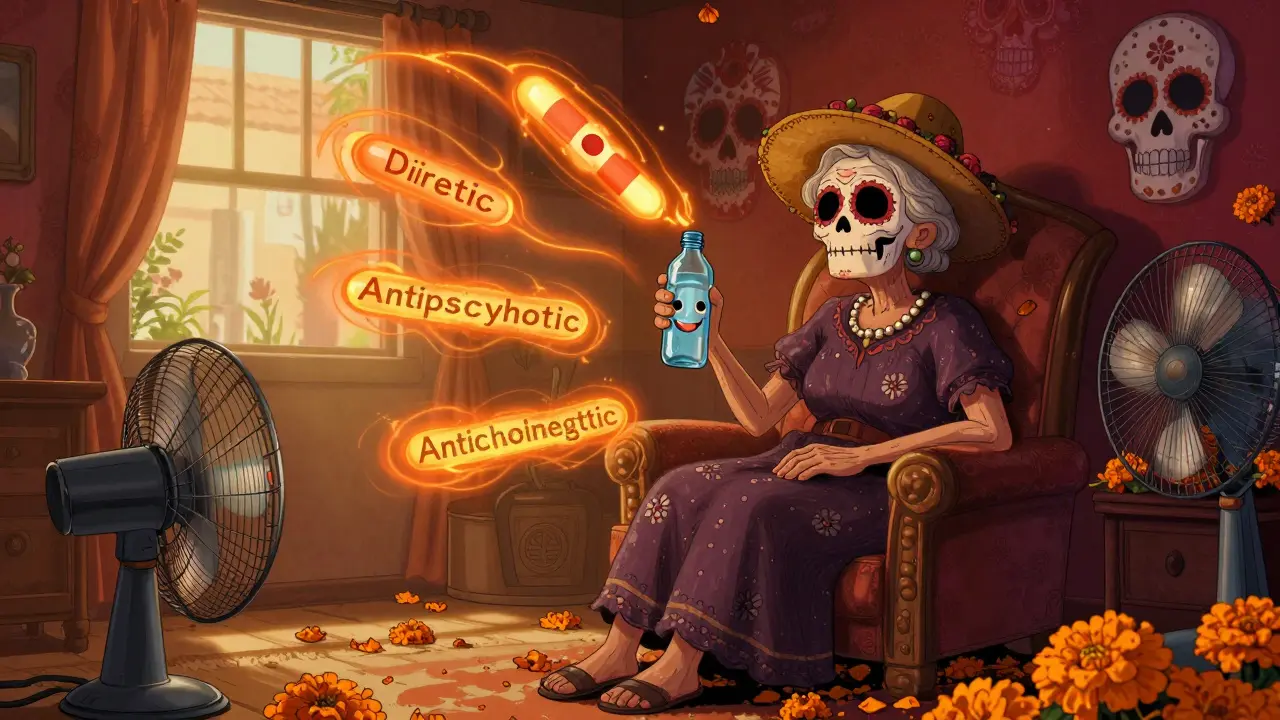
When the temperature climbs, most people think about drinking more water or turning on the AC. But for seniors taking certain medications, heat isn’t just uncomfortable-it’s life-threatening. A 78-year-old on a diuretic for high blood pressure might not feel thirsty, even as their body loses fluids faster than they can replace them. Someone taking an antipsychotic for dementia could be overheating without realizing it because their brain no longer signals danger. These aren’t rare cases. According to the CDC, heat-related medication problems are behind a growing number of hospitalizations and deaths among older adults, especially during summer heat waves that are becoming more frequent and intense.
The problem isn’t the heat alone. It’s how common medications interfere with the body’s natural cooling system. As we age, our ability to sweat, regulate temperature, and stay hydrated naturally declines. Add in medications that block these functions, and the risk skyrockets. A 2022 study in the Journal of the American Geriatrics Society found that seniors on diuretics like hydrochlorothiazide or furosemide experience a 30-40% drop in thirst sensation. That means they don’t drink enough-even when they need to the most.
Medications That Turn Up the Heat Risk
Not all medications are equal when it comes to heat. Some are silent culprits, quietly sabotaging the body’s ability to stay cool. Here are the top offenders:
- Diuretics (water pills): These include hydrochlorothiazide, furosemide, and spironolactone. They make you pee more to lower blood pressure, but they also deplete fluids and electrolytes. During heat, this can lead to dangerously low sodium levels (below 135 mmol/L) and reduced blood volume by 10-15%.
- ACE inhibitors and ARBs: Drugs like benazepril, lisinopril, and losartan help protect the heart and kidneys, but they also reduce thirst by about 25%. That means seniors on these meds may not drink enough, even when dehydrated.
- Antipsychotics: Medications like quetiapine and clozapine, often used for Alzheimer’s-related agitation, disrupt the hypothalamus-the brain’s thermostat. Research from the Mayo Clinic shows they can raise core body temperature by 1.5-2.0°F without the person feeling any different.
- Anticholinergics: Found in Benadryl, Tylenol PM, and some bladder control drugs, these block sweat production by 35-50%. No sweat means no cooling. In high heat, this can lead to heat stroke even in mild temperatures.
- Some antibiotics and antifungals: Drugs like doxycycline and voriconazole make skin extremely sensitive to UV rays. Sunburn risk can increase 4-6 times, leading to severe burns and dehydration in hours.
The real danger comes when these meds are taken together. A senior on a diuretic plus an ACE inhibitor is at double the risk. Their body loses fluid, doesn’t feel thirsty, and can’t cool down. The CDC reports that over 22% of heat-related falls in seniors are linked to this combo.
What to Do Before Summer Hits
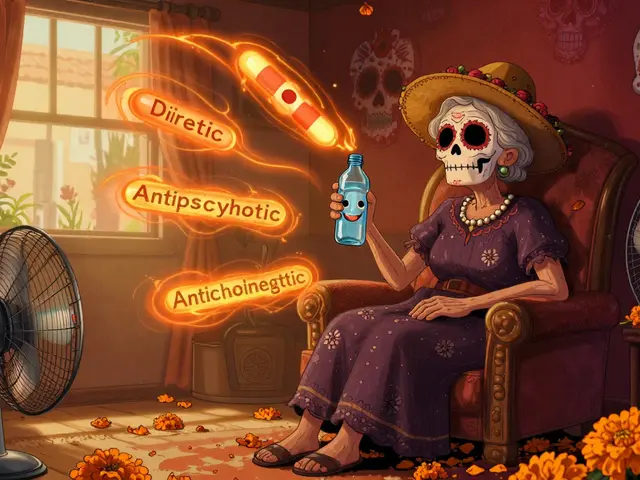
Waiting until it’s hot to check your meds is too late. The best time to act is in late spring. Start with a full medication review with your doctor or pharmacist. Bring a list of every pill, supplement, and over-the-counter drug you take-including sleep aids and pain relievers.
Ask these questions:
- Which of my meds increase my risk for heat problems?
- Should I adjust my dose during hot weather?
- Do I need to temporarily pause fluid restrictions if I have heart failure?
- Are there safer alternatives for my condition?
Research from Johns Hopkins shows that seniors who had structured medication reviews before summer saw a 37% drop in heat-related ER visits. That’s not a small number-it’s life-saving. If your doctor says no changes are needed, ask for a written plan: what to watch for, when to call for help, and how to adjust meds if the heat warning is high.
Hydration That Actually Works
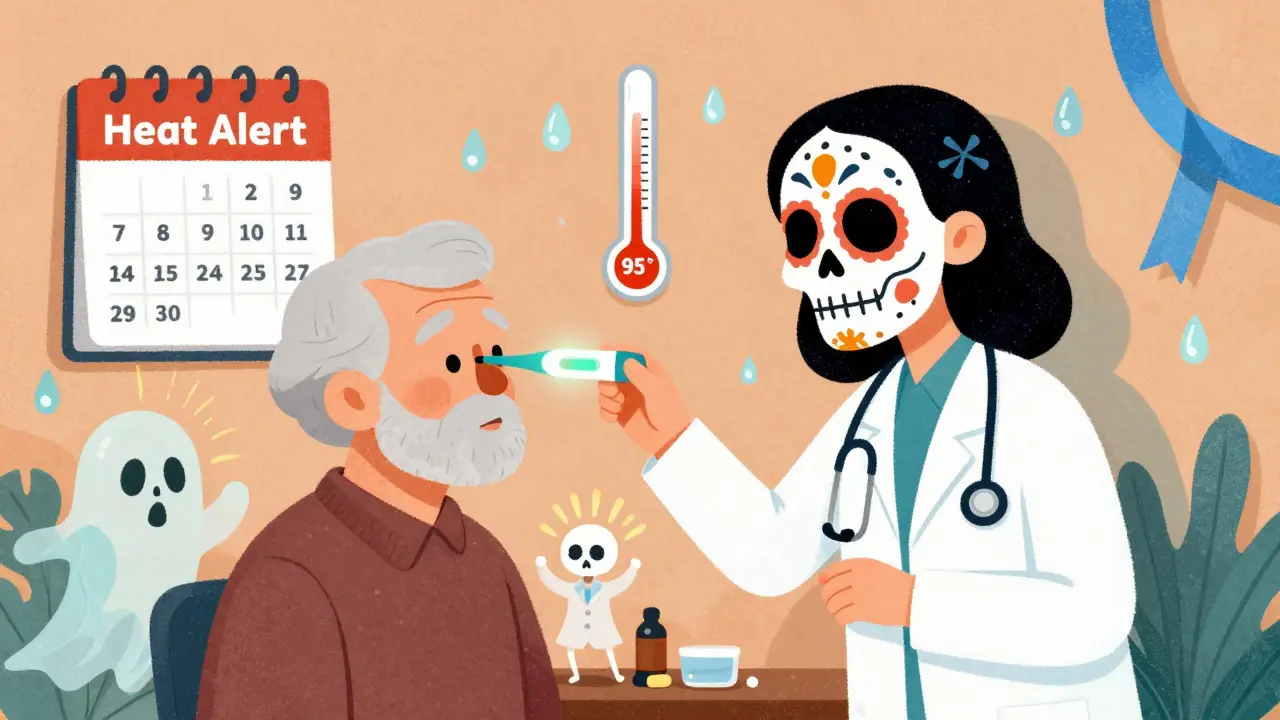
Drinking water isn’t enough if your meds are working against you. The National Institute on Aging recommends 8-10 eight-ounce glasses of water daily during hot weather. But if you’re on a fluid restriction for heart failure, don’t just drink more without talking to your doctor. About 43% of these patients develop dangerous electrolyte imbalances during heat waves.
For those on diuretics, plain water won’t cut it. You need electrolytes. Look for drinks with 120-150 mg of sodium per 8 ounces. Sports drinks like Gatorade Original or Pedialyte work well. Avoid caffeine and alcohol-they make you pee more and dry you out faster. A 2023 CDC report found that alcohol and coffee increase urine output by 40-60%, making dehydration worse.
Set reminders to sip water every hour-even if you’re not thirsty. Keep a water bottle by your bed, your chair, and your TV. If you’re taking anticholinergics, your body won’t tell you it needs water. You have to be the one to act.
Staying Cool Isn’t Optional
Keeping your home cool is just as important as staying hydrated. The CDC says indoor temperatures should stay below 78°F (25.6°C) during heat waves. If you don’t have air conditioning, find a place that does-libraries, malls, community centers. Even a few hours a day can make a difference.
Wear loose, light-colored clothing made of cotton or linen. Synthetic fabrics trap heat and sweat. Studies show natural fibers can lower your perceived temperature by 5-7°F. Cover up outside: wide-brimmed hats, UV-blocking sunglasses, and broad-spectrum sunscreen with SPF 15 or higher. Reapply every two hours-or after sweating. If you’re on doxycycline or other sun-sensitive drugs, your skin can burn in under 10 minutes.
Use fans wisely. They only help if there’s airflow. In extreme heat (above 95°F), fans alone won’t cool your body. You need air conditioning or a cool shower.
Recognizing the Signs-Before It’s Too Late
Seniors often don’t show the classic signs of heat illness. You might not see heavy sweating or flushed skin. Instead, look for subtle changes:
- Confusion or disorientation
- Slurred speech
- Unusual fatigue or dizziness
- Loss of appetite or nausea
- Dark urine or very little urination
According to the NIA, 41% of seniors on heat-risk meds don’t show typical symptoms. That means the first sign might be a fall, a fainting episode, or sudden confusion. If you notice any of these, act fast.
Heat exhaustion symptoms include:
- Heavy sweating
- Muscle cramps
- Headache
- Nausea or vomiting
- Weakness or dizziness
Heat stroke-a medical emergency-means:
- Body temperature above 103°F
- Hot, red, dry, or damp skin
- Rapid, strong pulse
- Loss of consciousness
If heat stroke is suspected, call 911 immediately. While waiting, move the person to a cool place, remove excess clothing, and apply cool water or ice packs to the neck, armpits, and groin. Don’t wait to see if they get better.

How Caregivers Can Make a Difference
If you’re caring for an older adult, your role is critical. Check in daily during heat waves-not just to ask if they’re okay, but to check their temperature, hydration, and behavior. Use the “I’m OK” program model: a simple daily checklist with temperature readings and mental status notes. Senior living communities using this method saw a 33% drop in heat-related hospitalizations.
Plan outings for early morning or evening. Avoid the 10 a.m. to 4 p.m. window when heat peaks. If they live alone, set up a phone check-in system with a neighbor or family member. The CDC reports that seniors who had daily contact during heat waves were 50% less likely to suffer serious heat illness.
Don’t assume they’re fine because they’re inside. Many homes, especially older ones, don’t stay cool. Use a thermometer to check the indoor temperature. If it’s above 80°F, take action.
The Future Is Here-And It’s Personalized
There’s new tech helping seniors stay safe. The CDC launched the Heat and Medication Risk Assessment Tool (HM-RAT) in June 2023. You enter your meds, age, and location, and it gives you a personalized risk score and daily tips. The National Institute on Aging’s HeatRisk.gov site links local weather alerts to your medication profile-sending alerts directly to your phone or caregiver.
Even better, clinical trials are testing a new “heat resilience” supplement designed for seniors on multiple meds. Early results show a 28% improvement in body temperature control. While it’s not available yet, it shows we’re moving toward smarter, personalized prevention.
By 2050, the CDC predicts extreme heat days will increase by 50%. For seniors on risky meds, this isn’t just about comfort-it’s about survival. The good news? You don’t need a miracle. You need awareness, a plan, and a few simple changes.
Can seniors stop taking their meds during heat waves?
No. Never stop or change medication without talking to your doctor. Some meds, like blood pressure or heart drugs, can cause dangerous rebound effects if stopped suddenly. Instead, ask your provider if the dose can be temporarily adjusted, or if there’s a safer alternative for summer months.
Are over-the-counter meds like Benadryl safe in hot weather?
No. Benadryl (diphenhydramine) and similar anticholinergics reduce sweating by up to 50%, making heat illness much more likely. Even if it’s for allergies or sleep, it’s risky during hot weather. Ask your pharmacist for a non-drowsy, non-anticholinergic alternative like loratadine or cetirizine.
What should I do if my senior relative won’t drink water?
Try flavoring water with lemon, cucumber, or mint. Offer ice chips, popsicles, or broth-based soups. Some seniors prefer the taste of electrolyte drinks. If they refuse all fluids, contact their doctor immediately-dehydration can lead to kidney failure or confusion within hours.
Do air conditioners help if the power goes out?
Not if they’re off. During power outages, heat risk spikes. Have a backup plan: identify air-conditioned public spaces nearby, keep battery-powered fans ready, and use damp cloths on wrists and neck. If it’s over 95°F and no AC, consider staying with a friend or family member for a few days.
Is heat risk higher for seniors in cities versus rural areas?
Yes. Urban areas often have higher temperatures due to the “heat island” effect-concrete, asphalt, and lack of trees trap heat. Seniors in cities may face temperatures 10-15°F hotter than nearby suburbs. If you live in a city, check local heat alerts and know where cooling centers are located.
What to Do Next
Start today. Make a list of every medication you or your loved one takes. Cross-reference them with the high-risk list above. Schedule a call with your doctor or pharmacist before the next heat wave hits. If you’re unsure where to start, download the CDC’s free Heat and Medication Risk Assessment Tool. It takes five minutes. It could save a life.


This is why I stopped taking all my meds last summer. No more pills, no more heat problems. Simple.
The government doesn't want you to know this, but Big Pharma designed these drugs to make seniors dependent on AC units and hospital visits. They profit from your suffering. The real danger isn't heat-it's the pharmaceutical-industrial complex. I've seen it with my own eyes.
I've been on hydrochlorothiazide for 12 years and never had an issue. Maybe you're just not drinking enough water. Stop blaming the meds and start taking responsibility.
In Nigeria, we don't have air conditioning. We use natural fibers, shade, and herbal teas. Your Western obsession with pharmaceuticals is the real problem. Let the body regulate itself.
This is an exceptionally well-researched and clinically grounded piece. The integration of CDC data with pharmacological mechanisms is precisely the kind of public health communication we need. Thank you for the clarity and rigor.
I've seen my grandmother nearly die from heatstroke because she was on Benadryl for sleep. This article saved her life. Please, if you're reading this-talk to your pharmacist. Don't wait.
You know what they don't tell you? The same companies that make these meds also own the weather satellites. They're manipulating heat waves to sell more AC units and hospital beds. The CDC? A front. I've cross-referenced the patent filings. They're all connected. Look up the 2018 SEC filing for Merck and the National Weather Service contract. It's all there. The heat isn't natural. It's engineered. And they're using your grandma's meds to justify it.
I must say-this article, while superficially plausible, lacks the requisite depth of epistemological inquiry. One cannot reduce physiological vulnerability to mere pharmacological taxonomy without addressing the existential alienation of the aging body under late-stage capitalism. Where is the phenomenology of thirst?
Anticholinergics reduce sweating by 35-50%? Source? The Mayo Clinic never published that. And why are you citing a 2023 CDC report without a link? This article is full of unsupported claims dressed as facts.
I just told my 80-year-old mom to stop taking her blood pressure meds during heat waves. She's fine now. 😊 She says she feels "lighter."
I don't care what the CDC says. My uncle took every one of those meds and lived to 92. He drank whiskey every night and never used AC. You're overcomplicating this. Just drink water and stop being a hypochondriac.
I'm not saying the article is wrong. But why does everyone assume seniors can't adapt? My grandfather worked in a steel mill in the 70s without hydration plans. He didn't need a risk assessment tool. He had grit.
The real issue? The government is using heat as an excuse to force seniors into managed care facilities. This article is a Trojan horse. The meds aren't dangerous-the surveillance is.
I appreciate the data, but I wonder if we're missing the social side. Many seniors live alone with no one to check on them. A pill list won't help if no one's there to hand them a glass of water. Maybe we need more community volunteers than more apps.
In India, we use neem leaves, coconut water, and morning walks before 7 AM. Maybe we don't need fancy tools. Maybe we just need to go back to simple habits. The body knows how to cool itself if we let it.