

How Medications Enter Breast Milk and What It Means for Your Baby

When you’re breastfeeding, every pill, injection, or drop you take doesn’t just affect you-it can reach your baby. It’s a scary thought. But here’s the truth: medications in breast milk are far more common-and often safer-than most new moms realize. The real question isn’t whether drugs get into breast milk. It’s how much, how fast, and whether it actually matters.
How Do Medications Even Get Into Breast Milk?
Breast milk isn’t just filtered blood. It’s made in tiny sacs called alveoli, surrounded by capillaries. Drugs cross from your bloodstream into milk through three main paths. The biggest one? Passive diffusion. About 75% of medications slip through simply because they’re small, fat-soluble, and not stuck to proteins in your blood. Think of it like a sponge soaking up water-drugs move from where there’s more (your blood) to where there’s less (milk) until things balance out. The rest move through special transporters. Some drugs, like nitrofurantoin or acyclovir, hitch a ride on proteins that normally carry nutrients or waste. Others are actively pumped in, though that’s rare. Size matters a lot. Anything bigger than 800 daltons-like heparin, which weighs 15,000-barely makes it through. But small molecules? Lithium, at just 74 daltons, slips right in. That’s why lithium requires close monitoring. Lipid solubility is another big factor. Drugs that dissolve easily in fat-like diazepam-move into milk more readily. That’s why diazepam can show up in breast milk at levels 1.5 to 2 times higher than in your blood. On the flip side, gentamicin, a water-soluble antibiotic, barely makes it into milk at all. Protein binding is the silent gatekeeper. If a drug is 99% stuck to proteins in your blood, like warfarin, only 1% is free to cross. That’s why warfarin is considered safe, even though it’s a strong blood thinner. Then there’s pH. Breast milk is slightly more acidic than blood. That traps weak bases-drugs like amitriptyline or sertraline-inside the milk. Their concentration can be two to five times higher than in your blood. It’s called ion trapping. And it’s why some antidepressants show up more than you’d expect.When Is Transfer Highest? Timing Matters
The first few days after birth are a special window. Right after delivery, the cells lining your milk sacs aren’t fully sealed. Gaps between them are 10 to 20 nanometers wide. That lets bigger molecules-like antibodies, and yes, some medications-pass through more easily. By day 10, those gaps close. Milk becomes more selective. So if you’re on a medication right after birth, exposure might be higher than later on. Timing your doses can make a big difference. Taking your medicine right after you nurse gives your body time to clear it before the next feeding. For most drugs, waiting 3 to 4 hours cuts infant exposure by 30 to 50%. That’s not magic-it’s pharmacokinetics. Your blood levels drop, so less drug flows into milk. For drugs with long half-lives, like diazepam, this matters even more. In newborns, diazepam can stay in their system for 30 to 100 hours. That means if you take it daily, it builds up. A single dose might be fine. Daily use? That’s when you need to watch for drowsiness, poor feeding, or breathing issues.What Levels Are Actually Dangerous?
It’s not about whether a drug is in milk. It’s about how much your baby gets. Experts agree: if the infant receives less than 10% of the mother’s weight-adjusted dose, the risk is usually very low. That’s the CDC’s benchmark. Antibiotics like amoxicillin? Infants get about 1.5% of the mom’s dose. Gentamicin? Just 0.1%. Both are considered safe. For antidepressants, the goal is to keep the baby’s blood level under 10% of what’s used to treat adults. Sertraline, the most common SSRI used while breastfeeding, delivers about 1-2% of the mom’s dose to the baby. That’s why it’s often the first choice. But some drugs are trickier. Phenobarbital, used for seizures, can accumulate in a baby’s system at 15% per week. That’s why doctors monitor these babies closely. Benzodiazepines like diazepam can hit 7.3% of the maternal dose. If you’re on high doses or taking it daily, watch for signs: excessive sleepiness, trouble latching, or weak cry. Nuclear medicine is a whole different ballgame. A VQ scan using Tc-99m MAA? You need to pause breastfeeding for 12 to 24 hours. But an FDG-PET scan? Only 0.002% of the dose ends up in milk. You can keep nursing right after.
What Do Experts Say About Safety?
The American Academy of Pediatrics (AAP) and the InfantRisk Center have been tracking this for decades. They rate drugs on a scale from L1 (safest) to L5 (dangerous). About 87% of commonly used medications fall into L1 or L2-meaning they’re either undetectable or show no known harm. Only 1-2% are truly contraindicated. Insulin? L1. Heparin? L1. Ibuprofen? L1. Sertraline? L2. Even most antibiotics, antihistamines, and blood pressure meds are safe. The real problem isn’t the drugs-it’s the fear. A 2022 study found that 15-30% of moms stop breastfeeding because they’re worried about meds-even though most of those drugs are safe. That’s tragic. Breastfeeding reduces the baby’s risk of infections, obesity, and even sudden infant death. Stopping early costs more than just milk-it costs health. The European Medicines Agency warns about serotonin syndrome from SSRIs, citing rare cases of fussiness or poor feeding. But the InfantRisk Center says those cases are extremely rare and often tied to high doses or other risk factors. The data doesn’t support blanket warnings. It supports monitoring.What Medications Should You Avoid?
There are exceptions. Radioactive iodine (I-131) for thyroid treatment? Absolutely avoid breastfeeding-ever. Chemotherapy drugs? Usually not safe unless carefully timed. Bromocriptine? It shuts down milk production in 95% of women. High-dose estrogen birth control? Can slash your milk supply by 40-60% in just 72 hours. Avoid those. But here’s the key: these are the outliers. Most meds-antibiotics, painkillers, antidepressants, thyroid pills, even some anxiety meds-are fine. The trick is knowing which ones. Don’t rely on old pamphlets or Google. Use trusted tools like the InfantRisk Center’s LactMed app (version 3.2, updated January 2023). It uses 12 pharmacokinetic factors to give real-time risk scores.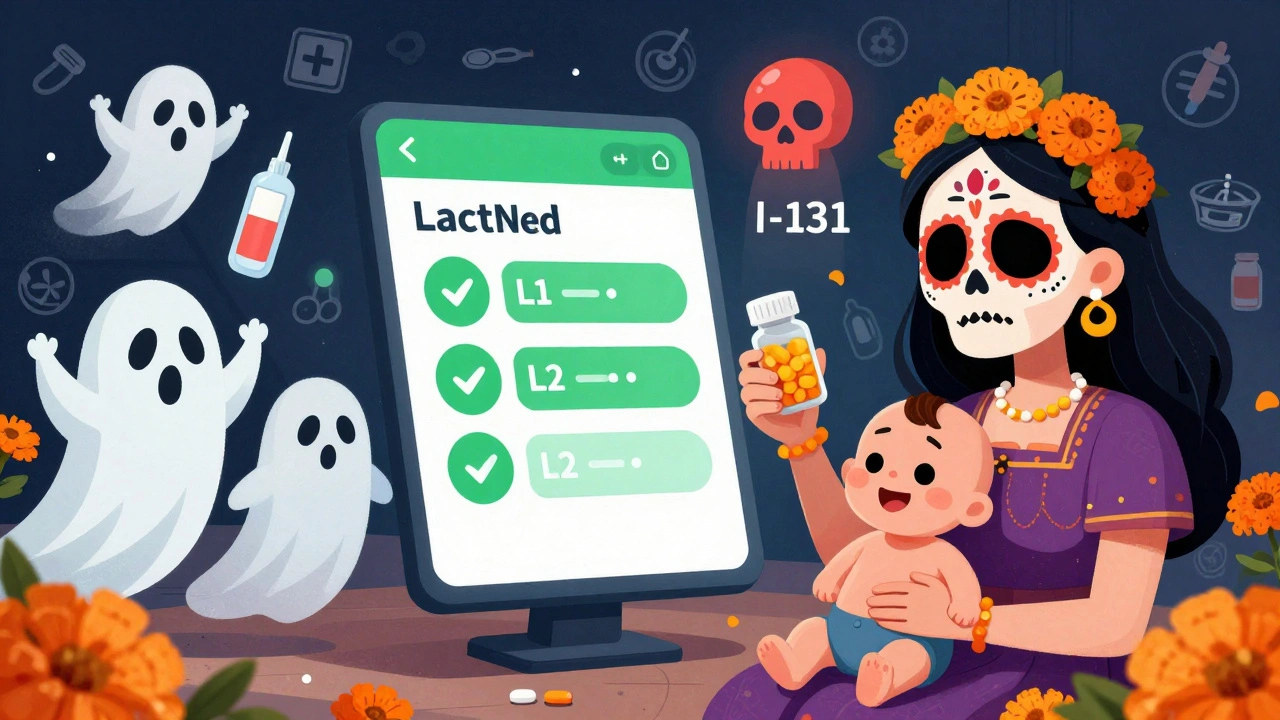
What Should You Watch For in Your Baby?
Most babies show no reaction. But if you’re on a drug that crosses into milk easily, keep an eye out:- Unusual sleepiness or difficulty waking to feed
- Poor latch or weak sucking
- Excessive fussiness or crying
- Changes in bowel movements (diarrhea or constipation)
- Jaundice that doesn’t improve
The Big Picture: You Don’t Have to Choose
You don’t have to pick between being healthy and being a good mom. That’s a false choice. The data is clear: 98-99% of medications are compatible with breastfeeding. You can treat your depression, manage your diabetes, fight your infection, and still give your baby the best start. The CDC says medication concerns are the third most common reason moms quit breastfeeding-after milk supply worries and nipple pain. That’s not because the drugs are dangerous. It’s because the information is confusing. New rules now require drug makers to include lactation data on labels. That’s progress. But you still need to ask the right questions. Talk to your doctor. Ask: "Is this safe?" Then ask: "Is there a better option?" And if they’re unsure, refer them to LactMed or the InfantRisk Center. Breastfeeding is powerful. And you don’t have to give it up to take care of yourself. With the right info, you can do both.Do all medications pass into breast milk?
Not all medications transfer into breast milk. Most drugs do to some degree, but the amount varies widely. Small, fat-soluble, low-protein-bound drugs cross more easily. Large molecules like heparin (15,000 daltons) or insulin barely pass through. About 87% of commonly used medications show minimal or no risk to infants.
Can I take antidepressants while breastfeeding?
Yes, many antidepressants are safe. Sertraline (Zoloft) is the most studied and preferred option, with infant exposure around 1-2% of the maternal dose. Fluoxetine is less ideal due to its long half-life in babies. Always monitor your baby for irritability, poor feeding, or sleepiness. Most babies show no symptoms, and the benefits of treating maternal depression usually outweigh the risks.
How long should I wait after taking a pill before breastfeeding?
Wait 3 to 4 hours after taking your medication before nursing. This allows your blood levels to drop, reducing the amount that enters your milk. For drugs with long half-lives, like diazepam, timing is even more important. Avoid taking medication right before a feeding, especially if it’s a daily dose.
Are over-the-counter painkillers safe while breastfeeding?
Yes. Ibuprofen and acetaminophen are both considered safe (L1 rating). They transfer in very low amounts-less than 1% of the maternal dose-and have no known adverse effects on infants. Avoid aspirin and naproxen for extended use, as they carry slightly higher risk.
Can I breastfeed after a CT scan or X-ray?
Yes, absolutely. Standard X-rays, CT scans, and MRIs with contrast (like iodine or gadolinium) do not require you to stop breastfeeding. The contrast agents are not absorbed by the baby’s gut and pose no risk. Even nuclear medicine scans like FDG-PET allow immediate breastfeeding-only 0.002% of the dose enters milk.
What if I need a medication that’s not safe for breastfeeding?
If a medication is truly unsafe, your doctor can often find an alternative. For example, if you need chemotherapy, temporary pumping and discarding may be advised. For radioactive iodine, breastfeeding must stop permanently. But these cases are rare-only 1-2% of medications require stopping breastfeeding. Always consult a lactation specialist or use trusted resources like LactMed before making a decision.




My doctor said ibuprofen was fine but I still panicked for a week
Thank you for this. As a new mom on sertraline, I’ve been terrified every time I nurse-until I read LactMed. The fact that my baby’s exposure is only 1.5%? That’s a game-changer. I’m not just surviving this-I’m thriving. And so is she. Don’t let fear silence your instincts. You’re not failing-you’re fighting for both of you.
Let’s be real-most of the fear around meds and breastfeeding is manufactured by people who’ve never actually checked the data. I’ve seen moms quit breastfeeding because they took a Z-pack. A Z-PACK. Meanwhile, their babies are getting pneumonia because they’re not getting the antibodies. The real tragedy isn’t the meds-it’s the misinformation epidemic. Use LactMed. Stop Googling. Your baby deserves better than a panic-driven decision.
As a dad from India, I didn’t know much about this until my wife started breastfeeding. I read this whole thing with her and now I’m the one reminding her not to skip her meds. She’s on sertraline and we’re both sleeping better now. It’s not about being perfect-it’s about being present. And meds help her be present.
Hey mama-you’re not alone. I was on diazepam for postpartum anxiety and I thought I was poisoning my baby. I cried for three days straight. Then I talked to a lactation consultant who showed me the numbers: 7.3% of mom’s dose, sure-but only if you’re taking it daily. I switched to once-a-night dosing, waited 4 hours after feeding, and my baby? Slept like a angel, ate like a champ, never looked back. You’re not broken. You’re healing. And your milk? It’s still magic.
So let me get this straight-your body is a magical drug delivery system that ignores all laws of physics except when it comes to antibiotics? Interesting. I wonder if the same logic applies to caffeine. Oh wait-it does. And nobody’s freaking out about that. Funny how we’re fine with a baby getting a quarter cup of espresso but lose our minds over 0.1% of a beta-blocker. Science is weird.
98-99% safe? That’s not a statistic-it’s a marketing slogan. Where’s the long-term neurodevelopmental data? Who funded this? You think Big Pharma doesn’t want you breastfeeding while on SSRIs? Of course they do. They’re selling pills AND formula. You’re not a mother-you’re a walking pharmacy. Wake up.
So you’re telling me I can take my Xanax and keep nursing? Yeah right. My cousin’s friend’s neighbor’s daughter’s pediatrician said a single dose of diazepam can cause autism in 1 in 500 babies. And you’re telling me to trust a ‘LactMed app’? That’s not a medical source-that’s a TikTok algorithm with a clipboard. I’m pumping and dumping. And I’m not sorry.
I remember sitting in the hospital after my C-section, holding my newborn, shaking because I’d just taken my first dose of citalopram. I stared at the pill bottle like it was a bomb. Then I called the InfantRisk Center. The woman on the line didn’t just give me data-she gave me permission. Permission to be sick. Permission to be healed. Permission to be both a mother and a human. I’m still on it. My daughter’s five now. She’s brilliant, healthy, and still nurses sometimes. The science didn’t lie. The fear did.
Wow. Just... wow. This is the most balanced, data-driven, non-sensationalized piece on breastfeeding and meds I’ve ever read. The fact that you included pharmacokinetic details-ion trapping, protein binding, half-lives-without turning it into a textbook? Brilliant. The AAP and EMA references? Spot on. And calling out the 15-30% of moms who quit due to fear? That’s the real headline. This isn’t just info-it’s advocacy. You’ve done the work. Now go publish this in JAMA Pediatrics.