

Manufacturer Copay Assistance Cards: How to Use Them and Avoid Costly Surprises
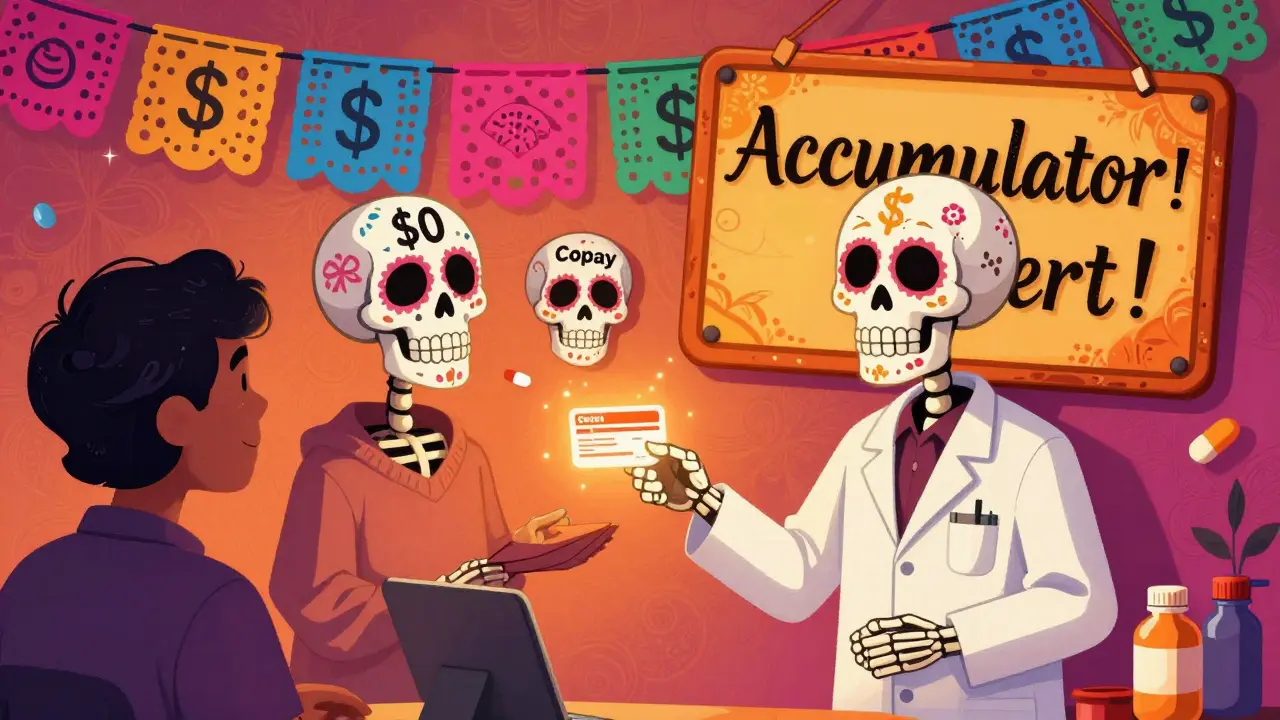
If you’re taking a brand-name medication that costs hundreds or even thousands of dollars a month, you’ve probably seen a copay assistance card pop up on the manufacturer’s website. These cards promise to cut your out-of-pocket costs to $0 or just a few dollars. But here’s the catch: copay assistance cards aren’t free money. If you don’t understand how they work with your insurance, you could be hit with a massive bill later in the year.
What Exactly Is a Copay Assistance Card?
A copay assistance card is a coupon issued by the drug company that makes your medication. It pays part or all of your copay or coinsurance when you fill a prescription - but only if you have private health insurance. These cards are designed for brand-name drugs, especially expensive ones like biologics for rheumatoid arthritis, multiple sclerosis, or Crohn’s disease. Without the card, your monthly cost might be $1,500 or more. With the card, you pay $5 or nothing at all. But here’s the key detail: you cannot use these cards if you’re on Medicare Part D, Medicaid, or if you have no insurance. Federal law blocks manufacturers from helping people on government programs. If you’re on Medicare, you’ll need to look into other options like patient assistance programs or pharmacy discount cards.How Do You Get and Use a Copay Card?
Getting one is simple. Go to the drug manufacturer’s official website - not a third-party site. Search for your medication name, then look for a link like “Savings Program,” “Copay Card,” or “Patient Assistance.” You’ll answer a few quick questions: Are you over 18? Do you have private insurance? Are you not on Medicare? If you qualify, you can download a digital card or get one mailed to you. When you go to the pharmacy, hand the card to the pharmacist along with your insurance card. The pharmacy’s system will process both. The insurer pays what it owes, and the manufacturer pays the rest - up to the limit on the card. You pay only what’s left. Some cards cap assistance at $8,000 a year. Others cover 100% of your copay until that limit is hit.The Hidden Trap: Copay Accumulator Programs
This is where most people get burned. Many insurance companies now use something called a copay accumulator program. Here’s how it works: even though the manufacturer pays $1,800 of your $2,000 monthly copay, your insurance doesn’t count that $1,800 toward your deductible or out-of-pocket maximum. That means you’re still responsible for paying the full $2,000 - just not out of your pocket. The money is paid by the drug company, but it doesn’t help you reach your annual limit. Why does this matter? Because once your card runs out - say, after four months of $2,000 copays - you suddenly owe the full $2,000 every month. And if you haven’t met your deductible yet, you might be paying the full price of the drug. That’s not a $5 copay anymore. That’s a $2,000 bill. According to the Kaiser Family Foundation, about 70% of commercial insurance plans in the U.S. now use accumulator programs. That means if you’re on private insurance, there’s a very high chance your plan is one of them.Copay Maximizer vs. Copay Accumulator: Know the Difference
Not all plans are the same. Some use what’s called a copay maximizer. This is actually better for you. With a maximizer, the manufacturer’s contribution is spread evenly across the year. So if your card covers $8,000 and your monthly copay is $2,000, the plan treats it like you’re paying $2,000 each month - even though the drug company paid it. That means your deductible and out-of-pocket maximum get credited properly. The problem? Most plans are accumulators, not maximizers. And insurers don’t always tell you which one they use. You have to ask.
How to Find Out If Your Plan Uses an Accumulator
Don’t guess. Call your insurance company. Ask: “Does my plan use a copay accumulator or maximizer program for brand-name medications?” If they don’t know what you’re talking about, ask to speak to someone in the pharmacy benefits department. Say: “I’m using a manufacturer copay card. Will those payments count toward my deductible and out-of-pocket maximum?” If they say no, you’re on an accumulator program. Write it down. Then call your pharmacy’s benefits manager - sometimes they have clearer answers. You can also check your plan documents. Look for terms like “copay accumulator,” “copay maximizer,” or “manufacturer assistance.” If you see language like “payments from third parties do not apply to deductible or out-of-pocket limits,” that’s your answer.What Happens When Your Card Runs Out?
If you’re on an accumulator program, your costs will spike dramatically once the card’s annual limit is reached. For example:- Medication cost: $2,000/month
- Copay card limit: $8,000/year
- Monthly copay with card: $0
- After 4 months: Card is used up
- Month 5: You pay $2,000/month - and your deductible still hasn’t been met
What to Do Before Your Card Runs Out
Don’t wait until you’re handed a $2,000 bill. Step 1: Calculate your card’s end date. Divide the annual limit by your monthly copay. If your card gives you $8,000 and your copay is $2,000/month, you have 4 months of coverage. Step 2: Contact the manufacturer’s patient assistance program a month before your card runs out. Many manufacturers offer free medication programs for people who can’t afford the drug after the card ends. These are different from copay cards. You might qualify for free drugs if your income is below a certain level - even if you have insurance. Step 3: Look into nonprofit organizations. Groups like the Patient Access Network Foundation (PAN) or the HealthWell Foundation can help with copays for certain conditions. They often cover medications that copay cards don’t. Step 4: Ask your doctor about alternatives. Is there a similar drug that’s cheaper? Is a generic available? Even if it’s not the first choice, sometimes a slightly less effective option is better than financial ruin.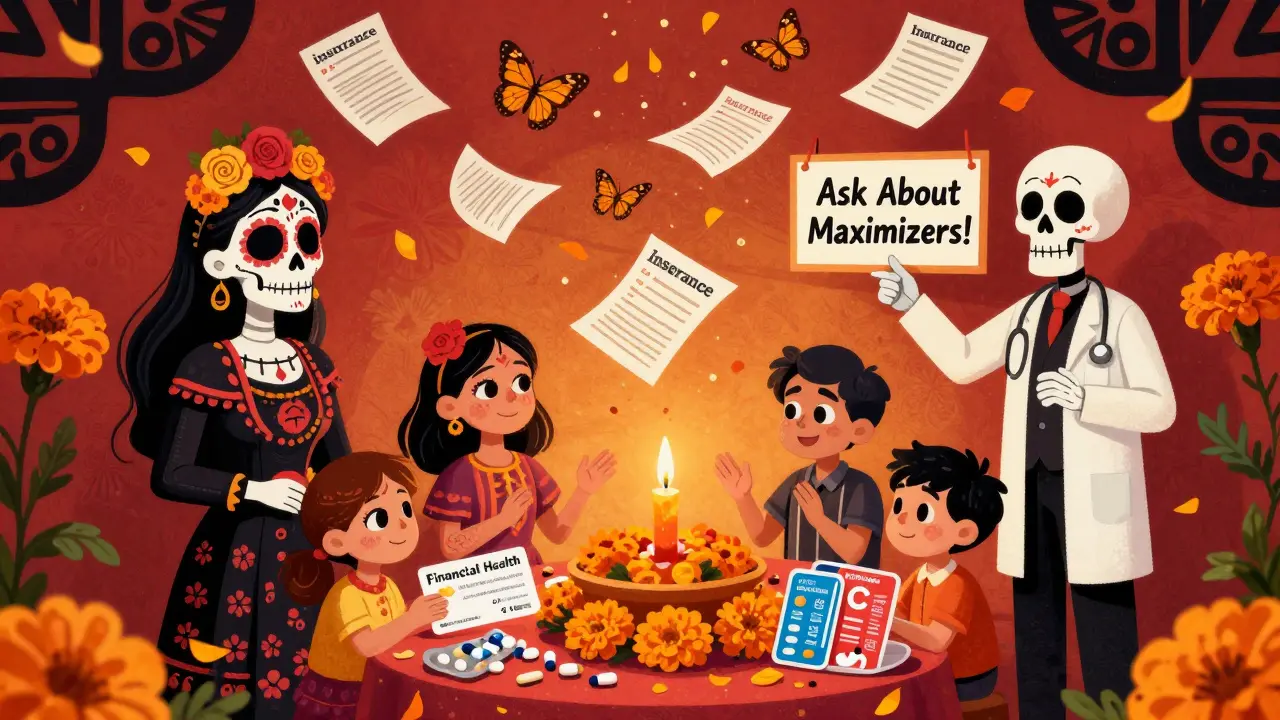
Copay Cards vs. Pharmacy Discount Cards
You might hear about GoodRx or SingleCare cards. These are different. They’re not tied to your insurance. Instead, they’re discounts negotiated between the card provider and pharmacies. You can use them instead of insurance - even if you have Medicare or no insurance. But here’s the trade-off: discount cards usually only work for generics or lower-cost brand drugs. They rarely help with expensive specialty medications. A copay card might get you a $2,000 drug for $0. A discount card might get you the same drug for $1,200. The copay card wins - if you’re not on an accumulator program. If you’re on Medicare, discount cards are your best bet. If you’re on private insurance and your plan doesn’t use an accumulator, copay cards are unbeatable.State Laws Are Starting to Change Things
Some states are pushing back against accumulator programs. California passed a law in 2021 requiring that manufacturer copay assistance count toward out-of-pocket limits. Other states like Illinois, Florida, and New York have similar laws - but not all are fully enforced yet. If you live in one of these states, check with your insurer. You might have more protection than you think.Bottom Line: Use the Card, But Plan Ahead
Copay assistance cards are powerful tools - but they’re not magic. They’re designed to help you afford your medication today, not protect you from financial shock later. Use the card. Save your money. But don’t ignore the clock. Track your usage. Know your plan’s rules. Contact assistance programs early. And never assume your insurance will help you after the card runs out - because most of the time, it won’t. If you’re taking a high-cost medication, your biggest threat isn’t the drug price. It’s the hidden rules your insurance company doesn’t tell you about.Can I use a copay assistance card if I’m on Medicare?
No. Federal law prohibits pharmaceutical manufacturers from offering copay assistance to patients enrolled in Medicare Part D, Medicaid, or other government-funded health programs. If you’re on Medicare, you’ll need to explore other options like pharmacy discount cards (e.g., GoodRx), patient assistance programs from drugmakers, or nonprofit organizations like PAN Foundation or HealthWell Foundation.
Do copay cards count toward my deductible or out-of-pocket maximum?
It depends on your insurance plan. Most commercial plans use a copay accumulator program, which means the manufacturer’s payments do NOT count toward your deductible or out-of-pocket maximum. A few plans use a maximizer program, which does count the assistance. You must contact your insurer directly to find out which one applies to you.
How do I know when my copay card will run out?
Check the card’s annual benefit limit - it’s usually listed on the card or the manufacturer’s website. Divide that number by your monthly copay. For example, if your card gives you $8,000 and your monthly copay is $2,000, you have 4 months of coverage. Mark your calendar and start planning a month before the card expires.
What should I do if my copay card runs out and I can’t afford the drug?
Contact the drug manufacturer’s patient assistance program immediately - many offer free medication to eligible patients. Also reach out to nonprofit organizations like PAN Foundation, HealthWell Foundation, or the Patient Advocate Foundation. Your doctor may also know of alternative medications or lower-cost options. Don’t wait until you’re out of pills - act a month before your card expires.
Are copay cards better than pharmacy discount cards like GoodRx?
For expensive brand-name drugs with no generic, copay cards usually save more money - but only if your insurance doesn’t use an accumulator program. For generics or lower-cost drugs, GoodRx often gives better prices and works even if you have Medicare or no insurance. Use copay cards for specialty meds with insurance; use discount cards for everything else.



This is why I hate these pharma companies! They lure you in with $0 copays, then BAM! You’re stuck with a $20K bill because your insurer is a greedy snake! 😤💸 And don’t even get me started on how they hide these accumulator programs in the fine print - it’s a scam wrapped in a coupon! 🇺🇸 #MedicareIsForLosers #PharmaLies
Interesting read. I didn’t realise how many plans were using accumulators. I’ve been using a card for my biologic and just assumed the payments counted. Will call my insurer tomorrow. Thanks for the heads up.
Let’s break this down with some actuarial clarity: copay accumulators are a structural risk-shifting mechanism designed to preserve insurer margins while externalizing cost burden onto patients via obfuscated contractual terms. The manufacturer’s subsidy is a temporary liquidity buffer - not a benefit accrual. What’s alarming is the lack of regulatory alignment across states. CA’s 2021 law is a step, but federal intervention is needed to standardize disclosure protocols. Bottom line: if your plan doesn’t explicitly state ‘maximizer,’ assume accumulator. Document everything. Advocate for yourself.
People need to stop being so lazy. If you can’t afford your meds, why are you even taking them? Just don’t get sick. It’s that simple. You think the government owes you free drugs? Newsflash: it doesn’t. Stop crying and get a second job.
Big thanks for this breakdown - seriously, this is the kind of info that saves lives. I’ve got a buddy on Humira and he almost skipped doses last year because he didn’t know his card was gonna drop off. Now he’s on a patient assistance program and breathing easy. Pro tip: set a calendar reminder 45 days before your card expires. And if you’re on Medicare, GoodRx is your new BFF. 🙌💊
It is indeed a most regrettably complex and profoundly disconcerting landscape that one must navigate when attempting to access life-sustaining pharmaceuticals in the contemporary American healthcare ecosystem. The opacity surrounding copay accumulator programs, coupled with the absence of mandatory transparency disclosures by insurers, constitutes not merely a policy failure, but a moral failing of monumental proportions. One is left to wonder whether the pursuit of profit has so entirely supplanted the ethical imperative of patient care. I implore all stakeholders - legislators, insurers, manufacturers - to prioritize human dignity over balance sheets. Sincerely, a concerned citizen.
Wow. So the real issue isn’t drug prices - it’s that people are too dumb to read the fine print? Let me guess, you also think the moon landing was faked because you didn’t check NASA’s T&C. This isn’t a conspiracy. It’s capitalism. You get what you pay for. Or in this case, what you don’t read.
Thank you for sharing this. I’ve been using a copay card for my daughter’s MS medication, and we just found out last month that our plan is an accumulator. I cried. I didn’t know what to do. I’m reaching out to HealthWell Foundation this week. 💔🩹
USA is the only country where you need a PHD just to afford your insulin. I’m from Canada. We just get the damn meds. No cards. No traps. Just care. 🇨🇦
This is incredibly well-explained. I work with patients in India who struggle with access, and I see similar issues here - but with different barriers. The key takeaway: always verify with your insurer’s pharmacy benefits department. Don’t trust the website. Call. Ask again. Write it down. Knowledge is power - and in this case, it’s financial survival.
I’ve been there. I had a $2,500/month drug. Card covered it for 5 months. Then - WHAM - $2,500 bill. I had to sell my laptop. I cried in the pharmacy parking lot. But then I found PAN Foundation - they helped me for a year. Don’t give up. You’re not alone. And if you’re reading this? Start calling NOW. Don’t wait until you’re out of pills.
As a pharmacist who’s seen this play out daily, let me add: copay maximizers are the unicorn of insurance plans - rare, beautiful, and often mislabeled. Always request a written summary of your plan’s copay assistance policy. If they can’t provide it, escalate to your employer’s HR benefits team. They’re contractually obligated to disclose this. And if you’re on Medicare - yes, GoodRx is your lifeline. I’ve saved patients $1,800/month with a simple discount card. Don’t let pride stop you from using it.