

Analgesic Nephropathy: How NSAIDs Damage Kidneys and What Safer Pain Relief Looks Like
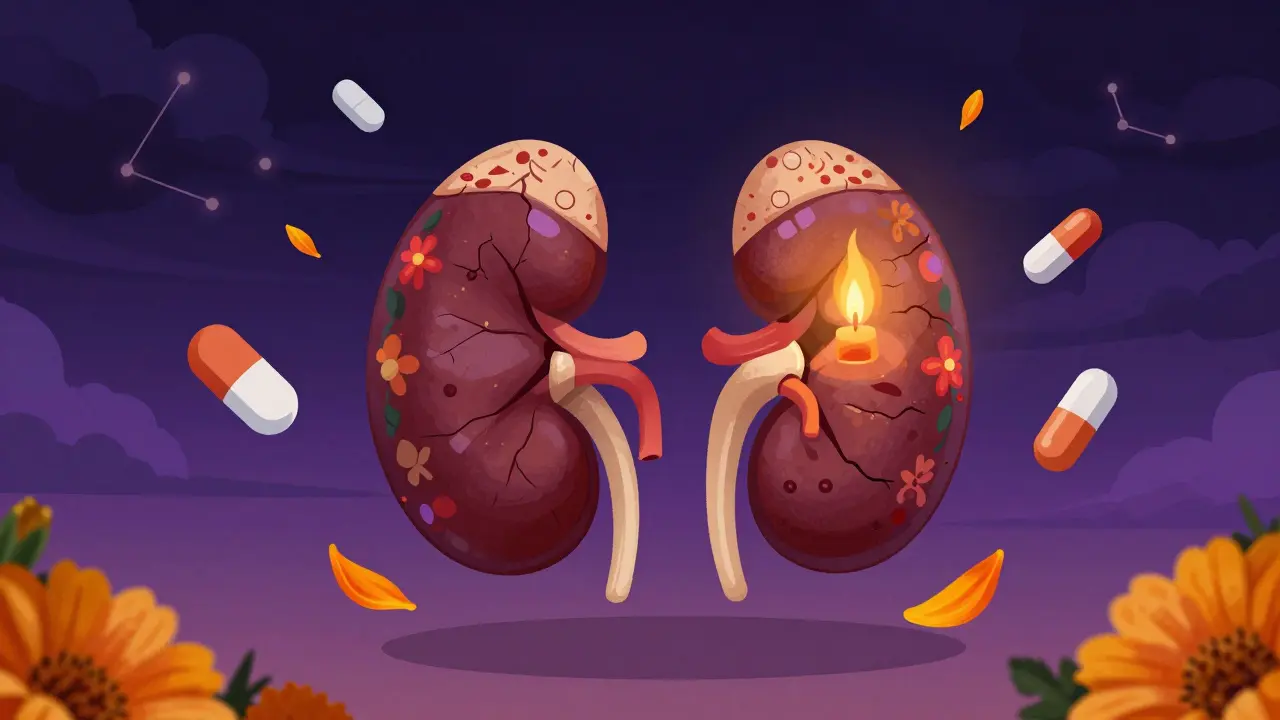
Most people think of painkillers as harmless-something you grab off the shelf when your head hurts or your back flares up. But what if taking a few extra pills every day for years was quietly damaging your kidneys? That’s the reality behind analgesic nephropathy, a preventable form of kidney disease caused by long-term overuse of common pain medications like NSAIDs and acetaminophen.
What Exactly Is Analgesic Nephropathy?
Analgesic nephropathy isn’t a sudden injury-it’s a slow burn. It happens when you take large amounts of painkillers over years, often without realizing it. The damage builds up in the inner parts of your kidneys, especially the papillae-the tiny structures that help filter urine. Over time, these areas die off, scar tissue forms, and your kidneys lose function. By the time symptoms show up, the damage is often advanced.
This condition was first noticed in the 1950s when people were routinely taking combination pain pills with phenacetin, a now-banned ingredient. Back then, up to 10% of end-stage kidney disease cases in Australia were linked to these meds. Today, phenacetin is gone from the market, but the problem hasn’t disappeared. NSAIDs like ibuprofen, naproxen, and aspirin, along with high-dose acetaminophen, are now the main culprits.
How Do Painkillers Actually Hurt Your Kidneys?
Your kidneys need steady blood flow to work properly. NSAIDs block chemicals called prostaglandins, which help keep blood vessels open in the kidneys. When you take these drugs regularly, especially at high doses, your kidneys get less blood. That’s like turning down the water pressure in a hose-you still get some flow, but not enough to do the job right.
Over time, this reduced blood flow leads to cell death in the kidney’s filtering units. At the same time, these drugs generate oxidative stress-basically, a chemical storm that damages kidney tissue. Think of it like rust forming on metal, but inside your body. The result? Chronic interstitial nephritis, papillary necrosis, and eventually, scarring that can’t be undone.
Studies show that people who take six or more pain pills daily for three years or more have a sharply increased risk. And it’s not just about quantity-combination pills (like Excedrin, which has aspirin, acetaminophen, and caffeine) are especially dangerous. One 2018 study found they’re nearly four times more likely to cause kidney damage than single-ingredient meds.
Who’s Most at Risk?
It’s not just older adults. While the average patient is over 45, women between 30 and 55 are hit hardest. Why? Many are managing chronic headaches, menstrual pain, or arthritis and turn to daily painkillers without medical guidance. In fact, 72% of diagnosed cases are women.
People with existing conditions like high blood pressure, diabetes, or early-stage kidney disease are at even higher risk. Their kidneys are already working harder, and adding NSAIDs pushes them over the edge. Yet, many don’t know they’re vulnerable. A Cedars-Sinai survey found that 62% of patients were shocked to learn OTC painkillers could cause kidney damage.
And here’s the quiet danger: most people don’t feel anything until it’s too late. In a review of 1,247 patient stories on health forums, 68% of those diagnosed with analgesic nephropathy had no symptoms at first. Their kidney damage was spotted only during a routine blood test showing elevated creatinine-a sign the kidneys aren’t filtering waste properly.
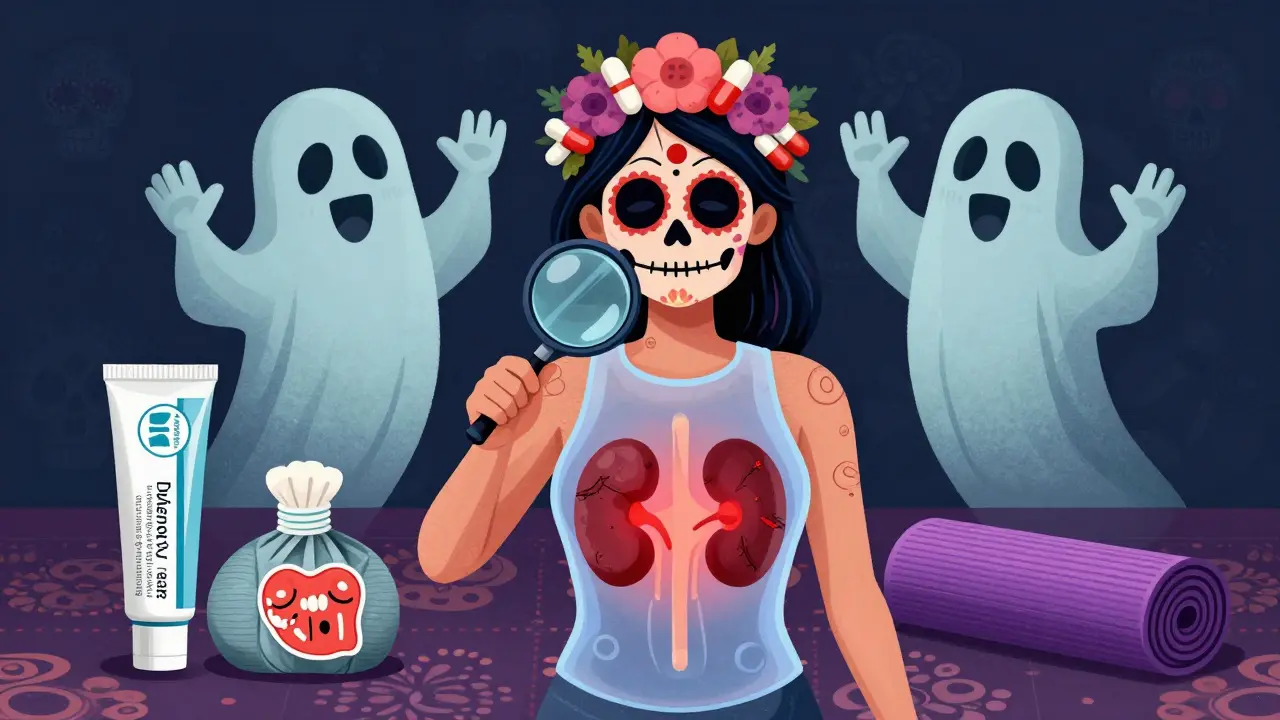
What Are the Signs? (And Why You Might Miss Them)
Early stages of analgesic nephropathy are silent. No pain. No swelling. Just a slow decline in kidney function. That’s why routine blood tests matter-especially if you’re on daily painkillers.
As the disease progresses, you might notice:
- High blood pressure that’s hard to control
- Fatigue or weakness that doesn’t go away
- Swelling in ankles or feet
- Changes in urine output (less frequent, darker color)
- Flank pain or blood in urine
Some patients report passing small, tissue-like clumps in their urine-these are pieces of dead kidney papillae. That’s a late-stage red flag.
And here’s the catch: many doctors don’t automatically test kidney function in patients on long-term pain meds. If you’re taking NSAIDs or acetaminophen daily, ask for a serum creatinine test and estimated GFR. It’s quick, cheap, and could save your kidneys.
Acetaminophen Isn’t Safe Either-Here’s Why
For years, acetaminophen (Tylenol) was considered the “kidney-safe” painkiller. But that’s changing. A 2020 study in Kidney International Reports found that people who took more than 4,000 mg of acetaminophen daily for five years had a 68% higher risk of developing chronic kidney disease compared to non-users.
It’s not as risky as NSAIDs, but it’s not harmless. The liver gets most of the attention with acetaminophen, but your kidneys are also exposed. Long-term, high-dose use leads to oxidative stress and inflammation in the tubules-the tiny tubes that reabsorb water and electrolytes.
The FDA recommends a max of 3,000 mg per day for adults, not 4,000 mg. Many people don’t know that. And if you’re taking combination cold or migraine meds, you might be hitting that limit without realizing it.
What Does Safe Pain Management Look Like Now?
The good news? This condition is almost entirely preventable. Here’s what works:
1. Stop Daily NSAID Use
The American College of Rheumatology says: never take NSAIDs daily for more than 10 days without seeing a doctor. For chronic pain, the max recommended doses are:
- Ibuprofen: no more than 1,200 mg/day
- Naproxen: no more than 750 mg/day
And even those limits are too high for many. If you have high blood pressure, diabetes, or kidney issues, stick to the lowest dose for the shortest time possible.
2. Try Topical Pain Relief
Topical NSAID gels (like Voltaren) deliver pain relief directly to the skin with 90% less drug entering your bloodstream. A 2021 trial showed they work just as well as oral pills for joint pain-but with zero decline in kidney function after 12 weeks.
3. Use Heat Therapy
Heat wraps like ThermaCare have FDA clearance for osteoarthritis pain. Studies show they reduce pain by 40-60% without any kidney risk. They’re cheap, easy to use, and don’t interact with other meds.
4. Explore Non-Drug Options
Physical therapy, acupuncture, and cognitive behavioral therapy (CBT) are now first-line treatments for chronic pain. The American College of Rheumatology recommends trying these for 4-6 weeks before turning to any medication.
5. Monitor Your Kidneys
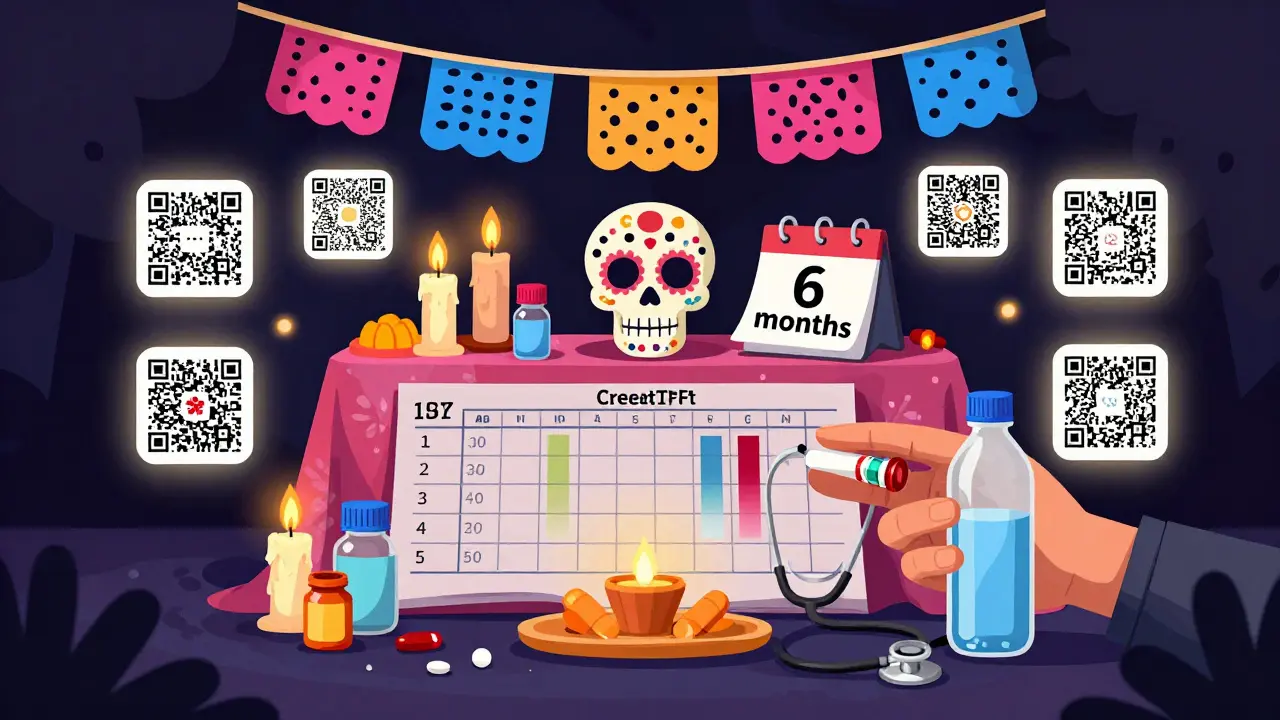
If you’ve been on painkillers for years, get your kidney function checked. A simple blood test for creatinine and eGFR can show if damage has started. For high-risk patients, testing every 6 months is recommended.
What Happens If You Stop?
Stopping the meds doesn’t fix everything-but it often stops the damage. A 2022 study followed 142 people who stopped taking analgesics after early diagnosis. Seventy-three percent had stable kidney function after five years. None got worse.
That’s huge. It means your kidneys can heal if you catch it early. But if you wait until you’re on dialysis, the damage is permanent.
What About New Alternatives?
There’s hope on the horizon. In January 2023, the FDA approved a new urine test called NephroCheck that detects early kidney damage from painkillers with 92% accuracy. It’s not yet routine, but it’s coming.
Drugs like AstraZeneca’s selepressin (still in trials) show promise in protecting kidney blood flow during NSAID use. And for migraine sufferers, new CGRP inhibitors offer powerful relief without kidney risk-though they cost around $650 a month.
CBD products are being studied too. A 2022 JAMA Internal Medicine study found no kidney damage in people taking up to 1,500 mg daily. But the evidence is still thin, and quality control is a mess in the CBD market.
The Bottom Line
You don’t need to live in pain. But you do need to be smarter about how you treat it. Analgesic nephropathy isn’t rare-it’s quietly common. And it’s entirely preventable.
If you’re taking painkillers daily, ask yourself:
- Am I using combination pills? (Stop. Switch to single-ingredient.)
- Am I exceeding 3,000 mg of acetaminophen a day? (Cut back.)
- Have I had my kidney function checked in the last year?
- Have I tried heat, physical therapy, or topical treatments first?
Most people don’t realize their pain meds are the problem. But once they do, they can take control. Your kidneys can’t talk-but they’ll thank you for listening.
Can over-the-counter painkillers really cause kidney damage?
Yes. Taking NSAIDs like ibuprofen or naproxen daily for years, or exceeding 3,000 mg of acetaminophen daily, can cause chronic kidney damage known as analgesic nephropathy. This isn’t rare-it’s one of the most preventable causes of kidney disease.
Is Tylenol safer for kidneys than ibuprofen?
Tylenol (acetaminophen) is less harmful to kidneys than NSAIDs, but it’s not safe at high doses. Taking more than 4,000 mg daily for five years increases chronic kidney disease risk by 68%. The FDA recommends a max of 3,000 mg per day for safety.
What are the early warning signs of kidney damage from painkillers?
There often aren’t any. Most people don’t feel symptoms until kidney function is already reduced. The only reliable way to catch it early is through a blood test checking creatinine and eGFR. If you take daily painkillers, get tested every 6-12 months.
Can I still use painkillers if I have high blood pressure?
Be extremely cautious. NSAIDs raise blood pressure and reduce kidney blood flow-two risks that can spiral together. If you have high blood pressure, avoid daily NSAIDs. Use topical pain relievers, heat therapy, or talk to your doctor about alternatives like physical therapy or prescription options.
How long does it take for painkillers to damage your kidneys?
It varies, but damage can start after just 3 years of daily use. People who take 6 or more pills a day over this period are at significantly higher risk. The longer you use them, the worse it gets. That’s why early detection matters-before the damage becomes permanent.
What should I do if I’ve been taking painkillers daily for years?
Stop taking them daily and schedule a blood test for kidney function (creatinine and eGFR). Then, work with your doctor to find safer alternatives-topical NSAIDs, heat therapy, physical therapy, or non-drug pain management. Most people can control pain without daily pills-and protect their kidneys in the process.



I used to take ibuprofen like candy for my migraines. Turned out my creatinine was through the roof. Stopped cold turkey. Kidneys are stable now. Don't be stupid.
Wait-so acetaminophen isn't safe? But everyone says it's the safest option?? I've been taking 3,500 mg daily for my back pain for 7 years?? Are you telling me I've been slowly killing my kidneys?? I need to go check my last bloodwork NOW. I'm not even kidding.
Oh wow. Another 'big pharma is hiding the truth' article. Let me guess-next you'll tell us water is bad for kidneys if you drink too much? This is just fearmongering dressed up as science. People have been taking Tylenol since the 1950s and we're still here. Also, who the hell checks their eGFR unless they're already on dialysis?
This is such an important post 🙏. I work in a rural clinic in Kerala and see this daily-people taking 4 ibuprofen tablets every day for 'just a little pain'. No doctor. No tests. Just hope. I always tell them: your kidneys don't scream-they whisper. And by the time they yell, it's too late. Please, if you're reading this-get a simple blood test. It costs less than your monthly painkiller habit. Your future self will thank you 💙
In India, we call this 'dard ka ilaj'-pain treatment. Everyone takes Combiflam or Dolo 650 like candy. My uncle took it for 15 years for his back. Now he's on dialysis. No one told him. No one knew. This article is a wake-up call for millions like him 🌏🙏
so like... if i take 2 advil a week is that ok? or do i need to go to the er? i mean i dont even know what eGFR means lmao
The notion that analgesic nephropathy is 'preventable' is a dangerous oversimplification. It presumes universal access to healthcare, medical literacy, and socioeconomic stability-all of which are luxuries in this country. To tell a single mother working two jobs with chronic back pain to 'just use heat therapy' is not advice-it's classist nonsense. The real issue is the absence of affordable, accessible pain management infrastructure-not individual negligence.
I'm surprised you didn't mention how the FDA's own guidelines have changed multiple times on acetaminophen dosing. It's not just about patient ignorance-it's about regulatory inconsistency. And why are you still recommending topical NSAIDs? They're just as systemic as oral ones if used over large surface areas. You're cherry-picking data to fit a narrative.
America's real problem isn't painkillers-it's that we've turned every ache into a medical emergency. Back in the 60s, people just sat down and waited for pain to pass. Now? We pop pills like M&Ms. We've become weak. Your kidneys are fine if you're tough. Maybe if you stopped whining and lifted something heavy once in a while, you wouldn't need this crap.
This is all a distraction. The real cause of kidney damage? Glyphosate in your water and GMO corn syrup. Big Pharma just wants you to blame your pills so they can sell you $650 migraine drugs. They don't want you to know the truth. The CDC is in on it. I've seen the documents. 🤫💊
I've been taking naproxen daily since 2018 for my arthritis. Just checked my last bloodwork-eGFR 78. Still in the green zone. And I'm 42. So yeah, maybe it's not as bad as you think. Also, I live in a country where you can't even get a doctor's appointment without a 3-month wait. So what am I supposed to do? Starve in pain? I'm not gonna let Big Pharma or some blog tell me how to live.
I just got my creatinine back-1.4. My doctor said it's borderline. I've been taking Excedrin for migraines for 5 years. I had no idea it was combo meds. I'm switching to single-ingredient acetaminophen now and starting physical therapy. Thanks for the nudge. I'm gonna book a kidney ultrasound next week.
How utterly pedestrian. You've turned a nuanced physiological phenomenon into a self-help pamphlet. 'Stop taking pills'-how quaint. The real tragedy isn't analgesic nephropathy-it's the collapse of holistic care in modern medicine. We've reduced human suffering to a pharmacological equation, and now we're blaming the patient for the system's failure. Pathetic.
You say NSAIDs reduce blood flow to kidneys. But what about the prostaglandins they block? Those same chemicals are involved in inflammation. So you're saying we should just suffer through chronic pain because the alternative might harm kidneys? That's not prevention-that's punishment. There's no balance here. Just fear.