

Healthcare System Shortages: How Hospital and Clinic Staff Gaps Are Hurting Patient Care
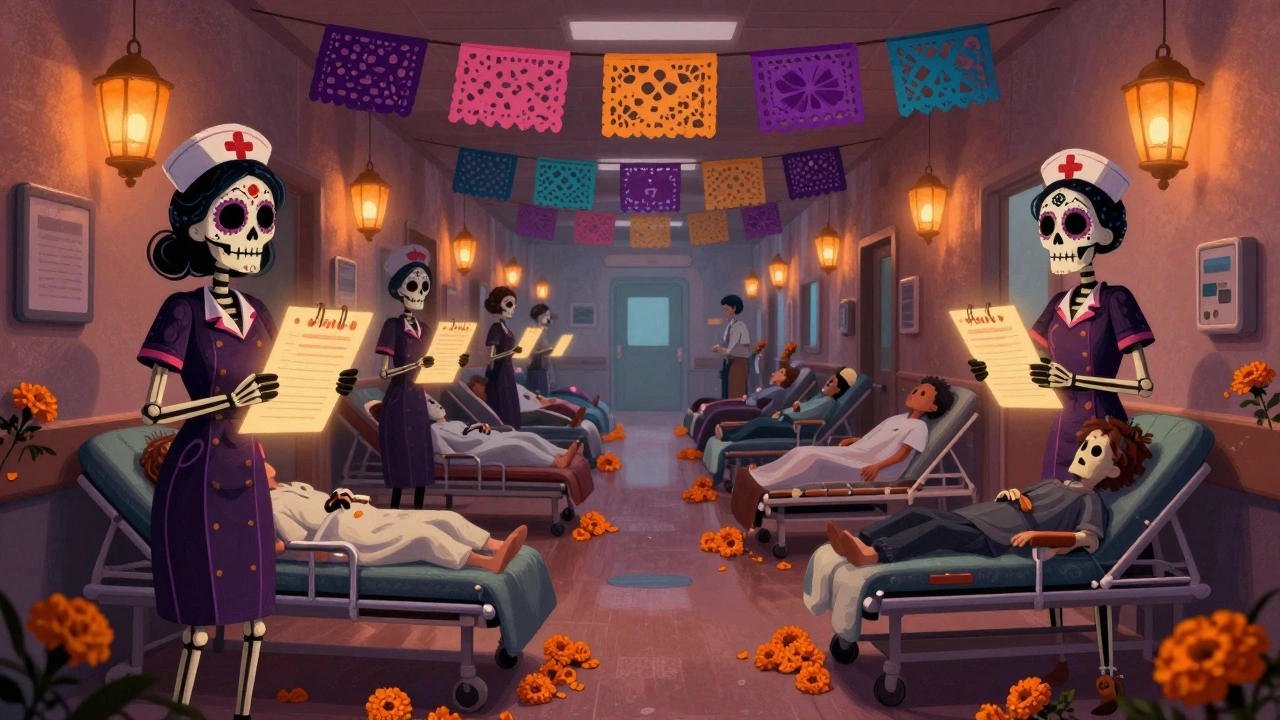
By November 2024, more than 42 states were reporting critical nursing shortages, and the numbers keep climbing. Hospitals are closing beds. Clinics are turning away patients. Emergency rooms are seeing 72-hour waits. This isn’t a future warning-it’s happening right now. The problem isn’t just one type of worker missing. It’s a collapse across the entire system: nurses, doctors, mental health providers, and support staff. And the impact isn’t theoretical. People are dying because there’s no one to help them in time.
What’s Really Going On Behind the Scenes?
It’s not just that there aren’t enough people. It’s that the people who are left are drowning. Registered nurses, who make up the backbone of patient care, are working longer hours with more patients than ever. In many units, one nurse is responsible for five or six patients. In some rural ERs, it’s worse. The standard used to be 1:4. Now, 1:6 is common. Studies show that for every extra patient added to a nurse’s load, the chance of a patient dying increases by 7%. That’s not a statistic-it’s a mother waiting for her child to get seen, or an elderly man with chest pain lying on a gurney for hours.
The numbers don’t lie. The American Association of Colleges of Nursing estimates a shortage of nearly 80,000 full-time nurses in 2025 alone. By 2030, that number could hit 500,000. Why? Many nurses are over 50 and nearing retirement. Others are quitting after burnout. The 2023 NSI National Health Care Retention Report found turnover rates hitting 104% in some specialties-meaning more nurses left than were hired in a single year. And the ones who stay? They’re exhausted. Sixty-three percent say they’re thinking of leaving the profession entirely.
Where It Hurts the Most
Not all areas feel the shortage the same way. Rural hospitals are hit hardest. They’re operating at 67% staffing, compared to 82% in big city medical centers. In some parts of Nevada, Montana, and West Virginia, clinics have shut down completely because no one will work there. The Rural Health Information Hub found rural hospitals have 37% more open positions than urban ones. And when they do get staff, it’s often temporary-travel nurses earning $185 an hour in New York City, while local nurses make $65. That creates tension, not solutions.
Behavioral health is another emergency. There are 12,400 unfilled mental health positions nationwide, up 37% since 2023. People in crisis wait days for a bed. Kids with severe anxiety sit in ERs for 24 hours because there’s no pediatric psychiatrist available. Seniors with dementia are stuck in hospital rooms because nursing homes can’t hire enough aides. These aren’t edge cases-they’re daily realities.
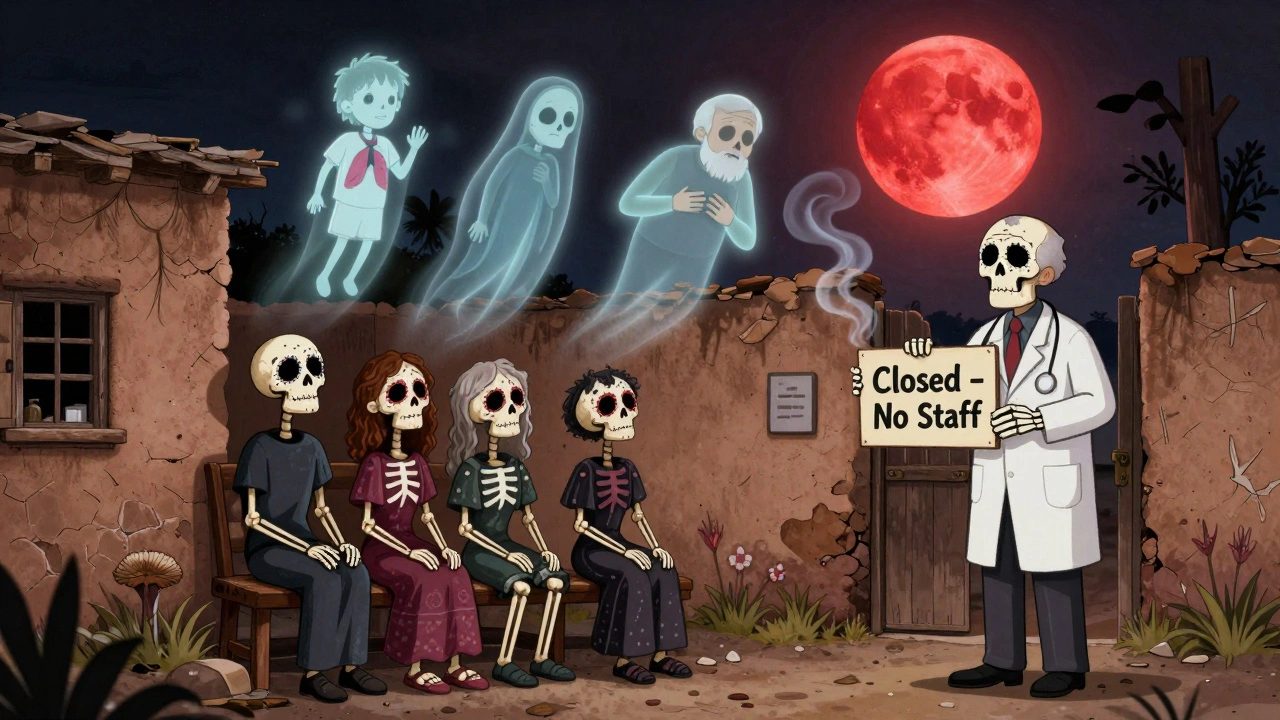
What Happens When You Can’t Staff a Hospital?
When hospitals can’t fill shifts, they do three things: close beds, delay surgeries, and push staff to the breaking point. Mercy Health’s CEO reported losing $4.2 million a month just from closing 12 inpatient beds weekly. That’s not just money-it’s lives. A patient with pneumonia who needs a monitored bed gets sent home too early. A woman in labor waits hours for an epidural because the anesthesiologist is covering three units. A cancer patient misses a chemo session because the nurse is double-booked.
Emergency departments are especially vulnerable. The American College of Emergency Physicians found wait times are 22% longer in understaffed ERs. That means people with strokes, heart attacks, or severe infections wait longer than they should. Every minute counts. Delayed care doesn’t just hurt-it kills.
And then there’s the ripple effect. When nurses are overworked, mistakes happen. A 2022 JAMA study found that each 10% rise in nurse turnover leads to a 6.5% increase in hospital-acquired infections. That’s not just a number-it’s a patient getting sepsis because a hand sanitizer bottle was missed, or a medication error because the nurse was rushing between three rooms.
Why Solutions Keep Failing
Everyone talks about fixing this. But most fixes are temporary. Travel nurses fill gaps-but they cost 34% more in labor. Telehealth helps reduce ER visits, but it needs $2.3 million in tech investment per system and still can’t replace a physical exam. AI tools promise to cut documentation time, but it takes 8.7 weeks to train staff, and 68% of hospitals can’t get their systems to talk to each other.
Some states are trying harder. California mandates 1:5 nurse-to-patient ratios in medical-surgical units. Massachusetts offers loan forgiveness that cut its shortage to 8% below the national average. But most states are still waiting for federal help. The Biden administration’s $500 million for nursing education sounds big-but the American Association of Colleges of Nursing says it covers just 18% of what’s needed. Meanwhile, 2,305 qualified nursing school applicants were turned away in 2023 because there weren’t enough teachers to train them.
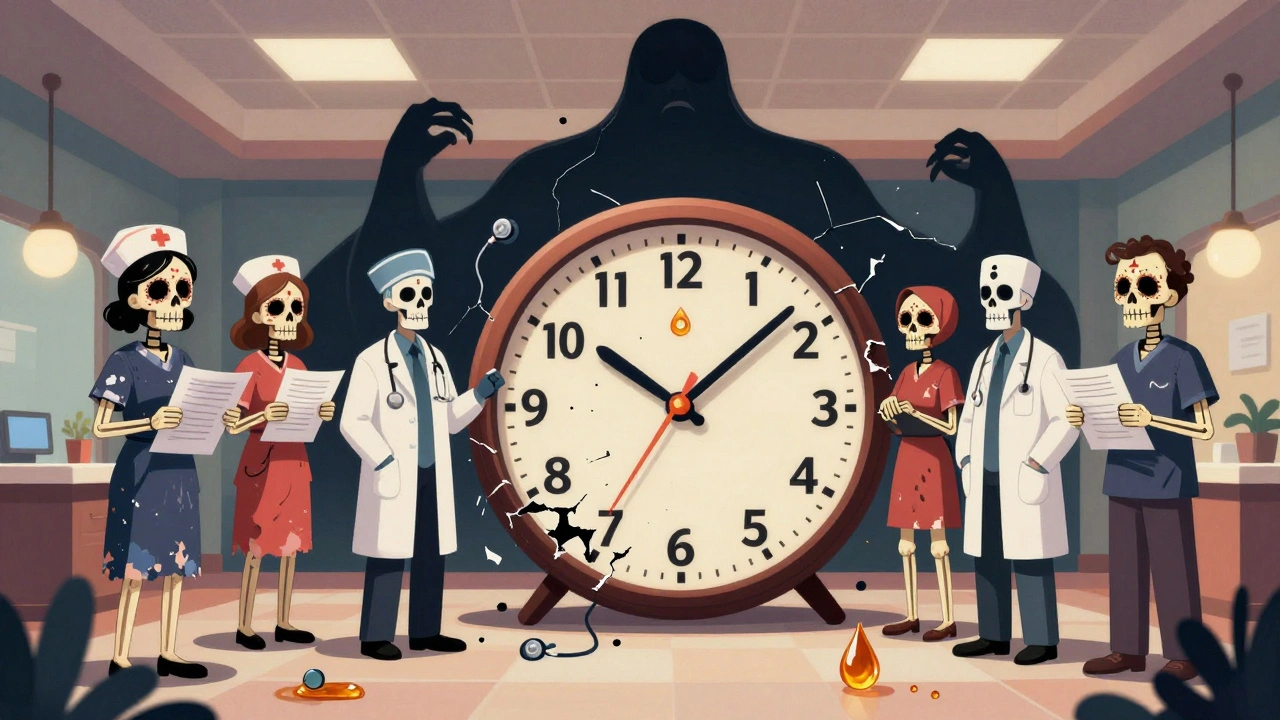
What’s Next?
The system won’t fix itself. The U.S. Census Bureau says the number of Americans over 65 will jump from 56 million to 82 million by 2050. That’s a 47% increase in people who need more care. But the number of working-age people to support them? It’s falling-from four workers per senior to 2.9 within five years. We’re building a demand monster with no workforce to match it.
Some experts believe technology can fill 30-40% of the gap. Remote monitoring, AI-assisted diagnostics, automated scheduling-these tools exist. But they need money, training, and time. And right now, hospitals are too busy trying to stay open to invest in the future.
The real solution isn’t just hiring more nurses. It’s redesigning care. Teams of nurse practitioners, physician assistants, and tech-savvy aides working together. Reducing paperwork with better software. Paying staff fairly so they don’t quit. Creating environments where people want to stay. The Mayo Clinic’s Care Team Redesign took 18 months and $4.7 million-but it cut nurse turnover by 31%. That’s proof it’s possible. But only if we choose to do it.
What You Can Do
If you’re a patient, know your rights. Ask about staffing levels. If you’re waiting too long in the ER, ask if there’s a backup plan. If you’re a family member of someone in a nursing home, check staffing reports-they’re public in most states. If you’re a student thinking about healthcare, now is the time to step in. We need you. If you’re a policymaker, fund education. Lift licensing barriers. Reward retention, not just recruitment.
This isn’t about politics. It’s about people. A nurse holding a dying patient’s hand. A doctor choosing between two patients because they can’t be in two places. A child with asthma waiting for a ventilator that’s being used elsewhere. The system is cracking. And if we don’t fix it now, the cost won’t just be measured in dollars. It’ll be measured in lives.
Why are hospitals closing beds because of staffing shortages?
Hospitals close beds because they don’t have enough staff to safely care for patients. Each bed requires a nurse, a technician, and often a doctor. If those roles are unfilled, keeping the bed open means risking patient safety. Closing beds is a last resort-but it’s safer than overworking staff or letting patients go without proper care.
Are travel nurses helping or hurting the system?
Travel nurses fill critical gaps, especially in rural and high-demand areas. But they’re expensive-costing hospitals 34% more than permanent staff. This drives up healthcare costs and creates resentment among permanent teams who earn less. They’re a band-aid, not a cure. Without long-term investments in training and retention, hospitals will keep relying on them, and the cycle won’t break.
What’s the biggest factor causing nurse burnout?
Unsafe patient ratios. Nurses say they can’t do their jobs properly when assigned five, six, or even seven patients at once. Add in constant paperwork, emotional stress, and lack of support, and it’s no surprise 63% are considering leaving. It’s not the hours-it’s the impossible expectations.
Why aren’t more nursing students entering the field?
There aren’t enough faculty members to teach them. In 2023, over 2,300 qualified applicants were turned away from nursing programs because schools didn’t have enough teachers. It’s a domino effect: fewer teachers → fewer students → fewer future nurses → bigger shortages. And funding for nursing education is only $247 million a year-when $1.2 billion is needed.
Can AI really solve the staffing crisis?
AI can help reduce administrative tasks like documentation and scheduling, freeing up nurses to focus on patients. Some studies suggest it could offset 30-40% of staffing gaps. But AI doesn’t replace human judgment, empathy, or physical care. It’s a tool, not a replacement. And many hospitals still struggle with outdated systems that don’t integrate with new tech.
What’s the most effective way to reduce nurse turnover?
Safe staffing ratios and real support. Hospitals that invest in nurse retention-through mentorship, mental health resources, and fair pay-see turnover drop by 30% or more. The Mayo Clinic’s program cut turnover by 31% after 18 months. It’s not about bonuses. It’s about respect, safety, and dignity in the workplace.




Been to my local ER twice this year. First time, waited 8 hours for a sprained ankle. Second time, they told me to come back tomorrow because the triage nurse was on her 14th hour. No joke. This isn't healthcare. It's a survival game.
I used to be a nurse for 12 years. I left because I couldn't watch another patient suffer because I had six people to care for and no time to even check their IVs properly. I cried every night for months. The system doesn't care. It just keeps pushing more on the same broken people. We're not machines. We're humans trying to hold a collapsing building together with our hands.
And now? My best friend just started nursing school. I told her to pick something else. She said, 'But someone has to do it.' That's the tragedy. We're not fixing it. We're just asking more of the broken.
It's funny how we talk about AI and telehealth like they're magic bullets. But you can't text a dying man's hand and say 'I'm here.' You can't video call someone through a heart attack. Tech helps, sure. But it doesn't replace presence. It doesn't replace the weight of a nurse sitting beside you while you cry because you're scared. That's what we're losing. Not just staff. Humanity.
My mom was in a rural hospital in Arkansas last year. They had one RN on duty for the whole floor. One. She was 72 and still working because no one else would come. The doctors were on Zoom calls from 200 miles away. They gave her a wrong med because the chart was handwritten and half faded. She lived. But barely. This isn't a crisis. It's a slow genocide of the vulnerable.
Let's be real. This is all because liberals won't let hospitals fire lazy nurses and hire cheaper foreign labor. If we just cut union rules and let employers pay $15/hour like in other countries, boom-problem solved. Nurses quit because they're spoiled. They want $80k and a hug after every shift. Wake up. This isn't a spa. It's a hospital.
As someone who has observed healthcare systems across continents, I must emphasize: the root issue is not merely quantitative, but qualitative. The erosion of professional dignity, coupled with systemic underinvestment in human capital, has led to a collapse of morale. The solution lies not in temporary fixes, but in institutional reengineering: structured mentorship, psychological safety nets, and equitable compensation models. Without these, even the most advanced AI will remain a hollow tool.
I work in admin at a mid-sized hospital. Every day I see the same thing: nurses crying in the break room, not because they're tired, but because they feel guilty. Guilty that they couldn't get to Mrs. Rivera on time. Guilty that they missed the sign that Mr. Chen was deteriorating. Guilty that they had to tell a family, 'We're doing all we can,' when they knew they weren't. The burnout isn't from workload. It's from moral injury. We're asking people to be angels in a system that treats them like disposable parts.
And the worst part? The people who could fix this? They're too busy trying to keep the lights on to even look up.
Let’s deconstruct this through the lens of structural healthcare economics. The labor arbitrage model-relying on transient, premium-priced travel nurses-is fundamentally unsustainable. It creates perverse incentives that disincentivize long-term workforce development. We’re witnessing a classic tragedy of the commons: institutional actors externalize costs onto frontline workers while optimizing for short-term operational continuity. The solution? A public-private partnership to subsidize nursing education at scale, coupled with mandatory staffing ratios codified into federal law. Anything less is performative policy.
USA is weak. In India we have 1 nurse for 10 patients and they still work 16 hours. No complain. No cry. No whining. You people need to stop being soft. If you cant handle job then go do something else. Why government pay so much to lazy people? In my country nurse work with no AC no water no rest and still do job. You need to learn discipline. This is not 1st world problem this is weakness.
I think we’re missing the bigger picture here. We’re treating symptoms, not causes. The real question isn’t how many nurses we need-it’s why we keep treating them like they’re replaceable. Why do we let hospitals prioritize profit over people? Why do we let policy makers ignore the data? Why do we accept that a child with asthma should wait 12 hours because the system is ‘stretched thin’? Maybe the solution isn’t more staff. Maybe it’s less greed.