

Medication-Induced Angioedema: Recognizing Swelling Risks and Airway Emergencies

Medication-Induced Angioedema Risk Checker
Check Your Medication Risk
This tool helps you identify if you're taking medications that may cause angioedema and what actions to take immediately.
Symptom Assessment
Check all symptoms you're currently experiencing:
Swelling in your lips or tongue might seem like a mild allergic reaction-until you can’t breathe. That’s when what looks like a simple rash turns into a life-or-death moment. Medication-induced angioedema isn’t rare, and it’s often mistaken for something harmless. But when swelling creeps into your throat, you have minutes-not hours-to act. And most people don’t know the difference between a regular allergy and this dangerous type of reaction.
What Exactly Is Medication-Induced Angioedema?
Angioedema is deep swelling under the skin or mucous membranes. It’s not surface-level hives. It’s the kind of swelling that makes your lips puff out, your tongue feel too big for your mouth, or your throat close up without warning. Unlike typical allergic reactions that cause itching and redness, this swelling can happen silently, without a rash. And when it hits the airway, it’s an emergency.
It’s not caused by just one drug. But the biggest culprit? ACE inhibitors. These are common blood pressure meds like lisinopril, enalapril, and ramipril. About 30-40% of all drug-induced angioedema cases come from these. Even scarier? It can happen after you’ve taken the drug for months-or even years-without issue. One patient in Melbourne reported swelling after 7 years on lisinopril. No prior symptoms. No warning. Just sudden, severe tongue swelling that nearly cut off her airway.
The Two Types of Swelling-And Why It Matters
Not all angioedema is the same. There are two main types, and treating them the wrong way can be deadly.
Mast cell-mediated (histaminergic) angioedema is what most people think of as an allergic reaction. It’s triggered by things like penicillin, aspirin, or NSAIDs like ibuprofen. This type causes itching, hives, and swelling. It responds to antihistamines, steroids, and epinephrine. If you’ve used an EpiPen before and it worked, this is likely the kind you had.
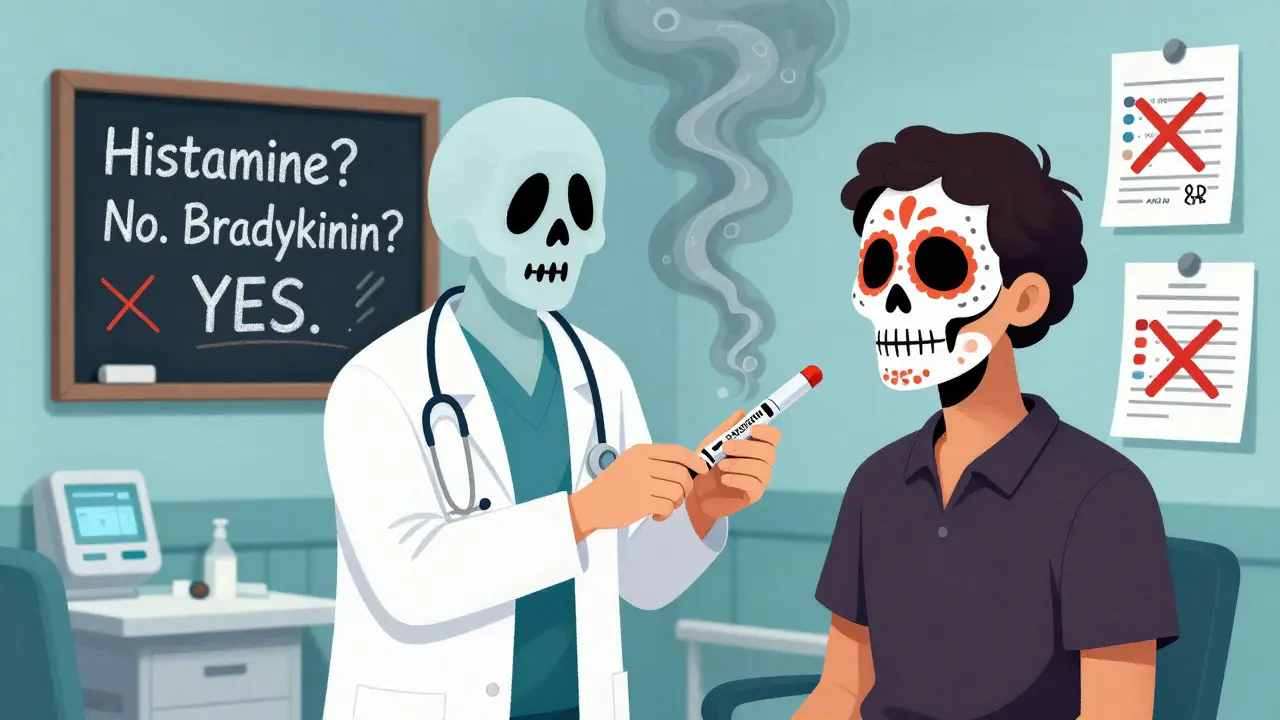
Bradykinin-mediated angioedema is the silent killer. It’s caused by ACE inhibitors, ARBs (like losartan), and sometimes even certain painkillers. This type doesn’t involve histamine. That means antihistamines and epinephrine? They won’t help. Steroids? Useless. The swelling comes from a chemical called bradykinin building up in your tissues. It’s why patients on ACE inhibitors keep getting swollen lips-even after taking Benadryl-and why doctors keep misdiagnosing it as allergies.
Here’s the hard truth: If you’re on an ACE inhibitor and you get swelling, and your doctor gives you antihistamines, you’re being treated for the wrong thing. And you’re at risk for another episode-possibly worse.
Who’s at Highest Risk?
Some people are more likely to develop this than others. African-American patients have up to a 2.2% risk of ACE inhibitor-induced angioedema-more than triple the general population. Women are also more affected than men. And if you’ve had any kind of angioedema before-even mild-you’re at higher risk for recurrence.
Age doesn’t protect you. It can happen to anyone, even healthy young adults. A 28-year-old in Sydney developed tongue swelling after 11 months on lisinopril. She had no history of allergies. No family history. Just a routine prescription. She ended up in the ER with her airway nearly blocked.
And here’s what most don’t realize: Switching from an ACE inhibitor to an ARB (like valsartan or losartan) doesn’t solve the problem. About 50% of people who get angioedema from ACE inhibitors will get it again with ARBs. That’s not a safe alternative-it’s a trap.
Warning Signs You Can’t Ignore
These aren’t vague symptoms. They’re red flags that demand immediate action:
- Sudden swelling of the lips, tongue, or throat
- Difficulty swallowing or a feeling that your throat is closing
- Changes in your voice-hoarseness, whispering, or loss of voice
- Noisy breathing, wheezing, or stridor (a high-pitched sound when you inhale)
- Abdominal pain, nausea, vomiting (swelling can happen in the gut too)
- Fainting or dizziness from lack of oxygen
One study found that 68% of people with drug-induced angioedema visited the ER at least once because of airway concerns. About 22% needed a breathing tube. That’s not a coincidence. That’s a pattern. And it’s preventable-if you know what to look for.
What to Do If You Think It’s Happening
If you’re on an ACE inhibitor or ARB and you notice swelling, stop the medication. Right now. Don’t wait. Don’t call your doctor tomorrow. Go to the ER or call an ambulance.
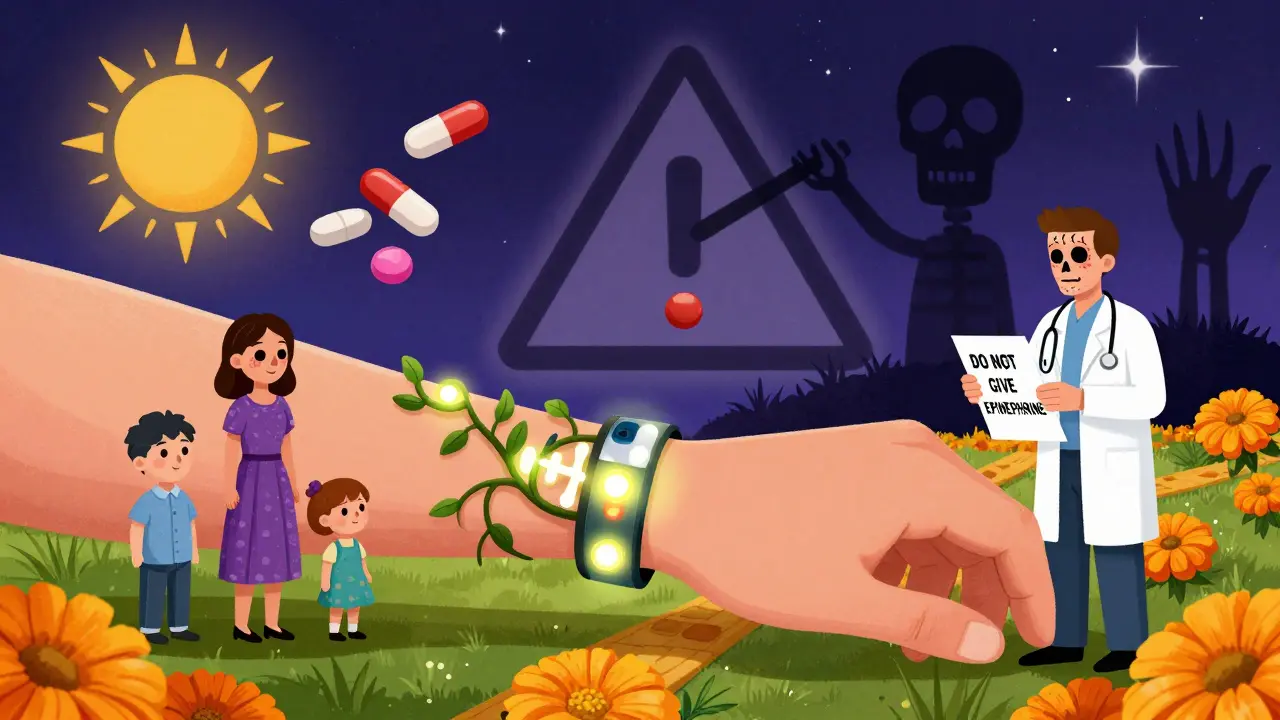
If you have a history of this reaction, carry an emergency action plan. Not just a list of meds. A written note that says: “I have bradykinin-mediated angioedema triggered by ACE inhibitors. Do NOT give antihistamines, steroids, or epinephrine. I require C1 inhibitor or icatibant.” Give this to ER staff. Most don’t know this. You might have to educate them.
For mast cell-mediated cases (like from penicillin), epinephrine is life-saving. But for ACE inhibitor-related swelling? Epinephrine won’t touch it. That’s why misdiagnosis is so dangerous. You’re given the wrong treatment, the swelling keeps growing, and you’re left fighting for breath.
How Doctors Are Getting Better-And Where They’re Still Failing
In 2023, new international guidelines finally split angioedema into clear categories: histaminergic vs. bradykinin-mediated. Hospitals using these protocols now diagnose correctly 89% of the time-up from just 65%. That’s progress.
But here’s the gap: Only 45% of primary care doctors know ACE inhibitors are the top cause of drug-induced angioedema. Many still think it’s just “allergies.” That’s why patients go to three or four doctors before someone connects the dots. One Reddit user shared: “My doctor kept telling me it was allergies for 3 years while I was on lisinopril-lost 2 teeth from tongue swelling before they finally connected the dots.”
Specialist allergy clinics have protocols. Primary care offices? Not so much. If you’ve had even one episode, you need to see an immunologist or allergist. Not just to confirm the cause-but to get a written emergency plan and learn what meds to avoid forever.
What Happens After the Swelling?
Once the acute episode is under control, the real work begins. You need to permanently stop the triggering drug. For ACE inhibitors, that means switching to a different blood pressure medication-like a calcium channel blocker (amlodipine) or a diuretic. But never switch to an ARB unless you’ve been tested and cleared by a specialist.
If you’ve had multiple episodes, you may need long-term preventive treatment. New drugs like berotralstat (Orladeyo) and lanadelumab (Takhzyro) are approved for hereditary angioedema-but they’re not yet proven for drug-induced cases. Research is ongoing. A 2023 trial of sebetralstat showed promise for bradykinin-related swelling, even if it’s drug-triggered. But right now, the best treatment is avoidance.
And yes-you’ll need to tell every doctor you see from now on. Put it in your medical record. Tell your pharmacist. Write it on your phone’s lock screen. Because if you’re ever unconscious and brought to the ER, they won’t know unless you make sure they do.
Why This Keeps Happening
There are 50 million Americans on ACE inhibitors. That’s a lot of people exposed to a known, preventable risk. The FDA added a black box warning in 1999. But warnings don’t change practice if doctors don’t understand the mechanism.
Pharmaceutical companies don’t market these risks clearly. Patients aren’t warned beyond a small print insert. And when swelling happens, it’s often dismissed as “just a side effect.” But this isn’t a side effect-it’s a physiological reaction with a clear, documented path to death.
The global angioedema treatment market is growing fast-$2.4 billion by 2028. But most of that money goes to rare hereditary cases. The real problem-medication-induced-is still underfunded, under-researched, and under-treated.
What You Can Do Today
- If you’re on lisinopril, enalapril, ramipril, or any ACE inhibitor, and you’ve ever had unexplained swelling-stop the drug and talk to your doctor today.
- If you’ve had angioedema before and your doctor gave you antihistamines, ask: “Was this histamine-mediated or bradykinin-mediated?” If they don’t know, get a referral to an allergist.
- Carry a medical alert card or app note that says: “ACE inhibitor-induced angioedema. Do not use epinephrine or antihistamines.”
- Never take ARBs if you’ve had ACE inhibitor angioedema-unless under specialist supervision.
- Teach your family what to do. If your lips swell and you can’t speak, they need to call 000-not wait to see if it gets better.
Angioedema from meds isn’t something you can ignore. It doesn’t always come with warning signs. But you can control your risk-if you know what to look for and what to avoid. The difference between a mild swelling and a blocked airway? Knowledge. And timing.
Can antihistamines treat angioedema caused by ACE inhibitors?
No. Antihistamines do not work for angioedema caused by ACE inhibitors because this type is bradykinin-mediated, not histamine-driven. Giving antihistamines in these cases delays proper treatment and can be dangerous. Epinephrine and steroids also don’t help. The only effective treatments are C1 inhibitor concentrate, icatibant, or ecallantide-medications typically used in hospitals for hereditary angioedema.
Is it safe to switch from an ACE inhibitor to an ARB if I had angioedema?
No. About 50% of people who develop angioedema from ACE inhibitors will have another episode when switched to an ARB (like losartan or valsartan). These drugs work similarly and can trigger the same bradykinin buildup. You should avoid both classes unless under the supervision of a specialist who has confirmed it’s safe for you.
How long does medication-induced angioedema last?
Acute episodes usually last 24 to 72 hours. But if the swelling affects the airway, it can worsen rapidly within minutes. Even if the swelling seems to go down, you’re still at risk for recurrence-especially if you continue taking the triggering medication. Episodes can return days or weeks later if the drug isn’t stopped.
Can angioedema happen without hives or itching?
Yes. In fact, bradykinin-mediated angioedema-like that from ACE inhibitors-often occurs without any hives or itching. The swelling is deep, painless in many cases, and can appear suddenly. This is why it’s so easily mistaken for something else. No rash doesn’t mean it’s not serious.
What should I do if I have swelling and I’m not sure what caused it?
Go to the nearest emergency department immediately. Do not wait. Bring a list of all your medications, including over-the-counter drugs and supplements. Tell them you suspect medication-induced angioedema. If you’ve had swelling before, mention it. Emergency staff need to know whether this could be life-threatening airway swelling-not just a rash. Time is critical.
Next Steps If You’ve Had an Episode
If you’ve experienced swelling linked to a medication, your next move isn’t just about stopping the drug-it’s about protecting your future.
- Get a referral to an allergy or immunology specialist. They can help confirm the type and create a personalized emergency plan.
- Update your medical records with your hospital, GP, and pharmacy. Make sure it’s flagged in your file.
- Consider a medical alert bracelet that says “ACE Inhibitor Angioedema” or “Bradykinin-Mediated Swelling.”
- Teach a family member or close friend how to recognize the signs and when to call emergency services.
- Keep a written list of safe blood pressure alternatives (like amlodipine, hydrochlorothiazide, or metoprolol) to show your doctor.
Angioedema isn’t something you outgrow. It doesn’t disappear after one episode. It’s a permanent risk if you keep taking the trigger. But with the right knowledge, you can live safely-without fear of the next swelling.






so i was on lisinopril for 2 years and never had an issue... then one morning my tongue felt like a balloon and i thought i was having a stroke. turned out it was the med. no hives, no itching, just pure panic. docs kept giving me benadryl like it was candy. i swear if i hadn't googled it myself i'd be dead. why do they even prescribe these without warning?
ARE YOU KIDDING ME. THIS IS WHY AMERICA IS FALLING APART. DOCTORS DON'T EVEN KNOW WHAT THEY'RE PRESCRIBING AND PATIENTS ARE DROWNING IN A SEA OF MISINFORMATION. I SAW A WOMAN IN THE ER WITH HER TONGUE OUT LIKE A DOG BECAUSE SOMEONE GAVE HER ANTIBIOTICS AND THEN ANTIHISTAMINES. SHE COULDN'T SPEAK. NO ONE KNEW WHAT WAS HAPPENING. THIS ISN'T A SIDE EFFECT. IT'S A CRIME.
lol so you're telling me the whole medical system is built on guesswork? i mean i get it, ACE inhibitors are everywhere. but if 50% of people who switch to ARBs get it again, why are they even on the market? someone's making bank off this. and no one's talking about it. classic pharma move.
this made me cry. my mom had this happen last year. she’s 71, healthy, never smoked. one day she just couldn’t swallow. they thought it was a stroke. turned out it was lisinopril. she’s on amlodipine now and lives. but i’ll never forget the look on her face when she couldn’t talk. please, if you’re on this med, listen.
knowledge is power. silence is death.
I've been telling everyone I know about this... Seriously. If you're on an ACE inhibitor and you've ever had unexplained swelling-stop. Now. And get tested. I had a friend who lost teeth from tongue swelling. She didn't even know it was the medication until she read a Reddit thread. How is this not common knowledge?
people don't understand that medicine isn't magic. it's chemistry. and when you ignore the science, you get bodies. this isn't 'allergy season'-it's a biochemical cascade that kills quietly. and the system rewards ignorance. doctors get paid to prescribe, not to learn. sad.
The pathophysiology of bradykinin-mediated angioedema is well-documented in peer-reviewed literature dating back to the 1980s. The failure of primary care providers to integrate this knowledge into clinical practice represents a systemic breakdown in translational medicine. One must question the efficacy of continuing medical education protocols when such life-threatening diagnostic errors remain endemic.
i'm so glad someone finally wrote this. my sister had this happen after 5 years on ramipril. they gave her epinephrine. nothing happened. she had to beg for icatibant. by then her throat was 70% closed. please, if you're reading this-don't wait. carry that card. tell your family. we need to stop pretending this is rare. it's not. it's just ignored.
💖 you're not overreacting. you're surviving.
i had no idea this was even a thing until my cousin nearly died. now i carry a little card in my wallet that says "ACE INHIBITOR ANGIOEDEMA - NO ANTihistamines". i even printed it for my grandma. she's on lisinopril. she thinks i'm being dramatic. i told her if she ever wakes up with a tongue like a marshmallow, she better call 911 and scream "BRADYKININ". she laughed. i hope she never has to.
In many parts of the world, access to specialized care remains severely limited. While the guidelines are clear, the infrastructure to implement them is not. In rural India, for example, a patient presenting with angioedema may never encounter an allergist. The burden of recognition falls entirely on the individual, often with tragic consequences. This is not merely a medical issue-it is a global equity issue.
It is imperative to note that bradykinin-mediated angioedema is frequently misdiagnosed as allergic angioedema due to superficial similarities in clinical presentation. However, the absence of pruritus, urticaria, and response to antihistamines are key discriminators. Physicians must be educated to recognize these distinctions, as delayed intervention significantly increases mortality risk.
bro i was on enalapril for 3 years and never thought twice... then one day my lips looked like i got punched by a balloon animal. i went to urgent care and they gave me benadryl. i was like "this isn't working" and i just left. then i went home and googled "swollen lips no rash" and found this exact post. i stopped the med that night. i still have nightmares. if you're reading this and on an ace inhibitor... just stop. please. i beg you.
look i get it people are scared but you cant just stop meds because you read a reddit post. what if you have heart failure. what if you dont have alternatives. this isnt a horror story its a complex medical situation. if you want to be a doctor go to med school. stop playing armchair physician
This is one of those topics where fear and misinformation spread faster than facts. I’ve seen patients in India stop their blood pressure meds entirely because they read this online-only to suffer strokes. The answer isn’t panic. It’s education. If you're on an ACE inhibitor and have swelling, consult a specialist. Don’t self-diagnose. Don’t stop cold. But do ask the right questions. Knowledge without action is useless. Action without knowledge is dangerous.