

How to Decide When to Replace Expired OTC First-Aid Medications
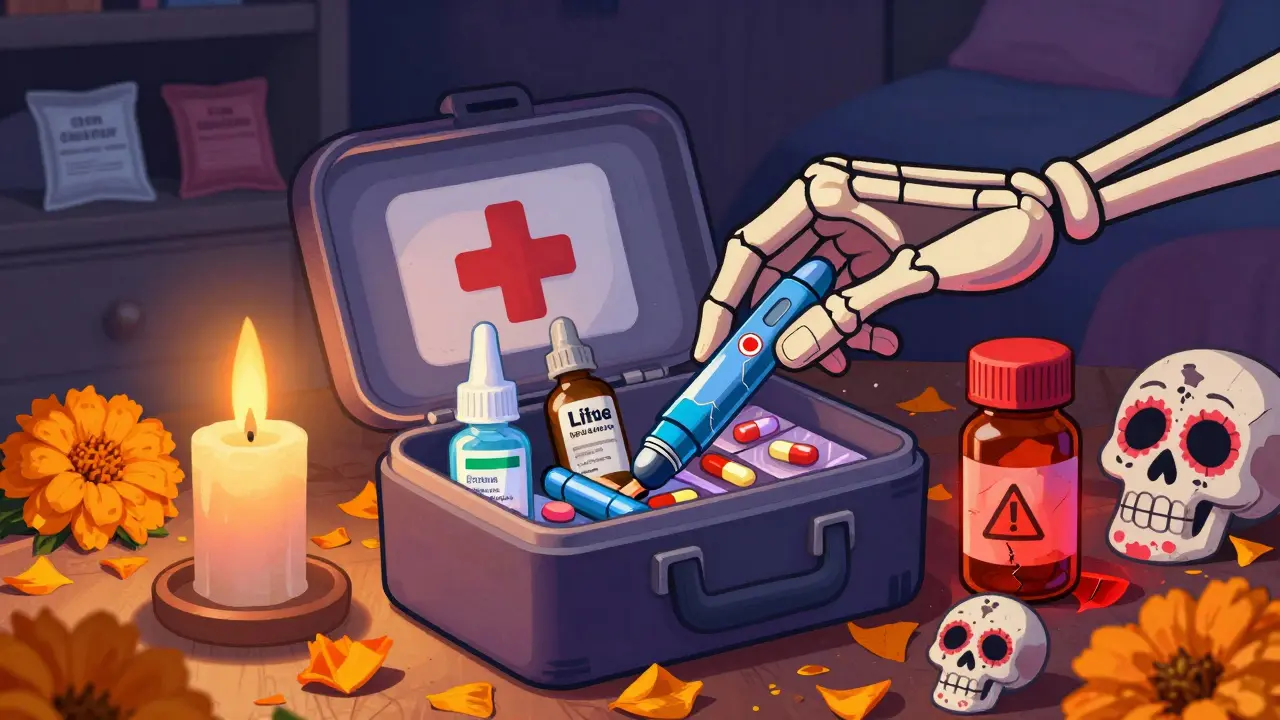
Most people keep a first-aid kit at home, but how many of them actually check the expiration dates? If you haven’t looked at yours in the last year, you’re probably holding onto something that won’t work when you need it most. Expired OTC medications aren’t just useless-they can be dangerous. You might think, "It’s only been a few months past the date, it’s probably fine." But that’s not how it works. Some pills lose strength slowly. Others turn into health risks the moment the clock hits zero.
Not All Expired Medications Are the Same
The biggest mistake people make is treating all expired meds the same. You can’t look at an old bottle of ibuprofen and assume it’s just like an old EpiPen. Solid pills like acetaminophen or ibuprofen? They often stay effective for years beyond their printed date-if stored right. A 2019 U.S. Department of Defense study found that 80% of unopened, properly stored pain relievers still had at least 90% of their original potency after 15 years. That’s not a typo. Fifteen years. But that’s not the whole story. Liquid meds? Emergency devices? Those are different. Epinephrine auto-injectors lose up to 30% of their potency within six months after expiration. That means if you’re having a severe allergic reaction and your EpiPen is expired, it might not stop the reaction. Same with nitroglycerine tablets-they break down fast after opening. Even if the date is still valid, if you’ve had that bottle open for more than six months, it’s time to replace it. Eye drops, ear drops, and liquid antibiotics? Never use them past expiration. The FDA specifically warns against it. Once these liquids go bad, they don’t just lose strength-they can grow bacteria. A 2023 FDA lab study found that 47% of expired hydrocortisone cream samples were contaminated with harmful microbes. Imagine putting that on a cut.Storage Matters More Than You Think
Where you keep your meds makes a huge difference. A lot of people stash their first-aid kit in the bathroom. Bad idea. Humidity and heat destroy pills faster than you realize. Johns Hopkins found that meds stored in a steamy bathroom lost potency 40% faster than those kept in a cool, dry drawer. The ideal spot? A bedroom cabinet, away from sunlight and moisture. Keep the original packaging. Those little silica packets inside? Don’t throw them out. They keep the air dry. Transferring pills to a pill organizer? That cuts their shelf life in half. The FDA says medications stored outside their original containers lose effectiveness 35-50% faster. Why? Because they’re exposed to air, light, and moisture. If you use a pill organizer for daily meds, fine. But don’t use it as your long-term storage for your first-aid kit. Keep the originals.Emergency Meds: Never Take Chances
There are five types of medications you should replace before they expire-not after:- Epinephrine auto-injectors (EpiPen, Auvi-Q)
- Nitroglycerine tablets
- Insulin
- Liquid antibiotics
- Eye and ear drops
What About Pain Relievers and Antihistamines?
Here’s where things get practical. If you’ve got a headache and your ibuprofen is six months past the date? It’s probably fine. Research from the University of California San Francisco shows that solid pain relievers retain 90-95% potency for 1-2 years after expiration if kept dry and cool. Same with antihistamines like diphenhydramine (Benadryl). One 2020 study found they kept 85% of their strength for 18 months past the date. But don’t get careless. Check for signs of damage. If the pills are cracked, discolored, or smell weird-pitch them. If the bottle’s been sitting in a hot car or damp basement? Throw it out. Even if the date is fine, bad storage ruins everything. Antiseptics? Hydrogen peroxide? It goes bad fast. Once you open the bottle, it starts breaking down. After 30 days, it’s basically salt water. Isopropyl alcohol (70%)? That one’s more stable. As long as the cap is sealed, it lasts two years.What to Do When You Find Expired Meds
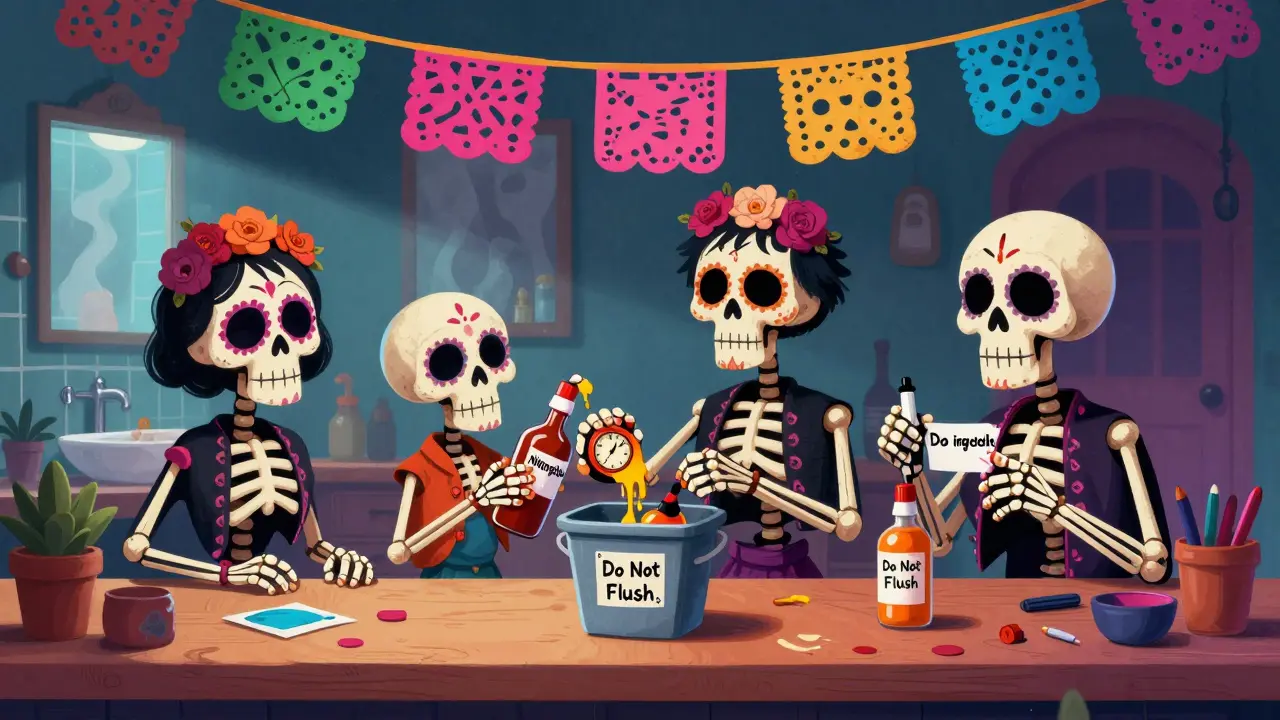
Don’t just toss them in the trash. Don’t flush them. The DEA’s National Prescription Drug Take Back Day collected over a million pounds of expired meds in 2023. That’s because improper disposal pollutes water and harms wildlife. Check if your pharmacy or local government offers a take-back program. Many cities now have permanent drop boxes. If no take-back option exists, mix pills with coffee grounds or cat litter, seal them in a bag, and throw them in the trash. It makes them unappealing to kids or pets and reduces environmental risk.Build a Simple Maintenance Routine
You don’t need to be a pharmacist to keep your first-aid kit safe. Here’s a simple system that works:- Every 3 months: Do a quick visual check. Look for discoloration, crumbling pills, cloudy liquids, or odd smells.
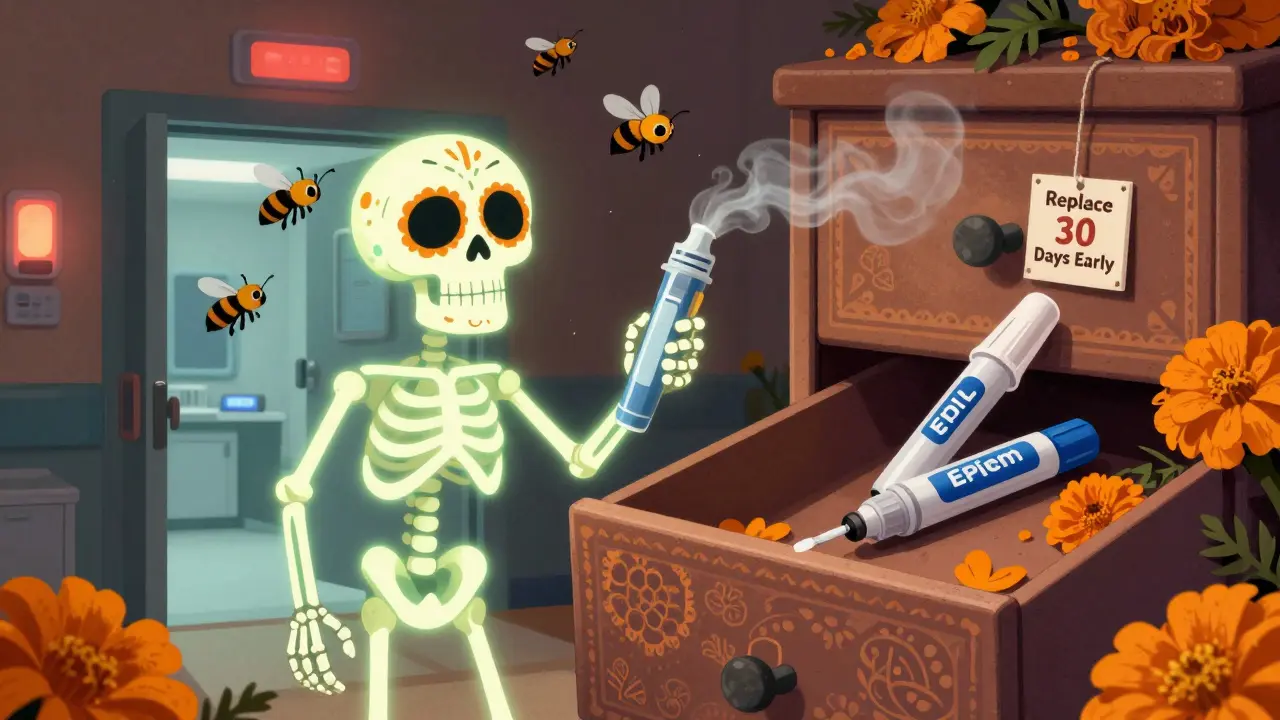
- Every 6 months: Go through every item. Pull out anything expired. Replace emergency meds 30 days before they expire.
- Once a year: Empty the whole kit. Clean the container. Restock bandages, gauze, and antiseptic wipes. Check expiration dates on everything-even the thermometer.
Smart Kits Are Starting to Change the Game
Some companies now make first-aid kits with Bluetooth sensors that track expiration dates and send you a reminder 60 days before something needs replacing. These are still pricey, but they’re catching on. In 2023, they made up 12% of the professional first-aid market. If you’ve got a large family or someone with allergies, it’s worth considering. The FDA’s "Check. Toss. Restock." campaign launched in January 2024 to help people do this right. It’s simple: Check your kit. Toss the expired stuff. Restock what’s missing. No guesswork.What Happens If You Use an Expired Med?
Most of the time, you won’t get sick from taking an old pain reliever. But you might not get relief either. That’s the real danger. You take a pill, feel nothing, and think, "I need more." So you take another. Then another. You end up overdosing on something that’s already weak. Worse, using expired antibiotics can lead to antibiotic resistance. If the dose is too low to kill all the bacteria, the survivors become stronger. That’s how superbugs start. The Institute for Safe Medication Practices linked expired topical antibiotics to 127 cases of skin infections between 2018 and 2022. In a true emergency-like anaphylaxis or a heart attack-if you have no other option, use the expired EpiPen or inhaler. But don’t stop there. Call 911 immediately. Even a weak dose is better than nothing. But you still need professional care.Final Rule: When in Doubt, Toss It
You can’t tell if a pill is still good just by looking at it. You can’t smell potency. You can’t taste strength. If you’re unsure, replace it. Your first-aid kit isn’t a closet for old stuff. It’s your safety net. And nets need to be strong. Replace emergency meds before they expire. Check your pain relievers every six months. Store everything cool and dry. And never, ever assume an old bottle will work when you need it most.Can I still use expired ibuprofen or acetaminophen?
Yes, if they’re solid pills, stored properly (cool, dry, in original container), and show no signs of damage. Studies show they often retain 90%+ potency for 1-2 years past expiration. But if they’re discolored, cracked, or smell odd, throw them out. Never use them for serious pain without a backup.
What should I do with expired medications?
Never flush them or toss them loose in the trash. Use a drug take-back program if available. If not, mix pills with coffee grounds or cat litter, seal them in a plastic bag, and put them in the trash. This prevents accidental ingestion and reduces environmental harm.
Is it safe to use expired EpiPens or inhalers?
Only in a life-threatening emergency with no other option. Expired epinephrine may be only 50-70% effective. If you must use it, give the full dose and call 911 immediately. Do not rely on it. Replace it before it expires-always.
How often should I check my first-aid kit?
Check for visible damage every 3 months. Review expiration dates every 6 months. Do a full restock once a year. Replace emergency meds 30 days before they expire. This simple routine keeps your kit reliable.
Do storage conditions affect expiration dates?
Yes, dramatically. Heat and humidity destroy medications faster. Storing pills in a bathroom cabinet can cut their shelf life by 40%. Keep them in a cool, dry drawer-like in a bedroom. Always keep them in original containers with moisture-absorbing packets.
Why do some medications expire faster than others?
Liquid medications, aerosols, and creams break down faster because they’re exposed to air, light, and moisture. Pills are more stable because they’re solid and sealed. Epinephrine and nitroglycerine are especially sensitive to oxidation. That’s why their expiration dates are strict-even if the bottle looks fine.

Just checked my first-aid kit yesterday-turned out my EpiPen expired in January. Yikes. Time to hit the pharmacy before I forget again.
Let me be brutally clear: storing meds in the bathroom is not just negligent-it’s a public health liability. The humidity alone turns your ibuprofen into a science experiment. You wouldn’t store your insulin in a sauna, so why treat your entire kit like a neglected garage sale?
The FDA doesn’t play games. Neither should you. If you’re still using that 2018 bottle of hydrocortisone because ‘it looks fine,’ you’re not saving money-you’re gambling with sepsis. And don’t even get me started on pill organizers. Transferring meds out of their original packaging? That’s not convenience-that’s chemical sabotage.
And yes, I know you think ‘it’s just a few months past the date.’ But potency isn’t a suggestion. It’s a chemical reality. That 2023 FDA study on contaminated creams? That wasn’t theoretical. Someone’s kid got a skin infection from a ‘still good’ tube you probably still have in your cabinet.
Replace emergency meds 30 days before expiration. Not 29. Not 28. Thirty. That’s not advice. That’s a survival protocol. If you can’t manage that, you shouldn’t be responsible for anyone else’s safety-not your kids, not your partner, not your dog.
And for the love of all that’s sterile-stop flushing pills. You’re not being clever. You’re poisoning aquifers. The DEA’s take-back program exists for a reason. Use it. Or at least mix them with coffee grounds. Please. I beg you.
Expired ibuprofen? Fine. Expired EpiPen? Death. That’s the whole post. Stop overcomplicating it.
Did you know the FDA is secretly controlled by Big Pharma to make you buy new meds every year? They say expiration dates are science but really its just profit. I keep my insulin for 8 years. I even stored it in my bathroom. My cousin did the same and he's still alive. Why do you think they put silica packets in the bottle? To trick you into thinking it matters. They don't. The body knows what it needs
Oh, for heaven’s sake-this is why America is falling apart. People treat life-saving medicine like expired yogurt. ‘Oh, it’s only two months past the date!’ No, it’s not. It’s a ticking time bomb wrapped in plastic. You wouldn’t drive a car with bald tires because ‘it’s still got tread,’ would you? So why are you swallowing chemical ghosts because you’re too lazy to replace them?
And let’s talk about storage: the bathroom? Really? You’re storing epinephrine next to your toothbrush and shampoo? That’s not laziness-that’s a form of passive self-harm. Johns Hopkins didn’t just ‘find’ that humidity ruins meds-they documented it in peer-reviewed journals. You’re not an exception. You’re not special. You’re statistically likely to end up in the ER because you thought ‘it’ll be fine.’
And then there’s the pill organizer. Oh, yes, let’s transfer every single capsule into a plastic tray with no protection from air, light, or moisture. Brilliant. Because nothing says ‘I care about my health’ like exposing your medication to the same environment as your socks.
And don’t even get me started on flushing pills. You think you’re being responsible? You’re just adding microplastics and pharmaceutical runoff to your local river. That’s not recycling-it’s ecological vandalism. The DEA’s take-back program exists because people like you can’t be trusted to do the right thing. And frankly? I don’t blame them.
Replace your EpiPen before it expires. Not after. Not ‘when I remember.’ Before. Write it on your calendar. Set a damn alarm. If you’re allergic to bees, your life is not a suggestion. It’s a biological imperative. And if you think you’re ‘saving money’ by keeping expired meds? You’re not. You’re just funding your own funeral.
Stop rationalizing. Start acting. Your future self will thank you. Or, more likely, your grieving family will curse your name.
Thank you for this meticulously researched and profoundly practical guide. The distinction between solid pharmaceuticals and liquid or aerosolized formulations is not only scientifically accurate but also critically important for public safety. The emphasis on environmental responsibility in disposal practices reflects a mature understanding of the interconnectedness of personal health and ecological stewardship.
Furthermore, the recommendation to annotate opened containers with the date of first use-rather than relying solely on manufacturer expiration dates-is an exceptionally thoughtful innovation. This simple practice, when adopted universally, could prevent countless incidents of therapeutic failure and adverse outcomes.
I would only add, in the spirit of continuous improvement, that community health centers might consider distributing pre-labeled expiration tracking stickers alongside first-aid kits. Such a low-cost, high-impact intervention could significantly increase compliance among populations with limited health literacy.
Once again, thank you for elevating the discourse on this vital yet overlooked topic.
bro like... i just found my benadryl from 2020 and it still works. i took two and i’m chillin. maybe expiration dates are just a scam? maybe the body knows better than the label? i think we’re being manipulated. also why do they even make these dates? who even checks them? i’m not a pharmacist lol
I live in rural India, and we don’t have take-back programs here. We just bury old meds in the backyard. It’s not ideal, but it’s what we’ve always done. Still, I never use anything past the date-even if it looks fine. Better safe than sorry.
OMG I JUST REALIZED MY EPIPEN IS EXPIRED AND I HAVE A KID WHO’S ALLERGIC TO PEANUTS I’M GOING TO CRY WHY DID NO ONE TELL ME THIS IS A THING I’M SUCH A BAD PARENT
There’s a lot here worth considering. I appreciate how the post separates general pain relievers from emergency medications-that’s a crucial distinction. I’ve always assumed ‘expired’ meant ‘dangerous,’ but learning that properly stored ibuprofen can remain effective for years changes how I think about it.
Storage conditions really are the silent killer here. I used to keep my kit under the sink until I read this. Now it’s in a drawer in my bedroom. Small change. Big difference.
And the pill organizer tip? Eye-opening. I’ll be switching back to original packaging for anything I don’t use daily.
Thanks for the clarity. It’s easy to ignore these things until something goes wrong. This feels like the kind of info that saves lives without anyone ever knowing it happened.
Just replaced my EpiPen today 🙌 Thanks for the nudge! Also, I bought one of those smart kits with the Bluetooth alerts-$80 but worth it for peace of mind. My wife says I’m overboard. I say: if it keeps my daughter alive, it’s a bargain. 💙🩹 #CheckTossRestock