Hypoglycemia in Older Adults: Special Risks and Prevention Plans
Hypoglycemia Risk Assessment Tool for Older Adults
Please complete the assessment to see results
Your recommendations will appear here
When blood sugar drops below 70 mg/dL, it’s called hypoglycemia. For most people, that means sweating, shaking, or a racing heart. But for older adults, especially those with diabetes, it often looks nothing like that. Instead, they might just seem confused, sluggish, or off their game. And by the time family members notice something’s wrong, it’s already dangerous.
Why Older Adults Are at Higher Risk
Older adults don’t respond to low blood sugar the way younger people do. Their bodies don’t release epinephrine or glucagon the same way anymore. Studies show these protective hormone responses are 30-50% weaker in seniors. That means their blood sugar can crash without warning. Around 25% of older adults with type 1 diabetes and 15-20% with type 2 diabetes lose the ability to feel low blood sugar at all. This is called hypoglycemia unawareness-and it’s deadly in older populations.Many older adults are on medications that increase this risk. Long-acting sulfonylureas like glyburide are especially dangerous. Research shows glyburide causes 50% more severe lows than glipizide in seniors. Even insulin, when not carefully adjusted, can lead to frequent drops. The American Diabetes Association now warns that these drugs should be avoided or carefully monitored in older patients.
It’s not just medication. Older adults often have multiple health problems-kidney disease, heart failure, dementia, depression-and they’re usually taking five or more drugs. Each one adds to the risk. For example, someone with chronic kidney disease has a 2.7 times higher chance of a severe hypoglycemic episode. Poor nutrition, skipped meals, or even a simple cold can trigger a crash.
The Hidden Symptoms
Classic signs of low blood sugar-sweating, trembling, hunger-often don’t show up in older adults. Instead, they might:- Act confused or disoriented
- Slur their speech
- Be unusually quiet or withdrawn
- Have trouble walking or stand unsteadily
- Complain of dizziness or nausea
These symptoms look like dementia, stroke, or just aging. That’s why up to 60% of hypoglycemic episodes in seniors go unreported. Caregivers think their loved one is just being forgetful-when really, their brain is starving for glucose.
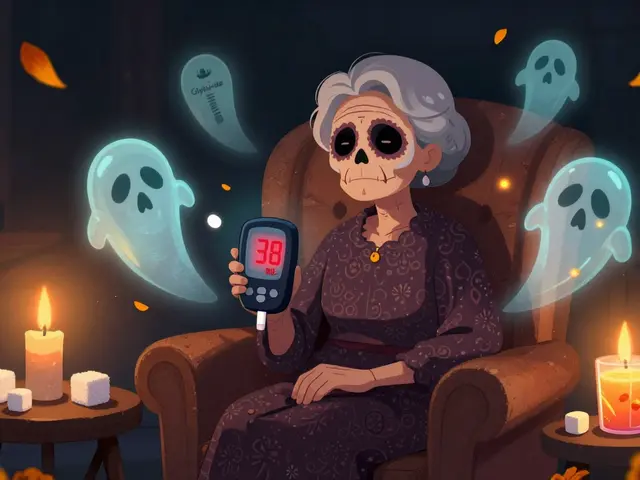
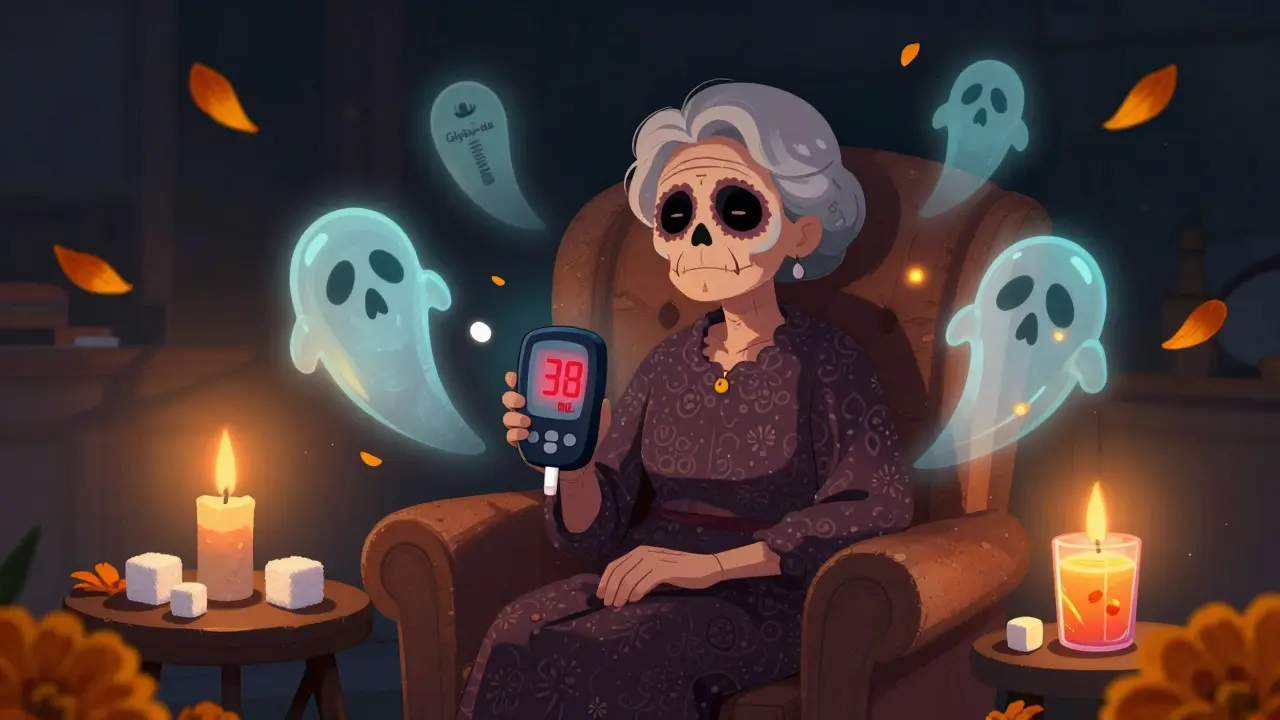
One caregiver in Melbourne shared: “My mum used to sit in her chair for hours, not talking. We thought it was her dementia getting worse. Then we checked her blood sugar one day-it was 38 mg/dL. After we started checking regularly, we realized she was low almost every morning.”
Severe Consequences
A single episode of low blood sugar in an older adult isn’t just uncomfortable-it’s life-altering. Each low increases the risk of:- 40% higher chance of falling
- 25% higher chance of breaking a hip
- 30% higher chance of heart attack or stroke
- 1.8 times higher risk of developing new cognitive decline within two years
A five-year study of 782 older adults with diabetes found those who had severe hypoglycemia were 2.5 times more likely to die. Even after accounting for other health issues, the risk stayed 40% higher. That’s not just correlation-it’s a direct threat.
One man in his late 70s broke his hip walking to the kitchen for juice after a nighttime low. He spent six weeks in rehab. His mobility never fully returned. His story isn’t rare. Emergency rooms see about 100,000 hypoglycemia visits from seniors every year in the U.S. alone. Each one costs an average of $1,200.
What Medications Are Most Dangerous?
Not all diabetes drugs carry the same risk. Here’s what experts say about common ones:| Medication | Risk Level | Notes |
|---|---|---|
| Glyburide (long-acting sulfonylurea) | High | Metabolized slowly in kidneys; lasts 24+ hours; linked to 50% more severe lows than glipizide. |
| Glipizide (short-acting sulfonylurea) | Moderate | Shorter action, less accumulation; preferred over glyburide if sulfonylurea is needed. |
| Insulin (especially basal insulin) | High | Requires careful dosing. Often too high in seniors. Dose reduction can prevent lows without worsening A1c. |
| Metformin | Low | Does not cause hypoglycemia alone. Safe for most older adults. |
| SGLT2 inhibitors (e.g., dapagliflozin) | Very Low | May even reduce hypoglycemia risk when used with other meds. |
| GLP-1 agonists (e.g., semaglutide) | Very Low | Only cause lows when combined with insulin or sulfonylureas. |
The American Geriatrics Society Beers Criteria lists glyburide as a potentially inappropriate drug for seniors. Many doctors still prescribe it out of habit. But switching to glipizide or even stopping sulfonylureas entirely can cut hypoglycemia rates by half.
How to Prevent Hypoglycemia
Prevention isn’t about tighter blood sugar control. It’s about safety. The goal isn’t an A1c of 6.5%-it’s avoiding lows that lead to falls, hospital stays, or death.Here’s what works:
- Review all medications with a doctor or pharmacist. Ask: “Is this drug still necessary? Could it be replaced with something safer?”
- Set realistic A1c goals. For healthy seniors: under 7.0%. For those with multiple illnesses or dementia: under 8.0-8.5%. Tight control increases risk without benefit.
- Use continuous glucose monitoring (CGM). Devices like the Dexcom G7 or FreeStyle Libre 3 alert users and caregivers when blood sugar drops-even if the person doesn’t feel it. Yet only 15% of older adults use them, mostly due to cost and lack of provider support.
- Check blood sugar before meals, before bed, and after exercise. Especially if they’re on insulin or sulfonylureas.
- Keep fast-acting carbs handy-glucose tablets, juice boxes, honey packets. Don’t rely on food that needs chewing or swallowing.
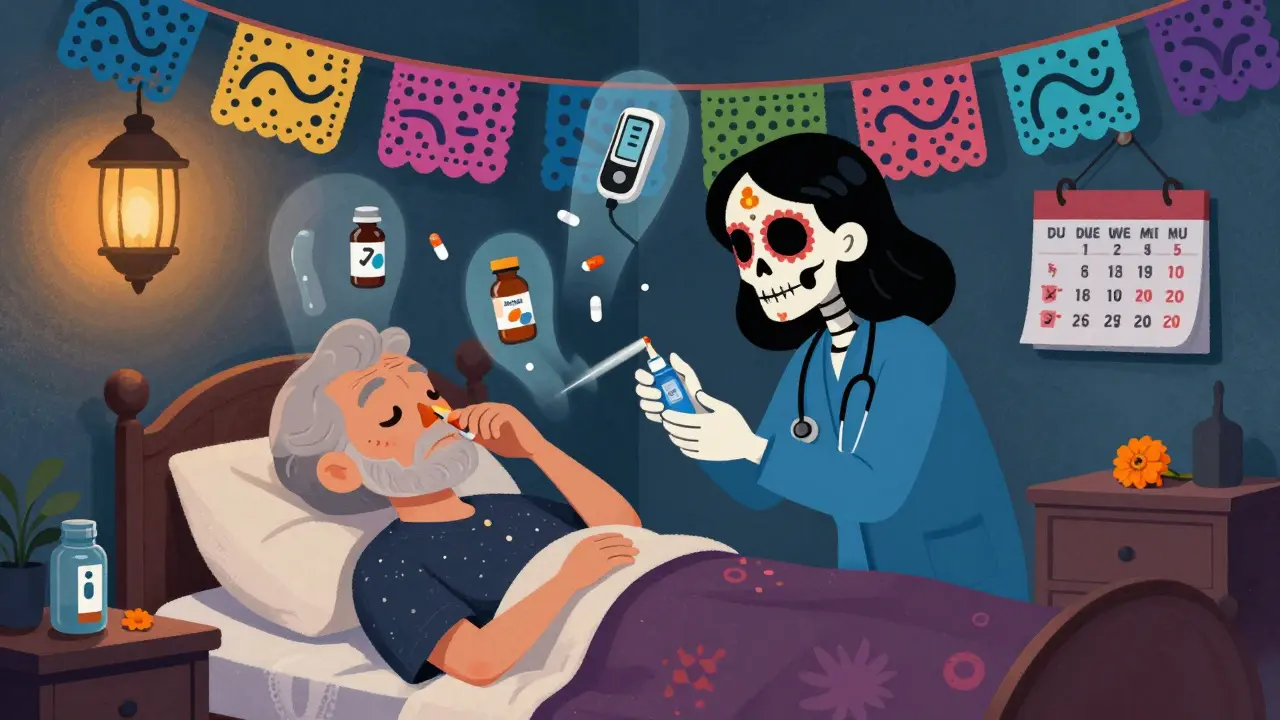
- Have glucagon on hand. The new nasal glucagon (Baqsimi) doesn’t require injection. Just spray it into the nose. It saved lives when people couldn’t swallow juice or were unconscious.
- Train caregivers. Family members need to recognize subtle signs and know how to use glucagon.
A study in Pennsylvania showed that three clinic visits focused on medication review and goal-setting reduced the number of seniors at high risk for hypoglycemia by 46% in just six months. A1c barely changed-so they didn’t get worse. But they had far fewer lows, falls, and ER visits.
What to Do When a Low Happens
If someone looks confused, weak, or unresponsive:- Check their blood sugar immediately.
- If it’s below 70 mg/dL, give 15 grams of fast-acting sugar: 4 glucose tablets, ½ cup juice, or 1 tablespoon of honey.
- Wait 15 minutes. Check again.
- If still low, repeat.
- If they can’t swallow or are unconscious, use nasal glucagon. Call emergency services.
Never wait to see if they “get better on their own.” In older adults, time is brain.
Why So Many Seniors Are Still at Risk
Despite all the evidence, many older adults are still on risky meds. Why?- Doctors don’t always update treatment plans as patients age.
- Patients fear stopping meds will make diabetes worse.
- Many don’t know hypoglycemia can be silent.
- CGM isn’t covered for non-insulin users by Medicare in the U.S.-even though sulfonylurea users are just as vulnerable.
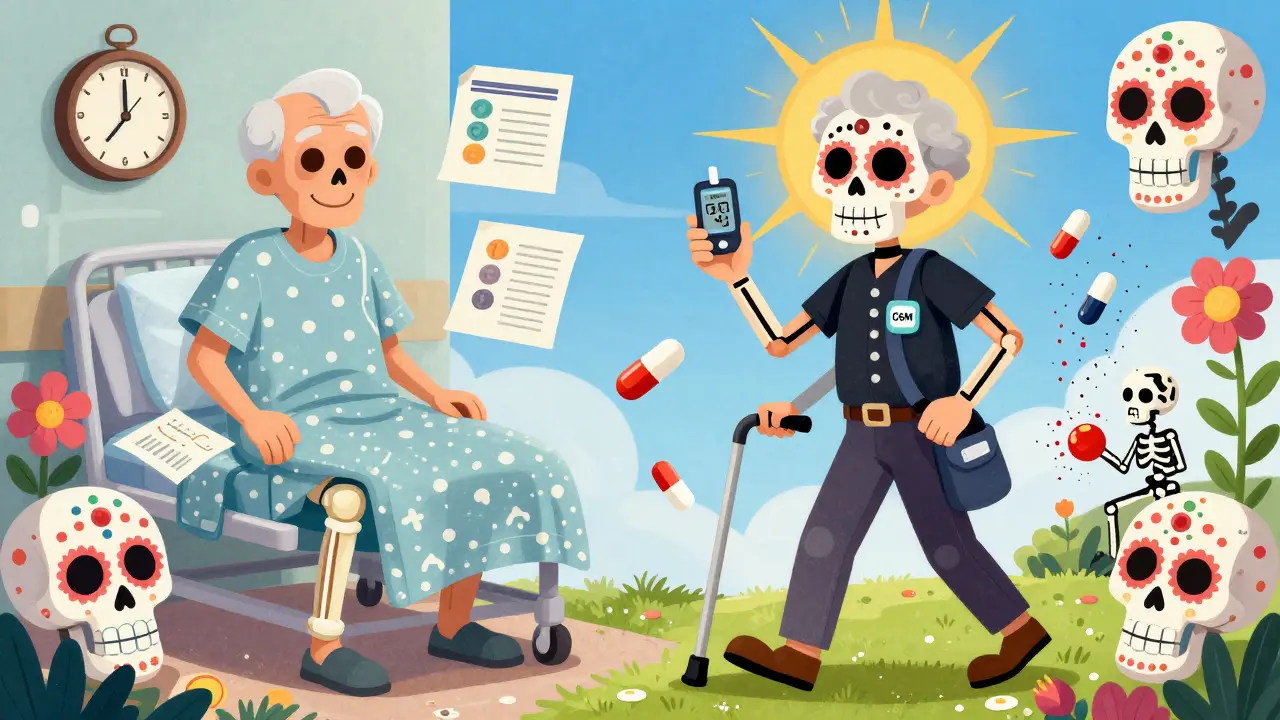
One woman in her 80s told her doctor she was having “spells” every week. She didn’t know they were lows. Her doctor didn’t ask about blood sugar. She was on glyburide. After switching to metformin and adding CGM, her episodes stopped. Her confusion improved. She started walking again.
It’s not about perfection. It’s about protection.
What’s Next?
New technologies are coming. Dual-hormone artificial pancreas systems (insulin + glucagon) are in clinical trials for older adults. But they won’t be widely available until 2026 or later.Right now, the best tools are simple: better medication choices, regular monitoring, and education for patients and caregivers. The American Diabetes Association now recommends “time in range” as the main goal-not A1c. For older adults, that means spending at least half the day (12 hours) between 70 and 180 mg/dL, and less than 1% of the day below 54 mg/dL.
That’s not a strict target. It’s a safety net.
Can hypoglycemia cause dementia in older adults?
Frequent hypoglycemia doesn’t directly cause dementia, but it significantly increases the risk of new cognitive decline. Each episode starves the brain of glucose, which can damage neurons over time. Studies show seniors with repeated lows are 1.8 times more likely to develop new memory or thinking problems within two years. This is especially dangerous if they already have early dementia.
Is it safe to stop diabetes meds in older adults?
Yes, in many cases. Reducing or stopping medications like glyburide or high-dose insulin can prevent dangerous lows without making diabetes worse. One study showed that cutting insulin doses in half kept A1c stable at 7.8% while eliminating weekly lows. The goal isn’t perfect numbers-it’s staying safe. Always work with a doctor to adjust meds gradually.
Why isn’t CGM used more in older adults?
Cost and lack of awareness. Medicare in the U.S. only covers CGM for people using insulin, even though seniors on sulfonylureas have the same risk of lows. Many doctors don’t know how to fit CGM into geriatric care. But studies show CGM cuts hypoglycemia by 40%. For families, it’s often worth paying out of pocket-or asking for a trial.
Should older adults check blood sugar every day?
If they’re on insulin or sulfonylureas, yes. At minimum, check before meals, at bedtime, and after physical activity. If they’ve had a low before, check more often. For those on metformin or SGLT2 inhibitors, daily checks may not be needed unless symptoms appear. The key is matching monitoring to medication risk.
What’s the best glucagon for seniors?
Nasal glucagon (Baqsimi) is the best option. It’s easy to use-no needle, no mixing. Just spray it into the nose. It works just as fast as the injectable version and is ideal for caregivers or family members who aren’t trained in injections. Keep one in the kitchen, bedroom, and purse. It’s a lifesaver when someone can’t swallow or is unconscious.