

Canada's Generic Drug System: How It Differs from the USA
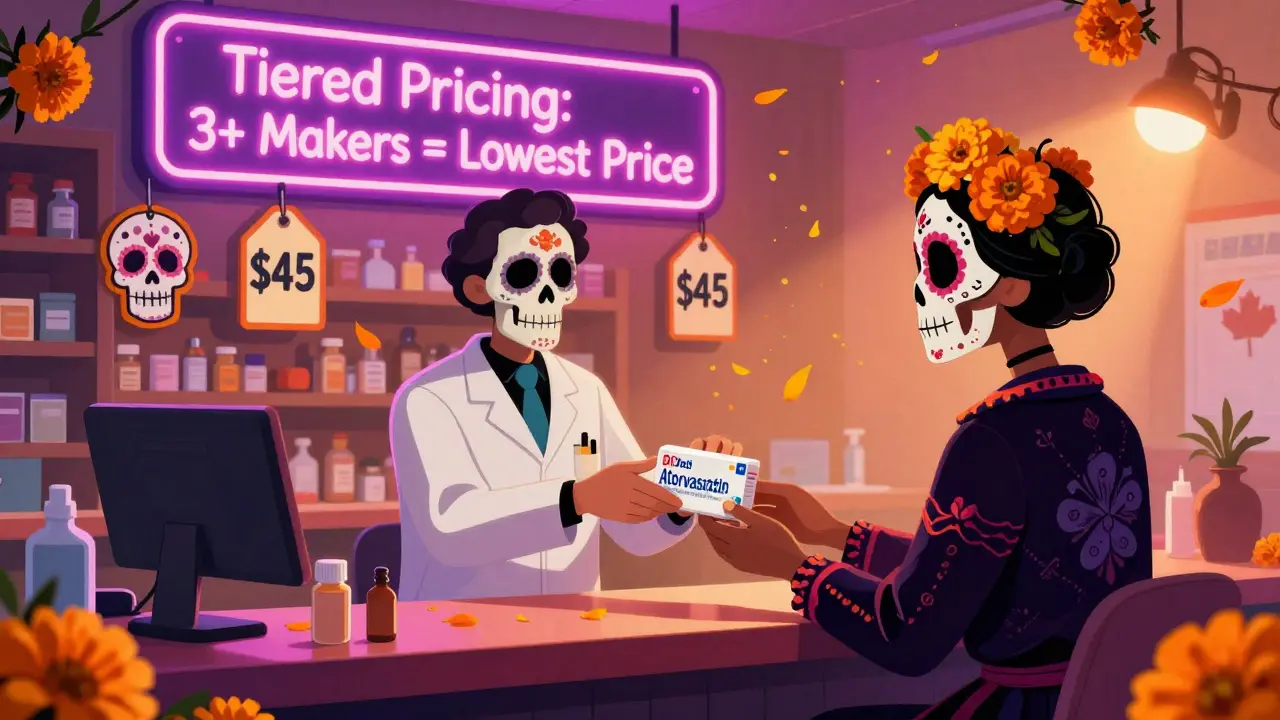
When you fill a prescription for a generic drug like atorvastatin or metformin, the price you pay depends on where you live. In Canada, you might pay $45 for a 90-day supply. In the U.S., you could pay $12 for the same thing-sometimes even less at discount pharmacies. But here’s the twist: Canada’s system isn’t broken. It’s just built differently.
How Canada Controls Drug Prices
Canada doesn’t let the market set prices for generic drugs. Instead, it uses a centralized system called the pan-Canadian Pharmaceutical Alliance (pCPA) a collaborative body formed by provincial and territorial health ministries to negotiate drug prices on behalf of public drug plans. Since 2010, the pCPA has negotiated bulk pricing for public drug plans covering 42% of outpatient drug spending. This means the government speaks with one voice when buying drugs for seniors, low-income patients, and others on public coverage.Unlike the U.S., Canada doesn’t have a federal agency that sets prices for generic drugs. The Patented Medicine Prices Review Board (PMPRB) a federal body that regulates the prices of brand-name patented drugs to prevent excessive pricing only controls prices for drugs still under patent. Once a drug loses patent protection and becomes generic, the PMPRB has no authority. That’s where the pCPA steps in.
Since October 2023, Canada has used a new Tiered Pricing Framework a system that sets generic drug prices based on the number of manufacturers competing in the market. Generics are grouped into three tiers:
- Tier 1: 3 or more manufacturers → lowest price
- Tier 2: 2 manufacturers → medium price
- Tier 3: 1 manufacturer (sole source) → highest price
This system is designed to reward competition. More manufacturers mean lower prices. But here’s the catch: Canada’s population is only about one-tenth the size of the U.S.’s. That means fewer companies see it as worth their time to enter the Canadian market. On average, there are just 3.8 generic manufacturers per drug in Canada, compared to 7.3 in the U.S.
How the U.S. System Works
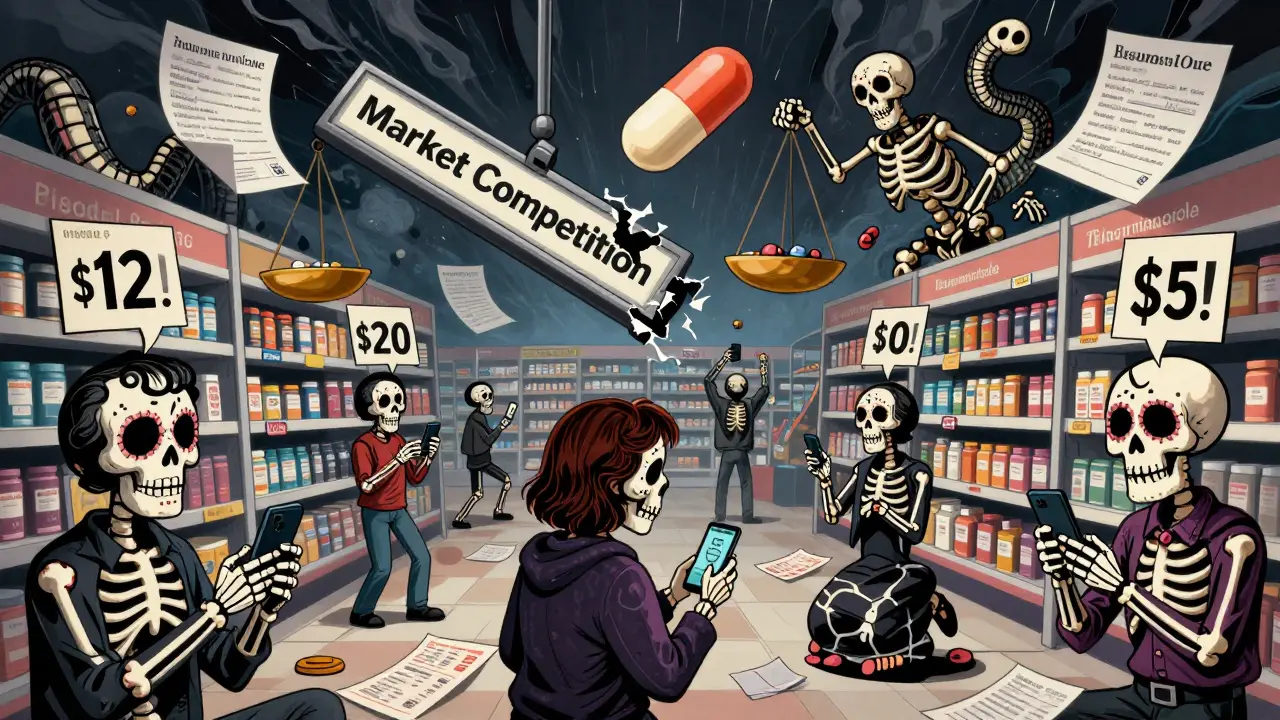
The U.S. has no national price controls on generic drugs. Prices are set by competition-and lots of it. When a brand-name drug loses its patent, dozens of companies can rush to make copies. The first company to file gets 180 days of exclusivity. After that, the floodgates open.That’s why U.S. generic prices often drop 80-90% within six months of a drug going generic. The market is flooded. Companies compete on price, not profit margins. PharmacyChecker found that 88% of the top 34 prescribed generics were cheaper in the U.S. than in Canada, with U.S. prices averaging 68% lower.
But this system isn’t perfect. With so many players, pricing becomes chaotic. GoodRx reports that 63% of U.S. consumers have to check three or more pharmacies to find the best price. Insurance formularies change frequently. Pharmacies don’t always know what they’ll be paid until the claim is processed. It’s a maze.
Why Canadian Generic Prices Are Sometimes Higher
It sounds backward: a country with universal healthcare pays more for generics than a country without. But the reason isn’t greed or inefficiency-it’s structure.Canada’s focus on controlling brand-name drug prices through the PMPRB has an unintended side effect. When manufacturers can’t make big profits on patented drugs, they shift focus to generics. But because Canada’s generic market is small and has fewer competitors, those companies can charge more. The Fraser Institute found that 33% of generic drugs in Canada cost more than their U.S. equivalents.
Take atorvastatin, the generic version of Lipitor. In Ontario, a 90-day supply costs around CAD$45. In the U.S., you can get it for $12 at Walmart or through mail-order pharmacies. That’s not a fluke. It’s a result of market size and competition.
Still, Canada’s system saves billions. Between 2013 and 2023, the pCPA generated over $4 billion in savings for public drug plans. Dr. David Henry, former CEO of the Canadian Institute for Health Information, says generics alone save Canada more than $37 billion annually. That’s money that goes back into hospitals, mental health services, and home care.
Drug Shortages: Canada’s Hidden Strength
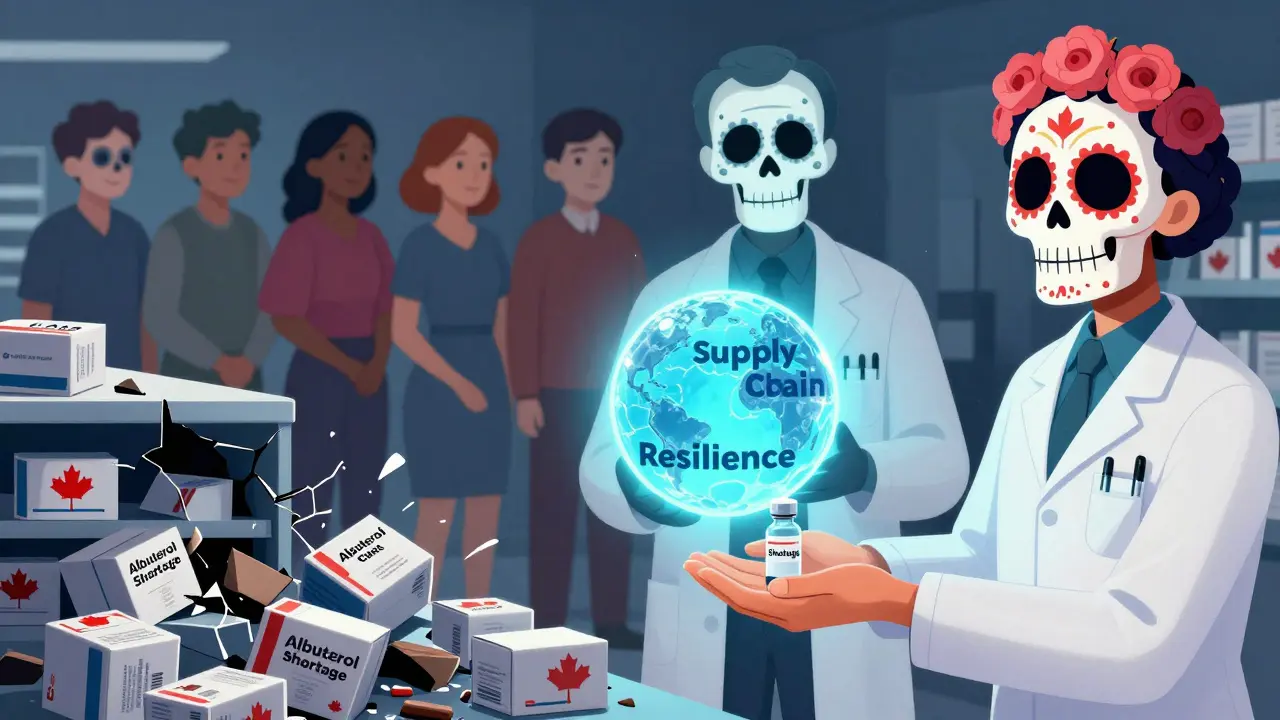
Here’s where Canada beats the U.S. hands down: keeping drugs in stock.Generic drugs make up over 90% of all drug shortages in both countries. But in the U.S., when a sole-source generic fails, patients go without. In Canada, Health Canada steps in.
During the 2022 albuterol inhaler shortage, U.S. hospitals in Seattle waited weeks for supply. Meanwhile, in Calgary, Health Canada coordinated with manufacturers to prioritize allocation. Canadian pharmacists didn’t have to ration. Patients didn’t have to switch treatments.
Research in JAMA Network showed that sole-source drugs in the U.S. had 2.58 times higher risk of shortage than in Canada. Canada’s proactive approach-tracking supply chains, requiring manufacturers to report potential shortages, and approving alternative suppliers faster-makes a real difference.
When asked in a 2023 survey, 68% of Canadian patients reported no access issues with essential generics. In the U.S., only 49% said the same.
Who Pays? The Role of Public vs. Private Insurance
In both countries, about half of prescriptions are paid by public plans and half by private insurance. But the way those plans operate differs.In Canada, public plans drive pricing. Private insurers follow the pCPA’s lead. Most private plans in Canada use the same price lists as public plans. That creates consistency. A patient with private insurance in British Columbia pays the same as someone on OHIP in Ontario.
In the U.S., private insurers negotiate separately with pharmacy benefit managers (PBMs). Each plan has its own formulary. One insurer might cover a generic for $5. Another might charge $20. That’s why U.S. patients often use GoodRx or SingleCare to find discounts outside their insurance.
Canada has 67% of its population with some form of private drug coverage. The U.S. has 54%. But in Canada, private plans don’t override the public pricing system. In the U.S., private plans often create a patchwork of prices that confuse patients and pharmacists alike.
What This Means for Patients
If you’re a Canadian patient, you might pay more out of pocket for generics-but you’re less likely to face a shortage. You don’t need to shop around. You don’t need to call five pharmacies. Your pharmacist knows the price. It’s standardized.If you’re a U.S. patient, you might pay less-but you’re more vulnerable when a drug disappears from shelves. You need to know your insurance plan inside out. You need to use discount apps. You need to be your own advocate.
For people with chronic conditions like diabetes or high blood pressure, stability matters. In Canada, the system is designed to keep the lights on. In the U.S., it’s designed to keep prices low. Neither is perfect. But both reflect deeply different values.
The Bigger Picture: Global Context
Canada spends $814 per person on prescription drugs annually. The U.S. spends $1,432. That’s a 43% difference. Yet both countries have similar rates of generic use: 83% in Canada, 90% in the U.S.Canada’s lower overall spending comes from controlling brand-name drug prices. The U.S. saves on generics but pays more for brand names. In the end, the total bill is higher.
Canada also lags in bringing new generics to market. It takes an average of 8.2 months longer than the U.S. to approve a new generic drug. That’s because Health Canada prioritizes safety and supply stability over speed.
The U.S. is exploring importing drugs from Canada to lower costs. Vermont, Colorado, and soon Florida have passed laws allowing it. But Canada has responded by strengthening its Supply Chain Resilience Framework a policy introduced in January 2023 to prevent drug exports from causing domestic shortages. Canada won’t sacrifice its own patients to fix America’s pricing problem.
What’s Next?
Canada is facing pressure. Drug prices are projected to rise 15-20% by 2025 due to global supply chain issues and manufacturing costs. Experts like Dr. Aisha Lofters warn this could strain the pharmacare system.The U.S. is facing its own crisis: shortages. Dr. Aaron Kesselheim at Harvard says the country must fix its supply chain, even if it means accepting higher prices.
Neither country has all the answers. But one thing is clear: Canada’s system isn’t about being cheap. It’s about being reliable. The U.S. system isn’t about being fair. It’s about being competitive.
For patients, the real question isn’t which system is better. It’s which one you’d rather live with.
Why are generic drugs more expensive in Canada than in the U.S.?
Canada doesn’t have the same level of manufacturer competition as the U.S. because its market is smaller-about one-tenth the population. Fewer companies enter the market, so prices don’t drop as low. Canada also doesn’t let the market set prices; instead, it uses centralized negotiations through the pCPA, which prioritizes stability over lowest possible cost. This can result in higher prices for generics, even though the system saves billions overall by controlling brand-name drug costs.
Does Canada have drug shortages like the U.S.?
Canada has drug shortages, but they’re less frequent and less severe. Health Canada actively monitors supply chains and intervenes when a drug is at risk of running out. During the 2022 albuterol shortage, Canadian hospitals received priority access while U.S. hospitals waited weeks. Canada’s system is designed to prevent shortages, not just react to them.
Can I buy cheaper drugs from the U.S. and bring them to Canada?
Technically, yes-but it’s not legal for individuals to import prescription drugs from the U.S. for personal use under Canadian law. Health Canada allows limited exceptions for rare drugs not available in Canada, but not for generics you can get domestically. The U.S. government also prohibits importing drugs from Canada, despite some states passing laws to allow it.
How does Canada decide how much to pay for a generic drug?
Canada uses the pCPA’s Tiered Pricing Framework. Prices are based on how many manufacturers are selling the same generic. If three or more companies make it, the price is lowest. If only one company makes it, the price is highest. This encourages competition but also ensures supply for essential drugs with few manufacturers.
Do Canadian pharmacists handle generic drugs differently than U.S. pharmacists?
Yes. Canadian pharmacists deal with a standardized pricing system across provinces, so they spend less time figuring out what a drug costs. U.S. pharmacists juggle dozens of insurance formularies, PBMs, and discount programs. A 2023 survey found Canadian pharmacists spend 5-7 hours a week on price issues, while U.S. pharmacists spend 3-4 hours-but U.S. pharmacists spend more time explaining confusing costs to patients.
If you’re a Canadian patient, your system may cost you more out of pocket-but it gives you peace of mind. If you’re in the U.S., you pay less-but you’re always one shortage away from disruption. Neither system is flawless. But each reflects what its society values most: stability or savings.



I used to think Canada was just cold and polite, but now I see they built a system that actually keeps meds on the shelf when you need 'em. No more scrambling like a squirrel with a peanut during a shortage. Respect.
so like... we pay less but also panic every time my grandma's blood pressure med disappears?? 😅🇨🇦 vs 🇺🇸 is basically 'chill mode' vs 'emergency mode'
let me guess - the 'stability' is just corporate collusion disguised as public policy. they're not saving billions, they're just keeping prices artificially high so pharma can quietly jack up brand names. classic.
i had to switch my insulin three times last year because of supply issues. canada’s system sounds like a breath of fresh air. not perfect, but at least i wouldn’t be crying in the pharmacy aisle.
this is all a lie. the government is hiding the real prices. they’re selling our meds to the u.s. in bulk and pretending they’re 'protecting' us. i know someone who works at a warehouse in ontario. they’re lying to us. 🤫💊
The Canadian model demonstrates a deliberate prioritization of systemic reliability over market-driven price minimization. While the United States benefits from competitive dynamics that depress generic pricing, the resultant fragmentation creates substantial administrative and access burdens for patients and providers alike.
the tiered pricing system is actually genius. more manufacturers = lower price. it’s basic economics but applied smartly. u.s. pharmacies are stuck in a nightmare of 12 different formularies. canada just says 'here's the price' and moves on.
i just want my meds to be there when i need them. i don’t care if it’s $5 or $45. the stress of wondering if my pill is gonna vanish is worse than the cost.
oh wow canada is so wise. they're just letting pharma play monopoly with their tiny market. meanwhile in the u.s. we have 47 companies fighting over a $0.10 profit margin. who's the real villain here? the system or the people who think 'stability' means 'no innovation'?
i used to hate how expensive my metformin was in canada until i got sick last winter and my pharmacist said 'don't worry, we've got a full shelf' while my friend in texas was calling 8 pharmacies. i'd pay twice as much for peace of mind. we're not buying drugs, we're buying safety.
in india we pay $1 for generics. but we have shortages too. maybe the real lesson isn't canada vs usa - it's that every system has tradeoffs. what matters is whether your life depends on it.
so canada's system is just a socialist fantasy that costs more and delays new drugs. meanwhile the u.s. has innovation, choice, and competition. you want stability? go live in a museum.
they're not saving billions they're just hiding the truth. if you think this is about patients you're naive. this is about control. the government doesn't want you to know how much cheaper it could be. they want you dependent. and you're okay with that?