

Blockchain for Drug Verification: How It’s Stopping Fake Medicines in Online Pharmacies
Every year, more than 1 million people die from taking counterfeit drugs. Many of those pills come from online pharmacies that look real but sell fake or contaminated medicine. You might think buying from a website with a professional logo and a "licensed" badge is safe. It’s not. In 2023, the WHO estimated that 1 in 10 medicines sold globally are fake - and in some countries, that number jumps to 1 in 3. For generic drugs, which are cheaper and often bought online, the risk is even higher. But there’s a new tool changing everything: blockchain for drug verification.
What Blockchain Does for Drug Safety
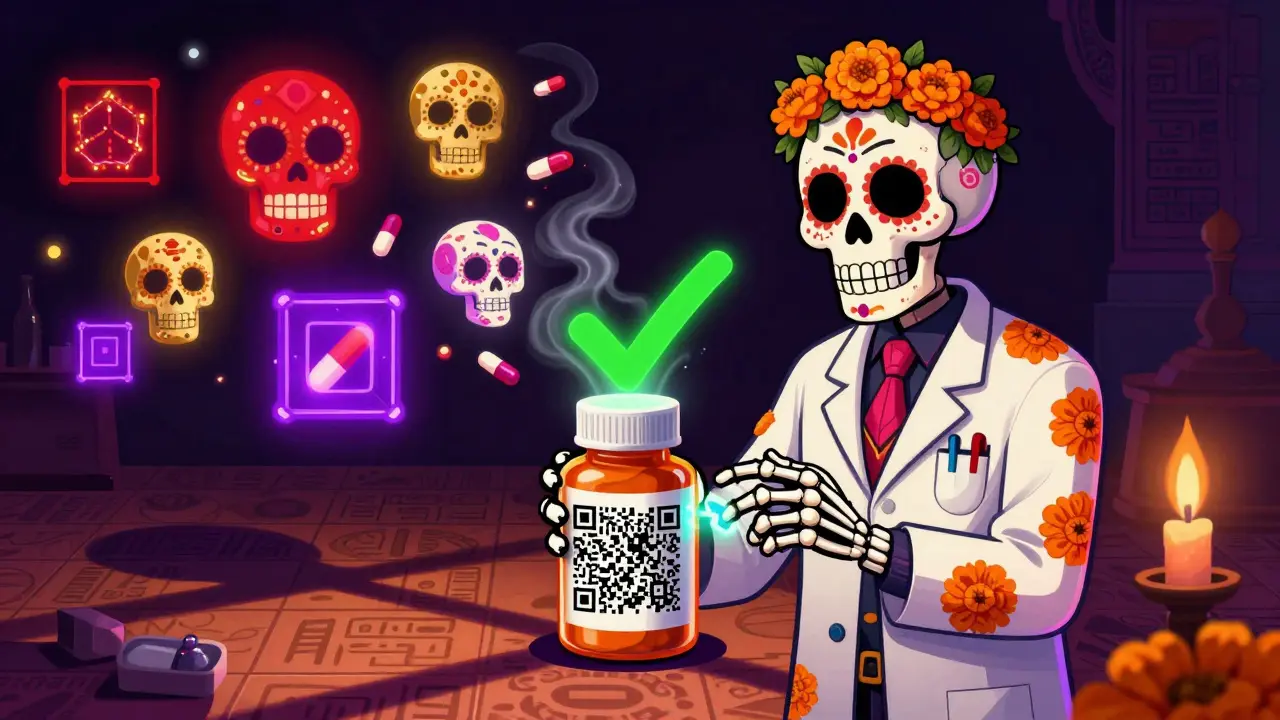
Blockchain isn’t just for Bitcoin. In pharma, it’s a digital ledger that records every single step a medicine takes - from the factory floor to your pharmacy shelf. Each pill bottle gets a unique digital fingerprint, like a QR code with a serial number tied to a blockchain. When you scan it, the system checks: Was this made by the real manufacturer? Did it pass every quality check? Was it stored at the right temperature? Did it get stolen or switched along the way?
Before blockchain, pharmacies relied on paper trails, handwritten logs, or simple barcodes. Those could be forged. Holograms on packaging? Easy to copy. Centralized databases? One hacker, one glitch, and the whole system breaks. Blockchain fixes that. It’s decentralized. No single company owns it. Every participant - manufacturer, wholesaler, distributor, pharmacy - has a copy of the same record. If someone tries to tamper with one entry, the system instantly flags it as invalid.
In the FDA’s 2022 pilot project, blockchain verified drug packages with 99.8% accuracy. That’s not theoretical. It’s real. Pharmacies using it now can scan a bottle and know within 2.3 seconds if it’s real or fake. No guesswork. No waiting for a call to the supplier. Just a green checkmark on a phone screen.
How It Works in Practice
Here’s how it plays out in a real pharmacy in Melbourne, Sydney, or even a small town in Ohio. A box of generic metformin arrives. The pharmacist doesn’t just open it and put it on the shelf. They use a handheld scanner or their tablet to scan the QR code on each blister pack. The app connects to the blockchain network - usually built on Hyperledger Fabric or Ethereum Enterprise - and pulls up the entire history of that pack.
It shows: Made by Sun Pharma in Gujarat, India, on January 5, 2026. Shipped to AmerisourceBergen in New Jersey on January 10. Stored at 18°C during transit. Delivered to your pharmacy on January 28. No breaks in the chain. No suspicious delays. No unverified handoffs. That’s the power of an immutable record.
Some systems even go further. AI algorithms analyze patterns in the data. If a batch of insulin was shipped to a warehouse in Nigeria, then suddenly appears in a pharmacy in Toronto without a clear route, the system flags it. Not because it’s definitely fake - but because it’s statistically impossible. That’s how the system catches smugglers, not just counterfeiters.
Why Generic Drugs Are the Biggest Target
Counterfeiters don’t go after brand-name drugs like Lipitor or Humira. Why? Because those are expensive, tightly regulated, and come with strong legal consequences. But generic drugs? They’re cheap, widely used, and often bought online without a prescription. A fake bottle of metformin costs $1 to make. It sells for $5 online. Real ones cost $1.50 to produce. The profit margin for fraudsters is insane.
That’s why blockchain matters most for generics. In India, Apollo Hospitals cut counterfeit antimalarials by 94% after rolling out blockchain tracking across 5,000 pharmacies. In the U.S., the Drug Supply Chain Security Act (DSCSA) now requires all prescription drugs to have electronic, interoperable tracking by 2023. That’s not optional. It’s law. And blockchain is the only system that meets the standard.
But here’s the catch: Only 31% of generic manufacturers have implemented it. Why? Cost. Installing serialization equipment on a production line runs about $150,000. Setting up blockchain nodes, training staff, and integrating with old pharmacy software can cost $2 million total. For a small generic maker, that’s more than their annual profit. So while big pharma companies like Pfizer and Genentech are already using blockchain, many smaller players are still using paper records - or nothing at all.
Real Problems - Not Just Perfect Tech
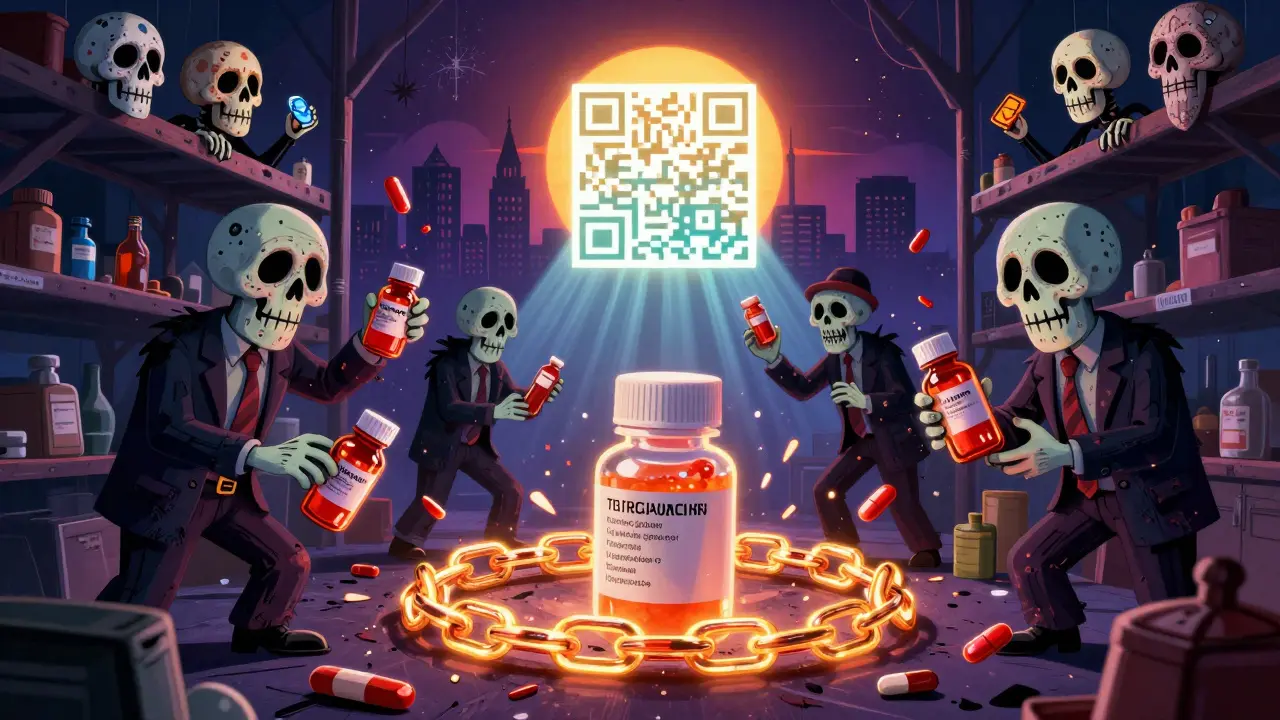
Blockchain isn’t magic. It doesn’t stop every fake drug. It only tracks the documentation, not the pill itself. If someone empties a real bottle and refills it with chalk and sugar, the blockchain still says “verified.” That’s why experts like Dr. Sarah Wynn-Williams warn: blockchain gives a false sense of security if you don’t also test the actual medicine.
And it’s not foolproof in the field. Pharmacists on Reddit say 63% have had issues with spotty internet in rural areas. One pharmacy in Montana lost 3 days of verification after their node went down. Training staff takes weeks. Integrating with old pharmacy systems like Epic or Cerner? That’s a nightmare. One pharmacy chain spent 8 weeks just training their team to use the new scanner.
Then there’s the cost barrier. For a branded drug, blockchain adds 3-5% to the cost. For a $2 generic, it’s 12-15%. That’s why many small pharmacies still avoid it. They’re stuck choosing between safety and survival.
Who’s Leading the Way?
The MediLedger Project, backed by EY and major pharma players, is the most widely used system in North America. It handles over 1,200 transactions per second with 99.99% uptime. Alibaba’s Ali Health dominates in Asia. SAP and Chronicled (now part of EY) control about 60% of the market combined.
In March 2024, MediLedger rolled out Version 4.2, which uses AI to cut false alarms by 37%. That’s huge. Before, a temperature spike during shipping might trigger a red flag - even if the drug was fine. Now, the system learns what’s normal. It’s getting smarter.
And the FDA just dropped new guidelines in May 2024: all verification systems must meet a standardized protocol by January 2026. That’s going to force everyone - even the holdouts - to upgrade. No more patchwork systems. No more incompatible platforms. It’s about to become the only way to play.
What’s Next? Temperature Sensors, Quantum Encryption
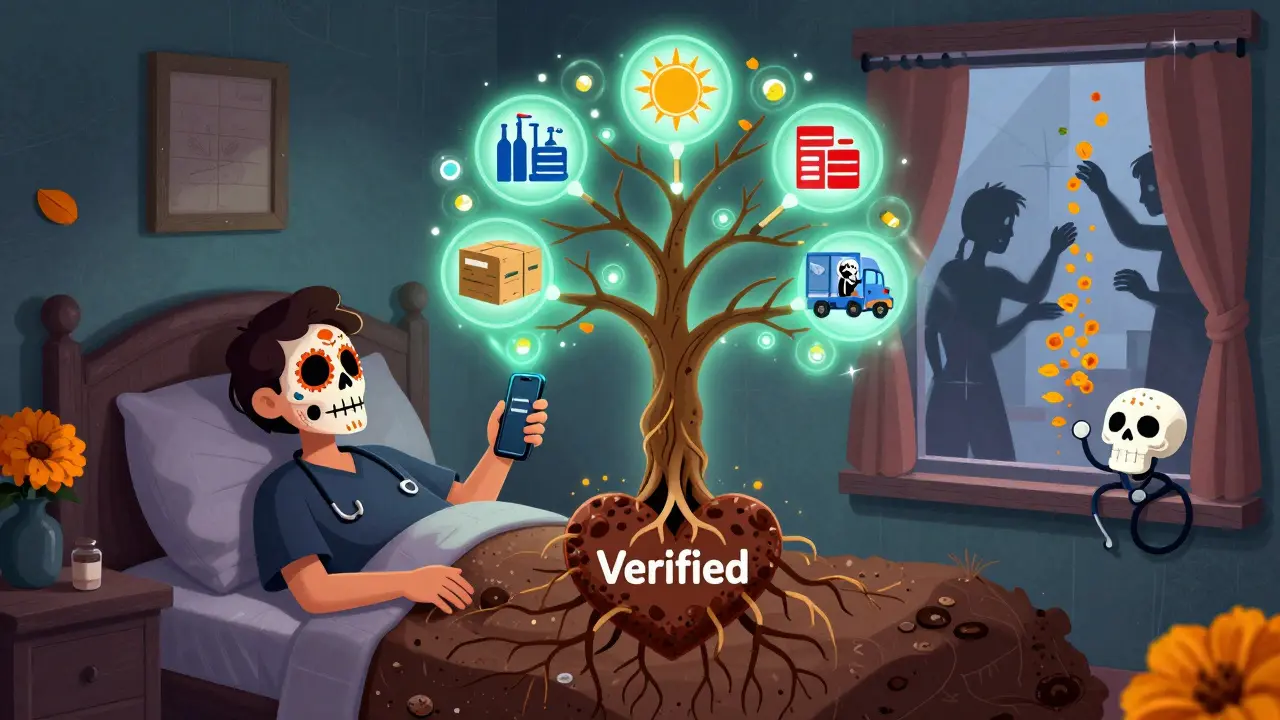
The next wave isn’t just about tracking where the drug went. It’s about what happened to it. Pfizer is testing IoT sensors inside shipping containers that record temperature, humidity, and light exposure in real time. If your insulin was exposed to 40°C for 6 hours, the blockchain logs it. You won’t get it. Period.
And in 2025-2026, blockchain systems will start using quantum-resistant cryptography. Why? Because one day, quantum computers will break today’s encryption. If we don’t upgrade now, all those verified records could be forged in minutes.
By 2027, McKinsey predicts 75% of prescription drugs in developed countries will use blockchain verification. By 2030, that number could hit 95%. The only question is: will generic manufacturers keep up? Or will we still be buying fake pills because they’re too cheap to track?
What You Can Do Right Now
If you’re buying medicine online, don’t just trust the website. Ask your pharmacy: "Do you use blockchain to verify generics?" If they say no, ask why. If they say they’re waiting for the government to make it mandatory - they’re right. But that doesn’t mean you have to wait.
Choose pharmacies that openly share their verification process. Look for ones that use scanners at the counter. Ask to see the verification screen. If they hesitate, walk away. Real pharmacies don’t hide their safety systems. They’re proud of them.
And if you’re a patient on long-term medication - especially for diabetes, heart disease, or mental health - know this: the system is changing. The old way of trusting a label or a logo is over. Blockchain isn’t perfect, but it’s the best tool we’ve ever had to stop fake drugs. And it’s already saving lives.
Can blockchain really stop all fake drugs?
No, blockchain can’t stop every fake drug. It tracks the digital record of a medicine’s journey, but it can’t detect if someone replaced the pills inside a real bottle. That’s why it needs to be paired with physical testing, like lab analysis or spectroscopy. But it does stop 99.8% of counterfeit attempts that involve forged documentation - which is how most fake drugs enter the supply chain.
Is blockchain only for big pharma companies?
Right now, yes - mostly. The upfront cost is high, and small generic manufacturers struggle to afford it. But new cloud-based blockchain services are emerging that cut costs by 60%. By 2027, these services could make blockchain affordable for 80% of generic makers. Regulatory pressure is also forcing change. The FDA’s 2026 standard will leave no room for non-compliant systems.
Can I scan a drug’s blockchain code myself?
Not yet - but soon. Right now, only licensed pharmacies and distributors have access to the verification apps. But the FDA is testing a patient-facing version for 2027. Imagine scanning a pill bottle with your phone and seeing a green checkmark that says: "This metformin was made by Teva, shipped through McKesson, and stored properly. Verified on February 1, 2026." That’s the goal.
What’s the difference between blockchain and a regular database?
A regular database is controlled by one company. If they lie, delete, or get hacked, the data is compromised. Blockchain is shared across hundreds of companies. No one can change a record without everyone else seeing it. It’s like a public ledger everyone can read but no one can alter - making it nearly impossible to fake the drug’s history.
Why aren’t all pharmacies using blockchain yet?
Cost and complexity. Installing the hardware, training staff, and connecting to legacy pharmacy software takes 6-9 months and over $2 million. Many small pharmacies can’t afford it. Plus, internet access is spotty in rural areas. But adoption is growing fast. In 2023, only 31% of large pharma companies used blockchain. Now it’s 78%. The trend is clear: it’s becoming mandatory, not optional.
Blockchain? Please. All it does is make the fake pills look more legit. I’ve seen pharmacies scan the damn QR code and still give out sugar pills - the bottle’s real, the code’s real, but the contents? Total garbage. This tech is just a fancy placebo for people who think a green checkmark means safety.
The elegance of blockchain in pharmaceutical supply chains lies not in its ability to prevent every conceivable fraud, but in its capacity to render systemic deception exponentially more difficult and costly to execute. Where once a single corrupt node could compromise an entire distribution chain, now every actor becomes both a guardian and a witness - a distributed consensus of accountability. The real tragedy isn't the technology’s limitations, but our collective reluctance to invest in it until a child dies from a counterfeit antimalarial. The ledger doesn't lie, but we keep choosing to ignore it.
I work at a small pharmacy in Nova Scotia. We just got the blockchain scanner last month. At first I was skeptical - another expensive gadget, right? But last week, we scanned a batch of metformin and it flagged a mismatch in the storage temp. Turned out the shipment sat in a hot warehouse for two days. We tossed it. No one got sick. That’s not magic. That’s just common sense, finally catching up.
Scan the code. Green light. Done. Why are we still talking about this?
Okay, but let’s be real: blockchain doesn’t fix the root problem - which is that people are desperate for cheap meds, and criminals are exploiting that desperation. Also, what about rural pharmacies with spotty internet? What about elderly patients who can’t scan QR codes? We’re building a high-tech solution for a problem that needs a human-centered one, too. Let’s not forget the people behind the pills.
So if I scan a bottle and it says 'verified', but I still feel weird after taking it... does the blockchain know? 😅
yo so i just got back from india and i saw this crazy thing - pharmacies there are using blockchain to track insulin, and people are actually trusting the system now? like, no joke, i saw a grandma in delhi scanning a bottle with her phone and crying because she knew her grandkid wasn’t getting fake stuff. tech is wild. also, why do we still use barcodes? they’re so 2005 😭
So if a fake pill is put in a real bottle the blockchain won't catch it but if the bottle is fake it will? That's kind of insane. Why not just test the pills too? Why is everyone acting like this is a magic fix?