

Hyponatremia from SSRIs: Low Sodium and Confusion Risk in Older Adults
SSRI Hyponatremia Risk Assessment Tool
Hyponatremia Risk Assessment
This tool helps determine your risk of developing hyponatremia (low sodium levels) while taking SSRIs based on factors identified in clinical research.
Your Risk Assessment
Low Risk
Minimal concern for hyponatremia
For low risk individuals: Continue monitoring, but the likelihood of developing hyponatremia is relatively low.
When someone starts an SSRI for depression, they’re often told to expect nausea, sleep changes, or maybe a temporary dip in energy. But few are warned about something far more dangerous: low sodium-a silent, potentially deadly side effect that can turn confusion into a medical emergency.
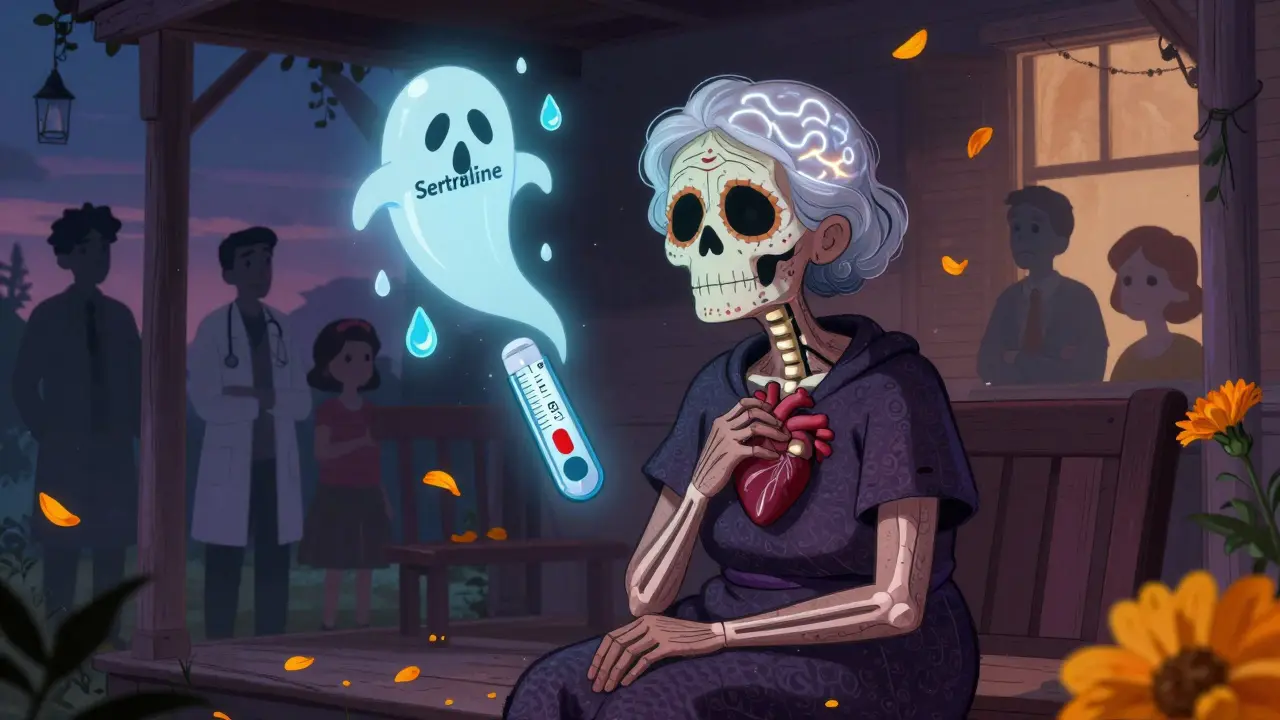
In Australia, where one in five people over 65 takes an antidepressant, this isn’t theoretical. It’s happening in living rooms, aged care homes, and emergency departments. A 78-year-old woman in Melbourne starts sertraline for anxiety. Two weeks later, she’s stumbling, confused, and can’t remember her grandchild’s name. Her blood test shows sodium at 118 mmol/L. Normal is 135-145. This isn’t dementia. It’s hyponatremia-caused by the very drug meant to help her feel better.
What Exactly Is Hyponatremia?
Hyponatremia means your blood sodium level has dropped below 135 mmol/L. Sodium isn’t just table salt. It’s a key electrolyte that helps your brain, nerves, and muscles function. When sodium drops too low, water floods into your cells-including brain cells. That’s when you start feeling off: headache, nausea, fatigue. Then comes the real danger: confusion, seizures, coma. In extreme cases, it kills.
SSRIs-like citalopram, sertraline, fluoxetine, and paroxetine-are among the most common antidepressants. But they also trigger something called SIADH: Syndrome of Inappropriate Antidiuretic Hormone Secretion. Basically, your body holds onto too much water because the drug overstimulates serotonin receptors in your brain. That water dilutes your sodium. The lower your sodium, the worse the symptoms.
Who’s at Highest Risk?
Not everyone on SSRIs gets this. But certain people are far more vulnerable.
- People over 65: Their kidneys don’t flush water as well. Risk jumps to 14-19%.
- Women: Over 65% of cases occur in women, possibly due to body composition and hormone differences.
- Those on diuretics: Thiazide diuretics (like hydrochlorothiazide) double or triple the risk. Many older adults take them for high blood pressure.
- Low body weight: People under 60 kg have less fluid volume to buffer the dilution.
- People with kidney issues: If your eGFR is below 60, your body can’t regulate water properly.
One study found that elderly patients on both an SSRI and a diuretic had a 4.2 times higher chance of developing hyponatremia than those on either alone. That’s not a coincidence. It’s a perfect storm.
How Fast Does It Happen?
It doesn’t take months. Most cases show up between two and four weeks after starting the drug-or after a dose increase. That’s why so many doctors miss it. They check in at week 6 or 8, assuming side effects are already settled. But the danger window is earlier.
A 2023 report from The Carlat Report found that 63% of primary care doctors didn’t even know this timing. They thought symptoms appeared after months. That delay costs lives.
Which SSRIs Are Worst?
All SSRIs carry some risk, but not equally. Based on data from over 30 studies in a 2024 meta-analysis:
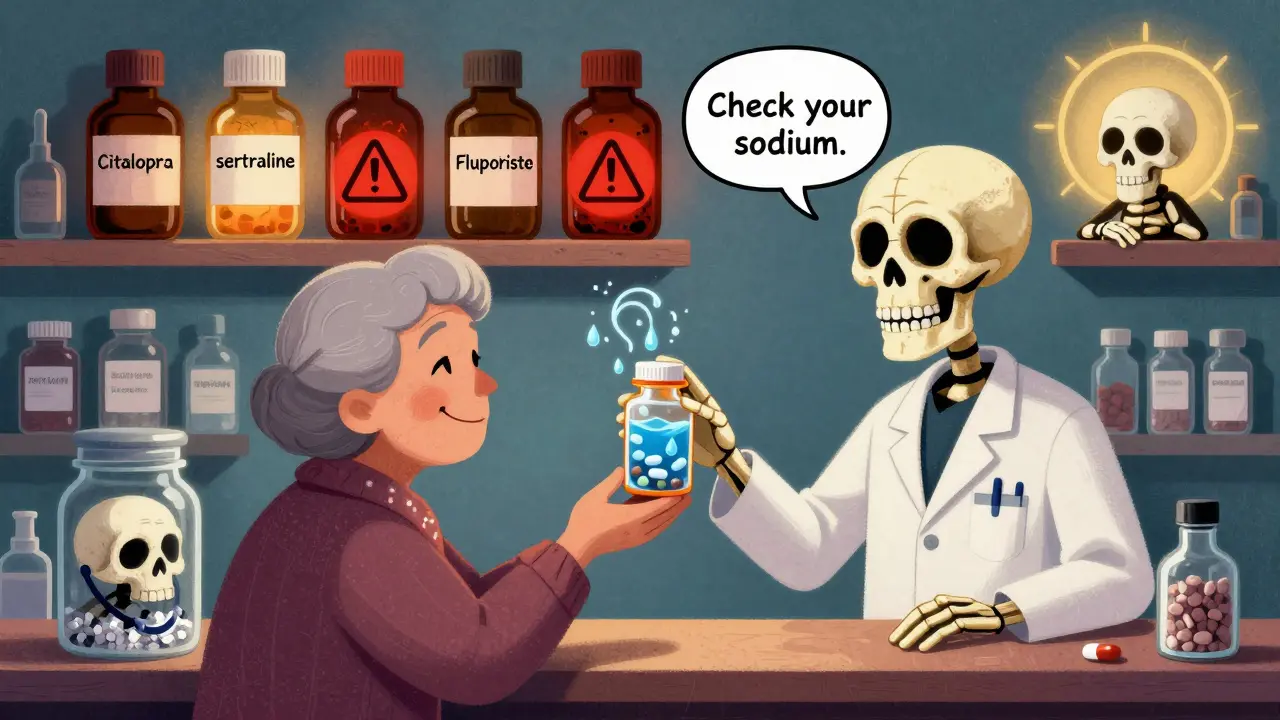
- Citalopram: Highest risk (odds ratio 2.37)
- Sertraline: Very high risk (OR 2.15)
- Fluoxetine: High risk (OR 1.98)
- Paroxetine: Moderate risk (OR 1.82)
Why? It comes down to how tightly each drug binds to the serotonin transporter (SERT). The tighter the bind, the more serotonin is released in the brain, and the more ADH (the water-retention hormone) gets triggered.
Compare that to other antidepressants:
- Mirtazapine: 47% lower risk than SSRIs. It’s not even in the same league.
- Bupropion: Nearly neutral risk. A solid alternative.
- Venlafaxine (SNRI): Moderate risk, but still lower than citalopram.
- Amitriptyline (TCA): Higher risk than bupropion, but lower than citalopram.
For someone over 65 with kidney issues and on a diuretic? Mirtazapine isn’t just safer-it’s the obvious first choice.
What Do Symptoms Look Like?
Early signs are sneaky:
- Headache
- Nausea
- Feeling unusually tired or sluggish
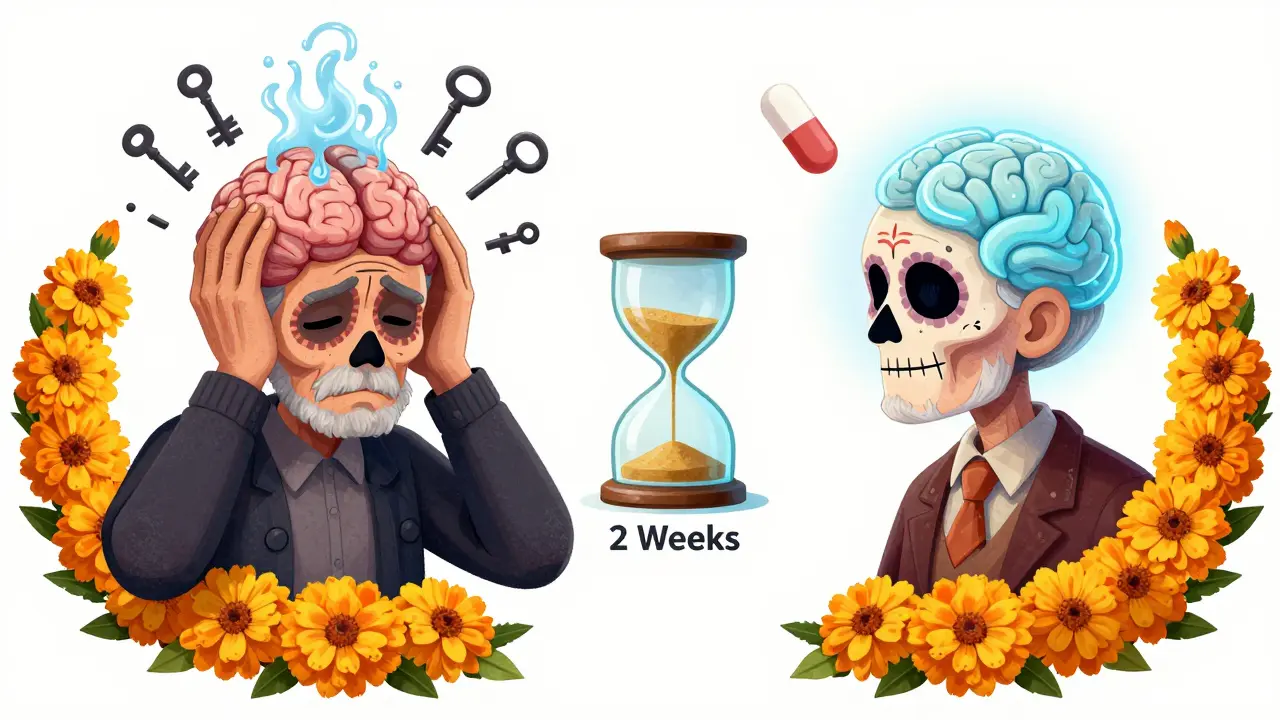
- Mild confusion-like forgetting where you put your keys
By the time someone is disoriented, falling, or having seizures, it’s already severe. In elderly patients, these symptoms are often mistaken for dementia, depression worsening, or just “getting older.” That’s the tragedy. Many cases go undiagnosed for days-sometimes over a week-because no one connects the dots.
A 2023 study found the average time from symptom onset to diagnosis was 7.2 days. In one Reddit post, a caregiver described her 82-year-old mother: “She became a stranger. We thought it was Alzheimer’s. Then the blood test came back: sodium 122.”
How Is It Diagnosed?
If hyponatremia is suspected, doctors need to check:
- Serum sodium: Below 135 mmol/L confirms it.
- Urine sodium: Above 30 mmol/L (means kidneys aren’t saving sodium).
- Urine osmolality: Above 100 mOsm/kg (shows water is being retained).
- Volume status: Usually normal (euvolemic), not dehydrated or swollen.
That’s the SIADH signature: water retention without swelling or dehydration. It’s why drinking more water makes it worse.
What Should Be Done?
Prevention is everything.
The American Psychiatric Association now recommends:
- Test sodium before starting any SSRI.
- Test again at 2 weeks after starting or increasing dose.
- For high-risk patients (over 65, on diuretics, kidney issues), test monthly for the first 3 months.
If sodium drops below 134 mmol/L:
- Stop the SSRI.
- Restrict fluids to 800-1000 mL per day.
- Recheck sodium in 24-48 hours.
If sodium drops below 125 mmol/L? That’s an emergency. Hospitalization. IV hypertonic saline. Slow correction-no more than 6-8 mmol/L in 24 hours. Too fast, and you risk brain damage from osmotic demyelination.
Why Isn’t This Common Knowledge?
Only 29% of patients surveyed in 2023 said they were warned about this risk before starting SSRIs. That’s not negligence-it’s systemic.
Drug labels updated in 2022 now include hyponatremia warnings. The FDA requires it. The American Geriatrics Society lists SSRIs as potentially inappropriate for older adults. But most GPs don’t read the fine print. Pharmacists don’t always counsel. Patients aren’t told.
Meanwhile, prescribing patterns are shifting. Between 2018 and 2023, SSRI use in Australians over 65 dropped by 22%. Mirtazapine prescriptions rose by 35%. That’s not coincidence. It’s evidence.
What’s the Alternative?
If you’re over 65, on a diuretic, or have kidney trouble, ask: Is this SSRI really the best option?
Mirtazapine is the clear winner for safety. It doesn’t trigger SIADH. It’s just as effective for depression. It even helps with sleep and appetite-common problems in older adults.
Bupropion is another solid alternative. It doesn’t affect serotonin the same way. It’s less likely to cause weight gain or sexual side effects too.
For many, switching isn’t about giving up on treatment. It’s about finding one that doesn’t risk brain function.
What Happens After Stopping?
Most people recover. Sodium levels bounce back in 3-4 days after stopping the SSRI. But recovery isn’t instant. Confusion lingers. Balance doesn’t return overnight. Some elderly patients fall more in the weeks after because their brain is still adjusting.
And here’s the hidden cost: In the U.S., SSRI-induced hyponatremia costs $1.27 billion a year in hospital bills. In Australia, it’s a growing burden too. Emergency visits, ICU stays, extended care-it all adds up.
Bottom Line
SSRIs save lives. But they can also put lives at risk-if you don’t know what to look for.
If you’re over 65, or caring for someone who is:
- Ask your doctor: Have you checked my sodium before starting this?
- Ask: Is there a safer alternative like mirtazapine?
- Watch for subtle changes: confusion, nausea, headaches in the first month.
- If symptoms appear, get bloodwork done-don’t wait.
This isn’t a rare side effect. It’s predictable. Preventable. And too often, ignored.


SSRIs are fine if you're young and healthy. But for older folks? This is a silent killer. Doctors need to test sodium before prescribing. Period.
No one should be blindsided by this.
my grandma got on zoloft and started acting like she didnt know me. we thought it was alzheimers. turns out her sodium was 121. doc said 'oh thats common' like it was no big deal. yeah right.
The tragedy here isn't just the medical oversight-it's the cultural assumption that aging equals inevitable decline. We normalize confusion in the elderly as 'just part of getting older' when it could be a reversible drug reaction. This is a failure of systemic empathy, not just pharmacology.
Americans really think they can medicate every problem away. In India, we don't throw pills at depression like candy. We talk. We sit. We eat together. This hyponatremia mess? It's the cost of overprescribing. Your system is broken.
I've been saying this for years. SSRIs are overprescribed to elderly women on diuretics like it's some kind of routine. And the worst part? Most of these doctors don't even know the timeline. They think it takes months. It takes two weeks. Two weeks. And then they wonder why the patient 'suddenly' got confused. It's not dementia. It's dumb.
This isn't just a side effect. It's a tragedy wrapped in a prescription bottle. Imagine your mother becoming a stranger because a drug company's risk assessment didn't make the front page. The FDA warning? Too little, too late. And the doctors? Still asleep. We're letting people die because we're too lazy to look at the fine print. 💔
My aunt had this happen. They told her to drink more water. Like that was the solution. She almost died. Now they say mirtazapine is better? Why wasn't that the first option? Because profit > patients. End of story.
Let’s unpack this. SIADH from SSRIs is a well-documented pharmacokinetic phenomenon. The serotonin receptor binding affinity directly correlates with ADH dysregulation. Citalopram’s high SERT affinity? That’s not a fluke-it’s a predictable off-target effect. But here’s the real win: mirtazapine’s noradrenergic and histaminergic profile avoids this entirely. So why aren’t we using it as first-line in geriatrics? Because guidelines are outdated. And the data’s been there for years. We’re not ignorant. We’re complacent.
Mirtazapine > SSRIs for elderly. 🧠💧 No contest. Sodium levels check before and at 2 weeks. If you're not doing this, you're not doing your job. And if you're on a diuretic? You're playing Russian roulette with brain cells. 😔
I’m crying. Not because I’m dramatic-though I am-but because my 79-year-old father went from reading the newspaper daily to forgetting his own birthday. They called it 'senior moments.' We didn’t know. We didn’t ask. And then? Sodium 119. They took him off sertraline. He came back. But not all the way. And now? I’m furious. This isn’t medicine. It’s negligence with a stethoscope. And the worst part? It’s happening to thousands. Every. Single. Month.
so like... if you're over 65 and on a diuretic and an ssri... maybe dont? like... why are we even doing this? we just keep giving pills and pretending its not a problem. someone should've told us this before my mom turned into a ghost.